
Ermeto Original hydraulic tube fittings and cutting ring fittings for pipes
Ermeto Original fittings for pipes allow proper sealing with its cutting ring fittings. This technique has a multiple decades long history of industry proofed standards. Your hydraulic connection benefits a lot from these leak-free connections and long service life.
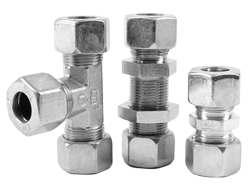
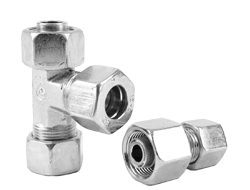
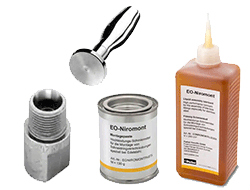
Ermeto Tube Fittings from Parker in Galvanized Steel and Stainless Steel — Precision for Pressure Lines
Ermeto tube fittings (EO, EO2) from Parker stand for positive and leak-proof connections in hydraulic and pneumatic systems. The fittings are available in galvanized steel and stainless steel and cover pressure ranges from low to very high pressures. Technical integrity is achieved through precisely manufactured internal and external contours, standard-compliant threads, and tested sealing elements. For users in the manufacturing industry, these components are designed to minimize leaks, assembly errors, and ingress of foreign matter, and to reduce downtime in production processes.Materials and Corrosion Protection
Galvanized steel offers an optimal price-performance ratio for moderate chemical exposure and dry environments. The galvanic galvanization protects the surface against rust and enables reliable electrical conductivity, if desired. Stainless steel variants (typically material groups 1.4404/316L or 1.4301/304) are preferable for corrosive media, food, pharmaceutical, and offshore applications. Stainless steel fittings resist chlorides, cleaning agents, and higher temperatures better than galvanized steel and maintain mechanical strength over long periods of use.Designs and Connections
Ermeto systems are supplied in several designs: screw-in fittings with conical or cylindrical threads, solder connections, elbows and tees, reducing and blanking fittings. Standard connections include metric threads (e.g., Metric ISO), BSPP/BSPT for hydraulics, and NPT for certain industrial applications. For thin-walled tubes, the EO2 version with a reinforced clamping point is recommended, offering better spreading action and tightness with reduced wall thickness. It is important to match the internal and external threads as well as the tube dimension (outer Ø) for a positive connection without additional fittings.Seals, Sealing Principles, and Testing Procedures
Ermeto connections use combined sealing principles: mechanical compression sealing by a clamping ring/cutting ring, metallic contact surface, and secondary seals made of elastomeric materials in special versions. Typical sealing materials are NBR (nitrile rubber) for oil and hydraulic applications, FKM/Viton for higher temperatures and aggressive media, and PTFE inserts for chemical resistance. Tightness is ensured ex-works through leak testing according to ISO or EN standards; at the application level, pressure tests (hydrotest) after assembly are mandatory to control leak rates and seating stability.Assembly, Tools, and Quality Assurance
Assembly is carried out using standardized torque specifications and calibration gauges for tube ends. Tube ends must be deburred and checked for proper roundness to avoid localized stresses at the clamping point. Special tools such as tube cutters, deburrers, and torque wrenches reduce assembly errors and extend the service life of the connection. For series assembly, it is advisable to introduce assembly protocols with random sample checks and documented torque values. Parker provides data sheets with tightening torques and recommended tube preparations — these specifications are binding for safety-critical systems.Compatibility and System Integration
Ermeto fittings are compatible with smooth steel, stainless steel, and copper tubes of appropriate wall thickness. It is important to match the tube material and diameter, as well as the correct pressing or pre-forming of ends in EO2 systems. When replacing components in existing systems, thread and sealing standards must be checked to avoid galvanic corrosion between different metals. For flow and pressure optimization, the internal contour and transition point must be considered, as slight cross-sectional reductions can cause flow losses and local pressure peaks.Fields of Application and Limits of Use
Ermeto fittings are used in mechanical engineering, hydraulic power units, manufacturing plants, lubrication and cooling systems, and in energy systems. In high-pressure hydraulics, they are designed for operating pressures up to several hundred bar; the actual permissible pressure rating depends on material, wall thickness, nominal diameter, and temperature. For applications with pulsating loads, regular inspections are mandatory, as material fatigue can occur at the clamping point and in the tube area. For potentially explosive atmospheres, suitable designs and certifications must be selected.Practical Examples
Example 1 — Hydraulic Press in Sheet Metal Processing: In a hydraulic line of a hydraulic press, galvanized Ermeto EO fittings were used as standard. After assembly, all connections were tightened with the specified torque, and a hydrotest at 1.5 times the operating pressure was performed. The fittings withstood pulsating pressures without plastic deformation; regular visual inspection every 6 months showed no leaks. When converting to coolant-based lubricant circuits, FKM seals were used to ensure solvent resistance. Example 2 — Food Processing, Cleaning Media, and Stainless Steel: In a food conveying system, 1.4404 stainless steel Ermeto fittings were chosen. Stainless steel pipelines were connected with clean, deburred surfaces. Cleaning cycles with chlorine and peracetic acid-containing media required PTFE inserts at defined points to ensure long-term tightness. The components were assembled on-site with stainless steel wrenches to avoid contamination by foreign metals. Example 3 — Retrofit System, Tube Reduction, and EO2: In a retrofit measure, older, thin-walled tubes were replaced with new components. EO2 fittings were used to securely clamp the small wall thickness. Before assembly, each tube end was checked for concentricity; after assembly, a 24-hour leak test was performed at operating temperature. The EO2 clamping reduced turbulence at the clamping point compared to soldered connections and simplified subsequent maintenance.Selection Criteria and Recommendation
Select Ermeto fittings based on specific parameters: medium chemistry, operating temperature, operating pressure, tube material and wall thickness, and environmental conditions (corrosion class). In case of uncertainty, a combination of stainless steel for corrosion resistance and FKM or PTFE seals for chemical resistance is recommended. Pay attention to standard-compliant threads and check the exact tube dimensions and the required tightening torque before ordering. Detailed technical specifications and material data sheets are available on the product pages or in the technical sections of our website if required: Technik and practical applications under Anwendungsbeispiele. * Product variants: EO (standard), EO2 (reinforced clamping); Materials: galvanized steel, stainless steel 1.4404/316L, 1.4301/304; Sealing materials: NBR, FKM, PTFE.Maintenance and Service Life
Service life depends on load cycles, medium, and temperature. Periodic checks for corrosion, loosening of screws, and mechanical damage are required. After loosening the connection, seals must be checked and replaced if necessary. Documented maintenance intervals and replacement cycles prevent unplanned downtime.Standards, Certifications, and Safety
Ermeto fittings typically comply with relevant DIN, ISO, and EN standards for tube connections in fluid technology. For safety-relevant applications, additional certificates and test reports must be requested. For potentially explosive atmospheres or food-related applications, specific approvals must be checked.Procurement and Technical Consulting
Order Ermeto fittings according to exact tube dimensions, material requirements, and desired sealing version. For technical clarifications, we offer detailed data sheets, drawings, and assembly instructions. For specific questions regarding design or adaptation, contact our technical department or use the technical resources at https://maku-industrie.de/technik.FAQ
1. Which fitting is suitable for thin-walled tubes: EO or EO2?EO2 is preferable for thin-walled tubes; the reinforced clamping point reduces crushing deformation and improves tightness compared to the standard EO version. 2. When should stainless steel vs. galvanized steel be chosen?
Stainless steel is mandatory for corrosive media, cleaning agents, food and pharmaceutical applications, or outdoor installations with high salt exposure. Galvanized steel is suitable for less aggressive environments with economic requirements. 3. Which seal is suitable for hydraulic oil at high temperatures?
For hydraulic oils at elevated temperatures, FKM (Viton) is recommended due to its temperature and oil resistance; PTFE is used for aggressive chemicals, NBR for standard hydraulics up to moderate temperatures.