
Protection components for pneumatic circuits
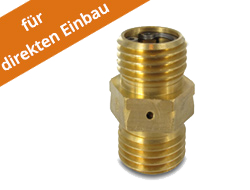
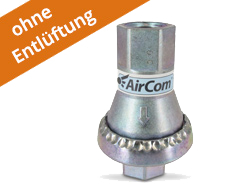
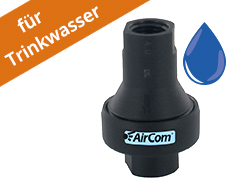
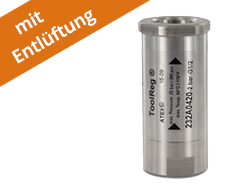
Inline Pressure Regulators for Protective Components in Compressed Air Systems
Inline pressure regulators ensure precise working pressure within compressed air systems in compact designs, simultaneously providing protective functions against overpressure and pressure peaks. Unlike stationary regulators, the regulating unit is located directly in the pipe or hose line, resulting in shorter reaction times and lower pressure losses. For industrial applications in manufacturing technology, assembly lines, and pneumatic drives, inline variants are the preferred solution when space, modularity, and easy retrofitting are crucial.
Core Functions and Applications
Inline pressure regulators reduce the incoming system pressure to a defined output pressure and maintain it constant against flow and load changes. In addition to primary pressure regulation, they protect downstream components from pressure surges, enable reliable operation of tools and cylinders, and contribute to energy efficiency by preventing unnecessarily high pressure. Typical applications include pneumatic switching systems, gripping systems in assembly cells, compressed air tools in workshops, and control circuits for valves in process plants.
Construction, Materials, and Sealing
Designs vary from miniaturized inline cartridges to robust block housings made of aluminum or brass. For corrosive environments, stainless materials such as stainless steel (e.g., 1.4301 / AISI 304 or 1.4404 / AISI 316L) are used. Materials influence fatigue strength, temperature resistance, and compatibility with lubricants and condensate. Elastomeric seals are critical wear parts; EPDM is used for oil- and temperature-resistant applications, NBR (Buna-N) for general, cost-effective systems, and FKM (Viton) for high temperatures or chemical exposure. Connection threads are often sealed with O-rings or conical seals; PTFE sealing tape should be avoided for threaded connections with metallic sealing surfaces when flat seals are used.
Connections, Sizes, and Pressure Ranges
Inline pressure regulators are available in connection sizes from M5 and 1/8" up to 1/2" and larger. The choice of connection size depends on the required flow rate and permissible pressure loss. Common nominal pressure ranges are between 0–16 bar with adjustment ranges such as 0–1 bar for fine controls up to 0–12 bar for machine supply. For high-pressure applications, special regulators with increased operating pressures exist. For hose-based systems, quick couplings and push-to-connect fittings are typical; for fixed lines, cylindrical or conical threads (Rp/G) are used. Pay attention to the flow characteristic (Cv or Kv value) of the regulator to correctly calculate pressure drop at operating points.
Regulation Principles and Accuracy
Mechanical inline regulators operate with spring-diaphragm systems, which are pre-tensioned by an adjustment screw or a push button. Pneumatic or servo-controlled variants allow external reference pressure control for central pressure distribution. Regulation accuracy depends on spring constancy, damping elements, and seat design; for precise applications, regulators with fine adjustment and low hysteresis are required. Integrated throttles or internal damping bores are useful for minimizing regulation oscillations.
Integration with Protective Functions
Inline pressure regulators in protective assemblies can combine additional functions such as hose break safety devices, check valves, overpressure valves, or filters. A hose break safety device disconnects the air supply in case of a sudden increase in flow rate to prevent damage from uncontrolled cylinder movements. Combination units with integrated fine filter and water separator extend the lifespan of the regulator and downstream valves. Modular inline units facilitate service and replacement without interrupting large sections of piping.
Selection Criteria: Technically Relevant Parameters
The selection of a suitable inline pressure regulator is based on the following parameters: permissible inlet pressure, desired outlet pressure range, flow rate requirement, medium quality (drying, oil content), ambient temperature, connection types, material compatibility, sealing material, and maintainability. Additionally, cycle stability, reaction time, and any necessary approvals (e.g., ATEX, ISO) must be considered. Use the manufacturer's flow characteristics to check pressure drop at maximum load, and perform a risk analysis for worst-case scenarios such as hose rupture or condensate failure.
Installation, Commissioning, and Maintenance
Installation must follow the flow direction indicated; incorrectly installed regulators lose their regulating behavior or can be damaged. Before commissioning, flush lines and remove particles, as foreign particles can damage valve seats and seals. For initial adjustment: adjust the adjustment screw slowly and in small steps, check measuring points with manometers, and test the system under various load conditions. Maintenance intervals depend on the degree of contamination and the number of cycles; replacement of seals, cleaning or replacement filters, and checking spring force should be documented. Spare seals and service kits should be stocked according to material selection.
Practical Examples
Example 1: In an assembly cell with pneumatic grippers, an inline pressure regulator reduces the line pressure from 7 bar to 4 bar directly in front of the gripper. The regulator is mounted as a compact inline cartridge in the low-current line, uses an NBR seal, and a 1/4" push-to-connect fitting. Result: reduced material wear on gripper jaws and constant clamping force despite fluctuations in the main supply network. Example 2: In a paint shop, a stainless steel inline regulator with an FKM seal is used to ensure constant spray pressure. Combined with a fine filter, this protects nozzle systems from clogging and chemical attack by solvents. Example 3: In a compact workshop supply, an inline regulator with an integrated hose break safety device is installed in front of a pneumatic press. If the compressed air supply to the press suddenly fails or a hose ruptures, the safety device disconnects the supply and prevents uncontrolled part movements; the regulator then automatically restores the correct working pressure setting.
Further Information and Application Documentation
For detailed technical background on control principles and selection aids, please visit our technical collection at https://maku-industrie.de/technik. Specific application cases with measurement data and installation drawings can be found at https://maku-industrie.de/anwendungsbeispiele. There, also check for compatible protective components such as filters, check valves, or overpressure valves that are suitable as combination modules with inline pressure regulators.
Quick Check for Ordering
- Desired outlet pressure range, max. inlet pressure, connection size, flow requirement, material/seal requirement, functional extensions (e.g., hose break safety device, overpressure protection)
FAQs
Q1: How do I choose the correct connection size for an inline pressure regulator?
The connection size is based on the required flow rate at maximum load. Calculate the flow rate in l/min at operating pressure and compare it with the Kv/Cv value of the regulator to limit the pressure drop. For short pipe runs and low flow rates, M5–1/8" is sufficient; for main lines, 1/4" to 1/2".
Q2: Which seal is recommended for oily compressed air?
For oily air, NBR (Buna-N) is often sufficient; for elevated temperatures or chemical exposure, FKM (Viton) should be used. EPDM is unsuitable for oily media. Selection depends on manufacturer specifications and material data sheets.
Q3: Can an inline pressure regulator with a hose break safety device be reset manually?
Depending on the design, there are automatic reset mechanisms or manual reset screws. In safety-critical applications, automatic resets with safety conditions are preferred, while in maintenance-friendly environments, manual reset with a signaling function is used.