
Buy tools and devices by the Apex Tool Group quick and safe online
In July 2010, two leading tool manufacturers have united under the new name Apex Tool Group: Cooper Tools and Danaher Tool Group.
Apex Tool Group is a manufacturer and marketer of high-quality electrical, pneumatic and industrial tools and accessories for customers in industry and crafts.
The Apex Tool Group has a strong presence with a variety of brands in Europe. These include for example the tools by Cleco and the hand tools by Crescent, which you can find in the Tool Sets section.
You can also find catalogs by Apex Tool Group on our website.
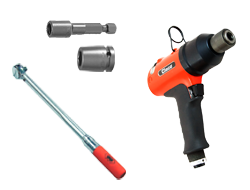
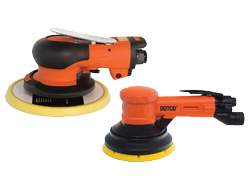
Apex Tool Group: Intelligent Tool Solutions for Demanding Industrial Applications
Globally, Apex Tool Group stands for a portfolio of highly specialized industrial tools that set standards in terms of precision, ergonomics, and durability. Brands like Cleco and DGD are synonymous in modern manufacturing with process-reliable fastening technology and high-performance material removal. These tools are not merely simple devices but integral components of networked and data-driven production environments. They have been developed to meet the demands of Industry 4.0, offering users in the automotive, aerospace, and general mechanical engineering industries maximum control, efficiency, and traceability.
Every tool from Apex Tool Group is the result of intensive research and a deep understanding of the challenges faced on modern assembly lines and in the harsh environment of metal processing. The solutions presented here combine robust mechanics with intelligent control electronics and pneumatic power to achieve optimal results in every application and sustainably reduce total cost of ownership (TCO).
High-Precision Fastening Technology from Cleco for Safety-Critical Connections
In modern assembly, fastening technology is a crucial discipline. It involves far more than merely tightening a screw. It's about the reproducible adherence to exact torques and angles of rotation to ensure the safety of assemblies and the quality of the final product. Cleco fastening systems are precisely designed for these requirements, offering the right technology for every application, from pneumatic shut-off screwdrivers to fully programmable, mechatronic systems.
Control Technologies: From Mechanical Shut-Off Screwdrivers to Intelligent EC Screwdrivers
The selection of the right screwdriver largely depends on the criticality of the screw connection. Cleco offers a tiered technology portfolio here. The classic pneumatic shut-off screwdriver (Clutch Type) uses a mechanical clutch that precisely disengages the drive from the output when the preset torque is reached. These tools are extremely robust, reliable, and ideal for applications requiring a constant torque.
For higher demands on process control, electronically controlled (EC) or mechatronic fastening systems are used. These intelligent tools feature brushless DC motors and integrated sensors for torque and angle of rotation. Complex fastening strategies can be programmed in multiple steps via an external control unit (e.g., tightening, angle, and loosening operations). Each individual fastening process is monitored, documented, and can be transmitted to higher-level MES systems (Manufacturing Execution Systems) for quality assurance. This enables seamless traceability, which is legally required, especially in the automotive and aerospace industries.
Designs and Ergonomics for Continuous Use
The physical strain on the operator is a crucial factor for productivity and work quality. Cleco tools are consistently developed with ergonomic considerations in mind. Various designs are available to optimally reach every fastening point:
- Pistol grip screwdrivers: The classic design for versatile, horizontal fastening applications.
- Straight screwdrivers (Inline): Ideal for vertical fastening operations and use in fastening fixtures.
- Angle screwdrivers: Indispensable for hard-to-reach fastening points in confined spaces.
The handles are made of vibration-damping materials, and the weight distribution of the tools is optimally balanced to minimize fatigue, even with high cycle rates in shift operation. The low noise emissions of modern motor generations also contribute to an improved working environment.
Practical Example: Assembly of an Airbag Module in Automotive Production
The Challenge: An automotive manufacturer needs to assemble safety-relevant airbag modules in the vehicle body. The fastening is classified as critical (Class A). Each fastening case must be tightened with an exact torque and angle value and documented without gaps to ensure product liability. Overtightening or undertightening the screw could lead to an airbag malfunction in an emergency.
The Solution: A mechatronic Cleco LiveWire™ fastening system is used for this task. The cordless pistol grip screwdriver communicates via WLAN with the control unit. A multi-stage tightening program is stored for the specific fastening point, which first drives the screw in at a search speed, then tightens it to a seating torque, and finally applies the final angle of rotation. The integrated barcode scanner on the tool captures the Vehicle Identification Number (VIN), so each fastening process is uniquely assigned to the respective vehicle. The result is signaled to the worker directly on the tool via an LED display (OK/NOK). All data (achieved torque, angle of rotation, timestamp, VIN) are automatically stored in the central quality database.
High-Performance Grinding Machines for Professional Material Processing
Where material needs to be removed, surfaces refined, or weld seams smoothed, Apex Tool Group's grinding and deburring tools are the first choice. These machines are designed for the toughest industrial use and offer an unmatched combination of material removal performance, robustness, and operator safety. Whether pneumatically or electrically driven, each machine is designed to deliver maximum productivity.
Turbine vs. Vane Motor: The Right Drive Technology
For pneumatic grinders, Apex Tool Group relies on two central drive concepts. The traditional vane motor is proven, robust, and offers high starting torque. It is ideal for many standard grinding and cutting applications.
For the highest performance requirements, the turbine motor was developed. Instead of vanes, a turbine wheel drives the grinder here. This principle enables significantly higher power with the same air consumption and a more constant speed under load. Turbine grinders have an outstanding power-to-weight ratio and are practically maintenance-free, as they have no wear-prone vanes. The result is significantly faster material removal and a longer service life of the abrasive, which noticeably reduces cycle times in manufacturing.
Practical Example: Preparation of Weld Seams in Tank Construction
The Challenge: In a company that manufactures large stainless steel pressure vessels, the edges of thick steel plates must be beveled (U-groove) before welding, and the finished weld seams subsequently ground flush. The material removal is enormous, and the work must be done quickly and precisely. Conventional grinding machines overheat quickly, have high vibration loads, and consume a lot of grinding wheels.
The Solution: A pneumatic Cleco T-Series turbine angle grinder is used for this task. Its enormous power allows the use of coarse roughing discs for rapid material removal. The speed-stable turbine ensures that the grinding disc operates in the optimal speed range even under high contact pressure. This prevents "glazing" of the disc and maximizes its service life. The integrated auto-balancer reduces vibrations to a minimum, which protects the worker and allows for more precise tool guidance. Thanks to the oil-free operation of the motor, contamination of the surface to be welded by oil mist is also avoided.
Conclusion: Investment in Process-Reliable and Ergonomic Manufacturing
The decision for Apex Tool Group's fastening and grinding tools is an investment in the core processes of your manufacturing. You not only increase the quality and safety of your products through precise and repeatable work processes but also enhance productivity through powerful, durable, and ergonomically optimized tools. The ability to collect data and integrate into modern production networks makes these tools future-proof and an indispensable component for efficient and transparent production.
Frequently Asked Questions (FAQ)
1. What is the difference between a shut-off and a stall-type screwdriver?
A shut-off screwdriver (Clutch Type) has a mechanical clutch. When the target torque is reached, the clutch audibly and tangibly disengages the drive from the output. This leads to very high repeatability and protects the operator's wrist. A stall-type screwdriver has no clutch. The motor stalls when the target torque is reached. The final torque here depends more on air pressure, the fastening application, and the operator. Stall screwdrivers are simpler in design and suitable for non-critical fastening applications.
2. Why should I use a turbine grinder instead of a vane grinder?
A turbine grinder is always the better choice when maximum material removal in the shortest possible time is required. Due to its higher power-to-weight ratio and better speed stability under load, you work significantly faster. In addition, it is almost maintenance-free, which reduces life cycle costs. A vane grinder is an excellent, more cost-effective choice for general grinding, cutting, and deburring tasks with moderate to high power requirements.
3. What does "Transducerized" mean for electronic EC screwdrivers?
"Transducerized" means that the screwdriver is equipped with an integrated transducer. This measures the torque directly at the tool's output in real-time. In contrast to current-controlled systems, which indirectly determine torque via motor current consumption, a transducer-controlled system offers the highest possible measurement accuracy and is largely independent of influences such as friction in the gearbox or temperature. This is the gold standard for safety-critical fastenings.