
Mold cooling couplings, plugs and hoses
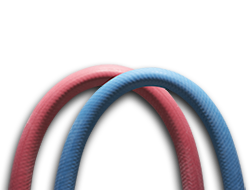
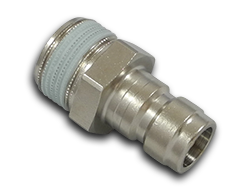
Temperature control couplings and temperature control plugs as well as hoses from Parker Rectus for mold cooling circuits. We offer all three European connector profiles (International, European and French) in the field of cooling and temperature control.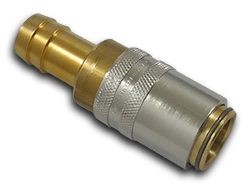
Couplings, Plugs, and Hoses for Mold Cooling — Technical Selection Criteria and Application
For efficient mold cooling, connection technology is crucial for operational stability, response speed, and maintenance effort. **Quick-release couplings**, plugs, and hoses form the interface between the temperature control unit and the mold; their material selection, sealing technology, nominal diameter, and connection type determine flow rate, pressure loss, temperature resistance, and service life. The following sections provide specific decision criteria, proven designs, and practical application notes.Materials and Thermal Properties
Hoses and connection parts must withstand the temperature control medium and temperature range. **FKM (Viton)** offers high temperature and chemical resistance up to ~200 °C and is resistant to many glycols and hydraulic fluids. **EPDM** is resistant to hot water-glycol mixtures up to approximately 150 °C and shows very good ozone and aging resistance, but is not suitable for media containing mineral oil. **NBR** (nitrile rubber) resists oils and is cost-effective, but has lower heat resistance (~100–120 °C). **Silicone** provides excellent temperature tolerance up to 200–250 °C and high flexibility, but limited resistance to oils and abrasion. **PVC** is economical, transparent, and suitable for low to medium temperatures; at higher temperatures, it embrittles faster. Metallic structural parts such as coupling housings, plugs, and clamps are usually made of **stainless steel (1.4404/316L)** for corrosion resistance in aggressive environments. Brass is used for limited corrosion requirements. Aluminum is used for low corrosion loads and for lightweight components. For high demands on cleanability and low particle count, users choose electropolished surfaces and FDA-compliant materials.Designs of Quick-Release Couplings and Connectors
Quick-release couplings differ in their locking mechanism (push-to-connect, lever, ball lock), sealing principle (O-ring, sealing needle valves), and flow characteristic (full flow vs. shut-off). Full-flow couplings minimize pressure loss and are advantageous for higher volume flows. Shut-off couplings prevent coolant loss during disconnection, which reduces maintenance and changeover times. Connectors with integrated valves reduce air intake and media loss during disconnection. Sealing technology is central: **FKM, EPDM, and NBR O-rings** are widely used; seal-free fits are only used in particle-sensitive applications. It is advisable to use seals as components with documented material approval to avoid contamination. For higher temperatures or aggressive media, metal bellows or special polymer composites are used.Connections, Dimensions, and Installation Positions
Typical connection variants include imperial threads (1/8", 1/4", 3/8", 1/2"), Metric (M), as well as quick-release coupling standards such as ISO 7241 or special industrial connections. Hose inner and outer diameters determine the nominal diameter calculation; for precise temperature control systems, pressure losses at a given length and temperature profile must be calculated and documented. Hose lengths should be chosen to maintain bending radii; common minimum bending radii are 4–6× hose inner diameter, depending on the material. Fixed installation positions, kink protection, and hose routing minimize mechanical wear.Economy, Service Life, and Maintenance
Service life assessments are based on temperature cycles, media chemistry, and mechanical stress. Silicone and FKM hoses show long service life with temperature changes, EPDM offers good long-term stability in hot water applications. Regular visual inspection for cracks, swelling, or hose hardening and checking the sealing function of couplings reduces unplanned failures. Replacement intervals should be documented and determined based on operating hours and temperature cycles.Connection Compatibility and Retrofit
When retrofitting existing molds, compatibility with existing fittings and temperature control units is crucial. Check internal and external threads, seal types, and the shut-off mechanism. Reducers and transition adapters are common solutions; if the material combination changes, seal changes and media compatibility must be checked. For retrofit projects, document all connection dimensions, existing pressures, and temperature limits before ordering components.Practical Application Examples
**Example 1: Plastic injection mold with a long cooling circuit** — Situation: Mold with multiple cavities, temperature control lines over 15 m, medium: water-glycol, operating pressure 6 bar, temperature 80 °C. Recommendation: Stainless steel quick-release couplings with shut-off valve technology, EPDM hoses with reinforced textile layer and nominal diameter DN10 to reduce pressure loss. Practice: Mount couplings near the tool holder, route hoses in kink protection channels, and use pressure sensors at the inlet for monitoring. Result: Constant temperature control, fewer production interruptions during mold changes. **Example 2: Hot runner temperature control with high temperature resistance** — Situation: Hot runners up to 180 °C, medium: thermal oil, specific maintenance requirements. Recommendation: FKM hoses or metal lines with stainless steel hoses, stainless steel quick-release couplings, and valve technology with metal seals at critical temperatures. Practice: Use short hose sections, install temperature sensors immediately behind the coupling, and perform manual pressure relief before disassembly. Result: Minimized risk of thermal damage and safe maintenance cycles. **Example 3: Small parts manufacturing with high-purity water as temperature control medium** — Situation: Electronic housings in a cleanroom environment, medium: deionized water, temperature 40–60 °C. Recommendation: FDA-compliant silicone hoses or PTFE lining, quick-release couplings with polymer-coated inner surfaces, stainless steel housing, O-rings made of EPDM or FFKM for chemical purity. Practice: Documented cleaning intervals, replacement of seals with every mold change, use of inline filters. Result: Low-contamination temperature control and reduced downtime through preventive maintenance.Installation and Testing Requirements
Before commissioning, leak testing, pressure drop measurement, and temperature response tests must be performed. Document test pressures (typically 1.5× operating pressure) and record pressure curves as well as behavior during disconnection. In particular, check seals for correct insertion and compatibility with medium and temperature. Use certified test equipment and record the results in the plant file.Compatible Products and Further Information
Our product range includes temperature control hoses in FKM, EPDM, NBR, silicone, and PVC, as well as various quick-release couplings and connectors in brass and stainless steel. Technical data sheets and assembly instructions are available in the category. Further technical information for design can be found at https://maku-industrie.de/technik. Practical reports and application examples are available at https://maku-industrie.de/anwendungsbeispiele.1-List: Important Selection Criteria at a Glance
- **Media compatibility** (water, glycol, thermal oil), temperature range, pressure requirements, connection dimensions, material combinations, seal type, bending radius, and maintenance accessibility.
FAQs
**1. Which seal should I choose for temperature control hoses at 120 °C and water-based glycol?**For 120 °C and water-based glycol, EPDM is the economical choice with good aging and ozone resistance; FKM is more durable and chemically resistant, but more expensive. Check the specific glycol composition for additives that may affect elastomer compatibility. **2. When are shut-off quick-release couplings necessary?**
Shut-off quick-release couplings are necessary when media loss is to be avoided during disconnection, with frequent mold changes, or when safety and cleanliness requirements are high. They reduce downtime and minimize media contamination. **3. How do I avoid cavitation and uneven temperature distribution in long hose runs?**
Choose appropriate nominal diameters (larger DN reduces flow velocity), minimize pressure losses through smooth inner surfaces and short, straight hose runs, use flow regulators and pressure sensors for monitoring, and plan regular venting and flushing cycles.