
Order service units for pneumatic circuits here
Quality of compressed air for your tools is very important. In maintenance units, the compressed air is processed in pneumatic systems with filters, regulators and oilers.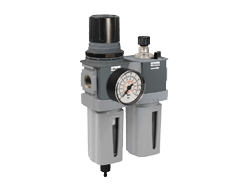
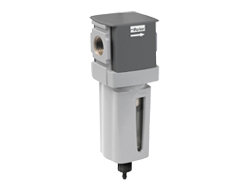
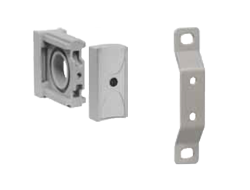
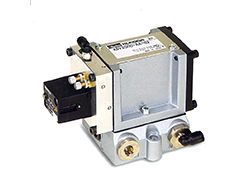
Ordering Maintenance Units for Compressed Air Systems
Maintenance units (often referred to as FRL modules: Filter, Regulator, Lubricator) stabilize and purify compressed air before it reaches pneumatic tools, valves, or measuring devices. A correctly sized maintenance unit prevents wear, malfunctions, and quality losses in manufacturing by removing particles, condensate, and foreign oil, compensating for pressure fluctuations, and – if necessary – specifically introducing lubricant into the system. The selection based on design, connection sizes, filter fineness, regulator precision, lubrication type, and material determines performance and operational stability.
Structure and Functional Principle
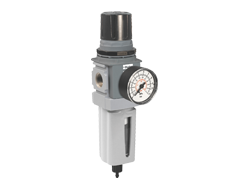
Typical maintenance units consist of three main components: a filter for separating particles and condensate, a manometer-controlled pressure regulator for maintaining constant operating pressure, and a lubricator for dosing lubricant droplets. Filter bodies and bowls are usually made of metal or transparent polycarbonate. Metal bowls are suitable for high temperatures and abrasive media; polycarbonate bowls allow for quick visual inspection of the condensate level but require protection from UV and aggressive chemicals. Many units combine several functions in one housing (combined filter regulators with integrated lubricator), which saves space and reduces pressure losses.
Technical Features to Consider
For industrial applications, the following technical properties are crucial: connection sizes (G, NPT, ISO 7/1), flow rate in l/min or m³/h at specific pressure drop, regulator adjustment range (often 0–16 bar, typical use 0–10 bar), filter fineness in µm (often 5 µm, 1 µm or coalescing for oil mist), operating pressure and temperature ranges, sealing material (NBR, FKM/Viton, EPDM), and type of separation (mechanical, coalescing). For safety-critical or food-grade applications, certifications and documentation for material conformity are relevant.
Materials and Seals
Housings are mostly made of die-cast aluminum or galvanized steel; stainless steel versions are available for aggressive environments or increased explosion protection. Polycarbonate bowls are lightweight, impact-resistant, and offer good visibility; metal bowls protect against mechanical stress and temperature peaks. Seals determine media and temperature resistance: NBR (nitrile rubber) is economical and oil-resistant, FKM/Viton withstands higher temperatures and chemical stress, EPDM is suitable for steam and strong oxidizing agents. Select sealing materials according to the lubricants and cleaning chemicals used.
Connections, Designs, and Mounting
Maintenance units are available as inline modules, base plate, or rail mounting (DIN 24 mm or ISO 15407). Inline modules are suitable for individual line sections, base plates for central distributors. Pay attention to correct connection pictograms for airflow direction and drainage type: manual, semi-automatic, or electrically controlled. For series installations, use modularly combinable systems with uniform mounting holes and quick-coupling variants to reduce service times.
Filter Technology and Filter Elements
Filter elements differ in separation principle and filter fineness. Mechanical filters remove coarse particles, depth and microfilters achieve 1–5 µm. Coalescing filters separate the finest liquid droplets and oil mist down to the range of 0.01–0.1 mg/m³, which can be essential in paint-near production or measuring rooms. Filter elements are replaceable; document change intervals based on pressure loss, operating hours, and determined particle load. In air treatment chains, pre- and post-filters are often combined: coarse filters before coalescing filters extend their lifespan.
Regulator Precision and Response Behavior
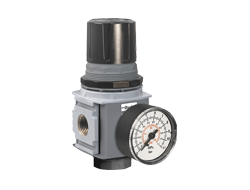
The pressure regulator determines the stability of the compressed air supply. Important values are control accuracy (hysteresis), response time, and maximum leakage. Precise regulators with fine adjustment are required for metrological equipment and sensitive assembly tools; robust regulators with quick adjustment are advantageous in harsh manufacturing environments. Check the integrated manometer or digital pressure displays and the possibility of remote monitoring for central systems.
Lubricator: Lubricants and Dosing
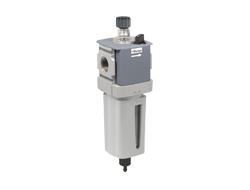
Lubricators introduce lubricant into the compressed air in droplet or aerosolized form. For modern low-maintenance tools, many manufacturers recommend finely regulated aerosol-based lubricators with adjustable droplet count. The use of biodegradable lubricants or synthetic oils can extend service life and minimize residues in end products. Pay attention to compatibility between oil type, seal, and filter material. In sensitive production areas, lubrication can be omitted; instead, maintenance-free, low-maintenance pneumatic accessories are preferable.
Operational and Maintenance Aspects
Regular inspection of condensate drainage, replacement of filter elements, checking seals, and functional control of the regulator are part of the basic maintenance plan. Establish documented intervals based on operating hours and pressure drop measurements. Automatic condensate drains minimize manual intervention; however, they require electrical supply and sensitive adjustment. Store spare filters and seal kits on-site to reduce downtime.
Practical Examples
Example 1 — Precision Screwing Assembly Line: In a line with pneumatic screwdrivers, a maintenance unit with a 5 µm particle filter, a precise regulator (0–10 bar), and a finely dosed lubricator ensures constant torques. Filter elements are visually checked daily; the polycarbonate bowl is equipped with a protective cage.
Example 2 — Paint Booth and Pre-treatment: In the paint station, a coalescing unit with 0.01 mg/m³ separation efficiency is upstream, followed by a drying container and a fine filter. All housings are made of stainless steel, seals of FKM, to ensure solvent resistance. Automatic condensate drains prevent water formation in the system.
Example 3 — Machine Tools and CNC Systems: For CNC machines, compact filter regulators are mounted directly on the machine. A metal bowl protects against chip ingress, an integrated dirt trap extends element change intervals. Electronic pressure monitoring forwards alarms to the machine control.
Further information on technical specifications and components can be found on our technology page: https://maku-industrie.de/technik. Specific application cases and installation examples are documented under https://maku-industrie.de/anwendungsbeispiele.
Selection Criteria in Practice
- Connection diameter: Match to the piping system and desired flow rate; over-dimensioning reduces pressure loss, under-dimensioning creates bottlenecks.
When selecting, compare flow curves and pressure losses of different designs, check filter classes and maintenance effort, as well as the availability of spare parts. Pay attention to modular combination options to allow for later expansions (e.g., additional fine filters or pressure switches) without extensive modifications.
Safety and Norm Aspects
Maintenance units should comply with relevant standards and recommended purity classes. For manufacturing areas with high quality requirements, companies adhere to ISO 8573 purity classes for compressed air. Explosion-proof versions, ATEX-compliant components, and tested material management are mandatory in hazardous zones. Document installation, test protocols, and spare part numbers for quick traceability.
Ordering Information
When ordering, specify the desired connection type (e.g., G1/4, G3/8), preferred bowl material, filter fineness, regulator range, lubricator droplet count, and required certificates. Check availability of package deals (filter regulator + oil), spare filter kits, and optional automatic separators for condensate drainage. Use modular systems if you prioritize scalability and easy maintenance.
Conclusion
Maintenance units are central components for reliable compressed air supply. Correct material selection, filter class, regulator precision, and maintenance concept reduce downtime, improve product quality, and extend tool life. Plan installation, monitoring, and spare parts management as part of your maintenance concept.
FAQs
1. How often do filter elements need to be changed?
Change intervals depend on operating hours, measured pressure loss, and environmental conditions; typical intervals are between 3 and 12 months. Shorter intervals are necessary in dusty or oily environments. Rely on measured values and visual inspection instead of blanket time specifications.
2. When is a coalescing filter necessary?
Coalescing filters are required when the finest oil droplets or aerosols impair process quality, e.g., in painting processes, measuring rooms, or with pneumatic measuring devices. They remove oil mist and fine particles down to the submicron range and protect downstream components.
3. Which seal for aggressive media?
For oils and higher temperatures, FKM/Viton is recommended. For steam or strong oxidizers, EPDM is more suitable. NBR is standard for general, oil-based applications. Always match the selection to the chemical resistance of the medium used and the temperature range.