
Buy low-priced high quality Tees online

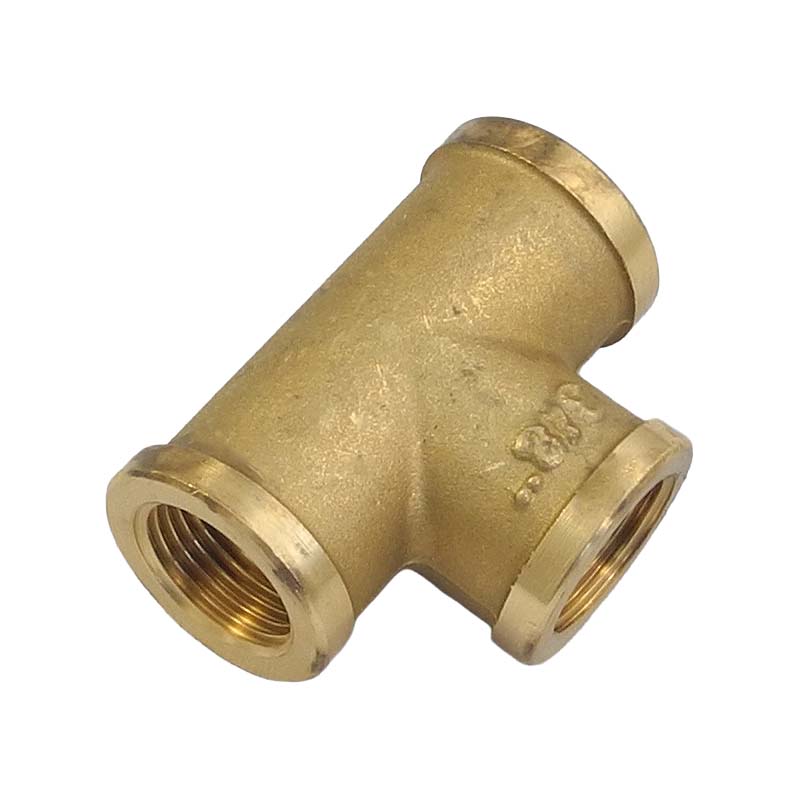


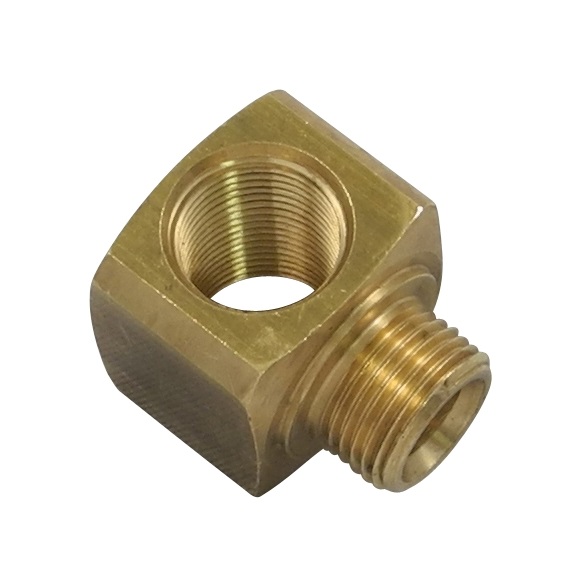

Technical Overview of T-Pieces: Design, Materials, Applications
T-pieces are central components in pipe and hose systems for dividing or combining media flows. Typical applications are found in pneumatics, hydraulics, cooling and supply lines, and industrial automation systems. Material, sealing type, connection variants, and mechanical design are crucial for selection and function. On this page, you will find precise information on designs, materials, and application scenarios for T-pieces, enabling you to quickly select or order the appropriate part.
Materials and Surfaces: Brass, Nickel-Plated Brass, Stainless Steel, Anodized Aluminum
Brass offers good machinability, corrosion resistance, and electrical conductivity, and is cost-effective for many standard applications. Nickel-plated brass enhances brass with an additional, more chemically resistant surface that reduces abrasion and provides improved corrosion protection in more aggressive environments. Stainless steel (typically AISI 1.4301/1.4401) is the choice for high chemical resistance, cleanability, and temperature stability, especially in the food and pharmaceutical industries and corrosive environments. Anodized aluminum reduces weight and offers good corrosion resistance with lower strength than stainless steel; ideal for movable mounting structures or systems with weight restrictions.
Designs and Outlets: Screwed, Threaded, Push-in/Quick Connect
T-pieces are available as fixed, screwed, and push-in versions. Screwed T-pieces with conical or flat seals are suitable for high pressures and permanent connections. Threaded connections (metric, BSPP/BSPT, NPT) allow standardized integration into pipe systems. Push-in or quick-connect T-pieces reduce assembly time, are service-friendly, and are particularly suitable for frequent disassembly. When selecting, consider: thread sealant (PTFE tape, sealing paste), seal type (O-rings, flat seals), and the pressure/temperature ratings of the connection.
Seals and Sealing Principles
Seals influence leak rates, repeatability, and maintenance effort. For T-pieces, elastomer O-rings (NBR, EPDM, FKM), PTFE flat seals, and metallic seals are suitable. NBR is suitable for oil and air applications up to approx. 80 °C, EPDM for water and steam environments as well as higher chemical resistance, FKM (Viton) for high-temperature and aggressive media. PTFE is suitable when chemical resistance and low friction are required. Metallic seals or form-fitting cones are used at high pressures and temperatures. Check the compatibility of the sealant and medium, especially with oxygen, fuels, and solvents.
Dimensioning: Flow Resistance, Pressure Loss, Diameter
The cross-sectional geometry of the T-piece influences pressure loss and flow profiles. For laminar to moderate turbulent flows, smooth internal surfaces and stepped transitions minimize pressure losses. For gaseous media, pressure loss as a function of cross-section is often higher than for liquids; consider the Reynolds number in your design. Avoid unnecessary reductions; if necessary, manufacturers' value tables provide specific flow coefficients. For multi-branch distributions, you should choose the diameter of the main line so that the permissible pressure difference is not exceeded at the planned flow rate.
Connection Technology and Installation Instructions
Ease of installation determines time and cost in many systems. Screw connections require the correct torque value; over- or under-tightening leads to leaks or damaged threads. For push-in systems, ensure that the hose inner diameter, pull-out force, and medium are compatible. For safety-relevant applications, the use of securing elements (lock nuts, circlips) is recommended. All T-pieces should be checked for leaks before commissioning; a pressure test at 1.5 times the operating pressure is recommended, unless otherwise specified.
Fields of Application and Practical Examples
Practical example 1: Pneumatic control cabinets in a production line require compact, repeatedly detachable branches. Here, T-pieces made of nickel-plated brass with quick-connect fittings are used to quickly disconnect station-specific supply lines during maintenance without having to reroute lines. Installation: Main line DN8 remains identical, two DN6 branches for supplying cylinders. Use of NBR O-rings for compressed air up to 8 bar.
Practical example 2: The cooling circuit of a processing machine uses stainless steel T-pieces with flange threads to divide a water circuit. Reasons for use: corrosive media due to cooling emulsion, cleaning with chemicals, regular temperature cycles. Installation note: Thread sealing with PTFE tape, check sealing surface, use sealant only after compatibility check.
Practical example 3: Lightweight assembly in an automation robot frame uses anodized aluminum T-pieces to integrate pneumatic lines into movable joints. Advantage: significantly lower weight with sufficient strength for max. 6 bar operating pressure. Sealing solution: special FKM O-rings for slightly elevated operating temperatures.
Specifications and Selection Criteria
Select a T-piece based on the following prioritized criteria:
- Pressure and temperature range of the medium
- Corrosion resistance of the material to the medium
- Connection type (threaded, screwed, push-in system) and standard
- Seal type and interchangeability during maintenance
- Mechanical loads (vibration, tensile forces, oscillating work)
For detailed technical data sheets and dimension tables, visit our technical page: https://maku-industrie.de/technik. For realized installation examples, go to https://maku-industrie.de/anwendungsbeispiele.
Quality Assurance and Standards
In industrial applications, conformity to standards and material certificates are relevant. Pay attention to documents such as material certificates (EN 10204), thread standards (ISO, DIN, BSP), and, if applicable, food or drinking water approvals (KTW, WRAS) for parts in contact with media. Series deliveries should include batch traceability and test protocols. For critical applications, we recommend preliminary testing under real operating conditions and consultation with technical advice regarding the appropriate tolerance and strength class.
Maintenance, Testing, and Replacement Intervals
Maintenance intervals depend on load, medium, and environment. Visual inspection for corrosion, cracks, and leaks at least during every system maintenance. Replace seals at visible signs of aging; elastomeric seals typically every 1–3 years depending on temperature cycles and medium. In case of demonstrable erosion or notching in the interior, replacement of the T-piece is recommended. Perform pressure and leak tests after repair.
Procurement and Delivery Information
When purchasing, pay attention to supplier documentation regarding material, surface treatment, and approvals, as well as delivery tolerances for custom-made products. Standard sizes are available at short notice; special designs (customer-specific threads, special stainless steel alloys, special sealing concepts) require longer delivery times. Use the product filters in our shop to select by material and connection type: https://maku-industrie.de/shop/de/rectus/armaturen/t-stuecke/
FAQs
1. Which material is best suited for my application?
For general compressed air and water applications, brass is economical; for increased chemical or thermal requirements, stainless steel variants are recommended; for weight restrictions, anodized aluminum is suitable. The choice primarily depends on the medium, temperature, and mechanical load.
2. How do I choose the right connection type (threaded vs. push-in connection)?
Threaded connections offer higher tightness and strength for permanent installations; push-in connections allow quick assembly and disassembly with a lower overall height. Crucial factors are maintenance cycles, required assembly speed, and permissible operating pressure.
3. Which seal types are available for T-pieces and how do I decide?
NBR is standard for oil and air up to moderate temperatures, EPDM for water and high chemical resistance, FKM for high temperatures and aggressive media, PTFE for maximum chemical resistance. Choose based on medium compatibility, temperature range, and required replacement frequency.