
Air tools for metal processing by Mannesmann Demag
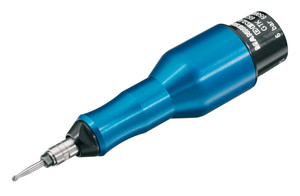
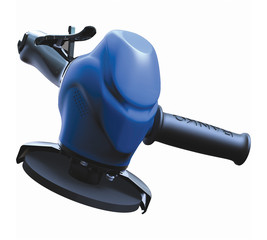
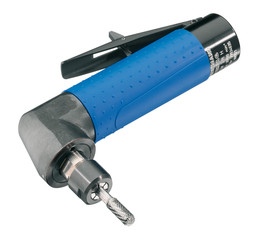
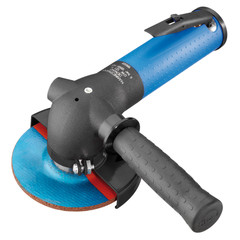
MANNESMANN DEMAG air tools are in accordance with the industrial needs since many years. They offer a maximum of reliability and power:
• Precise work under loaded conditions
• The corresponding air tool for every application
• Safety lever(H-models) according to EN 792
• Alternative air tools with turning valves (D-models)
• Cold insulating hand grip
• Exhaust air to rear through a hose unit with integrated noise reduction
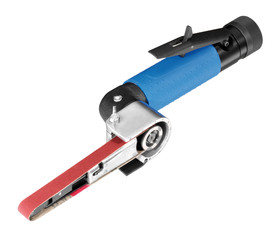
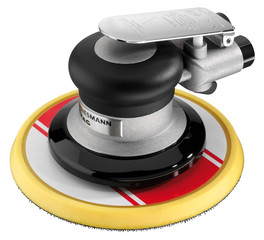
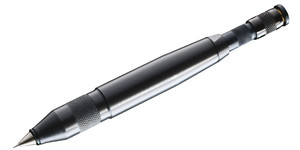
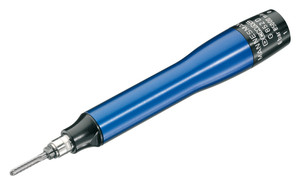
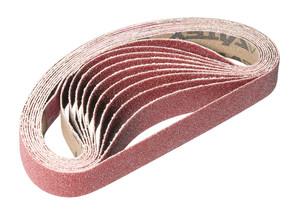
Abrasive Tools for Metalworking from Mannesmann Demag — Selection, Application, and Performance
Abrasive tools from Mannesmann Demag cover the spectrum of precise metalworking: from cutting discs and grinding wheels to flap discs and lamellar grinders, as well as mounted points and felt bobs for fine finishing. Key factors in selection are grit type, bond, grit size, hardness, and geometry. These parameters determine material removal, surface roughness, heat generation, and tool life. On this page, you will find well-founded technical information on the correct combination of tool and application, notes on machine interfaces, and concrete practical scenarios for reproducible results.
Materials, Grit Types, and Bonds — Fundamental Building Blocks of Performance
In metalworking, requirements vary significantly depending on the material. Aluminum oxide (A/O) is suitable for high-alloy and unalloyed steels, offering good cutting behavior and tool life. Ceramic abrasive grain (e.g., sintered ceramic minerals) provides higher cutting action with finer grit and is suitable for difficult-to-machine steels and applications with high thermal loads. Silicon carbide is primarily used for cast iron, stainless steels, and non-ferrous metals. Bonds such as Resinoid (synthetic resins) combine toughness and elasticity and are suitable for cutting and workpiece grinding; Vitrified bonds (glass-like bonds) offer precise form stability and high grinding forces for profile grinding and reprofiling.
Grit Size, Hardness, and Shape — Influence on Surface and Dimensional Accuracy
The choice of grit size controls surface roughness and material removal: Coarse grits (e.g., 24–60) for roughing and shaping, medium grits (80–120) for pre-grinding, fine grits (180–400) for fine grinding and polishing. The hardness of the grinding wheel influences how quickly abrasion weakens the bond; harder bonds hold the grit longer but result in higher heat generation if cooling is inadequate. Shape variations such as flat grinding wheels, flap discs with stepped lamellae, or mounted points determine accessibility and contour accuracy. Pay attention to the correct nominal dimensions: Diameter, bore diameter, thickness, shank diameter, and max. RPM are mandatory specifications for every grinding wheel.
Connection, Machine Compatibility, and Safety
Abrasive tools must match the machine. Check flange diameter, flange flatness, bolt pattern, keyway and clamping system, and possible reducing bushes. Shanks for mounted points require exact shank tolerances (e.g., h6) and correct clamping devices. Maximum speeds must not be exceeded; always select the wheel so that the machine's nominal RPM is below the wheel's limit RPM. Dynamic balancing reduces running noise and vibrations, increasing tool life and precision. Use protective hoods, covers, and personal protective equipment according to the operating instructions. For high-speed grinding, coolants and suitable sealing measures against foreign bodies and heat are important to prevent thermal damage to the workpiece.
Thermals, Coolants, and Surface Quality
Heat is the primary influencing factor for dimensional changes and edge zone damage. For stainless steels and hardened materials, controlled cooling lubrication is necessary to prevent hardening, discoloration, or cracks. Dry machining is suitable for abrasive cutting processes with very sharp grit and an open-pore bond; liquid cooling increases material removal and prevents smearing with aluminum alloys. Select the cooling system, nozzle geometry, and flow rate so that chips are quickly removed and the grinding zone is kept at a constant temperature. This reduces rework and increases process stability.
Application Areas and Specific Use Scenarios
Abrasive tools from Mannesmann Demag are used in series production as well as in maintenance. Practical example 1: In a production line for machining shafts, pre-forming is done with a coarse cutting disc (A/O 36), followed by a flap disc (A/O 80) for deburring and a felt disc with polishing paste to achieve a surface roughness Ra ≤ 0.8 µm; cooling nozzles are set to 10–15 l/min, and flange thickness is optimized to prevent deformation. Practical example 2: In weld seam processing on stainless steel assemblies, a ceramic lamellar disc with grit 60 is first used to remove penetration zones, then a 120-grit ceramic flap disc for fine grinding to ensure corrosion resistance; the tool is mounted on an angle grinder with a standardized 22.23 mm shank. Practical example 3: For regrinding hardened tools, vitrified grinding wheels with the finest grit and a defined profile cutting edge are used; the machine runs in the range of 50–70% of the maximum wheel RPM, and the grinding wheel is periodically dressed with a diamond-tipped reprofiling tool.
Material Recommendations
Select abrasive tools suitable for the material according to the following guidelines:
- Unalloyed and alloyed steels: Aluminum oxide or ceramic; Resinoid or Vitrified depending on form stability.
For cast iron, stainless steels, and non-ferrous metals, use silicon carbide-containing or special ceramic products. For particularly hard or wear-resistant coatings (e.g., PVD, CVD), diamond-based tools or CBN-bonded wheels are the first choice. Consider the interaction between grit and coating to avoid increasing toughness or crack susceptibility.
Shapes, Tolerances, and Balancing
Profiled grinding wheels serve dimensional accuracy. Use stable flanges and adjusting rings to ensure concentricity. Tolerances on workpiece geometry are only as good as the entire chain of machine, tool, clamping device, and process parameters. Dynamic balancing (G2.5 or better) minimizes vibrations and allows higher feed rates without loss of quality.
Maintenance, Dressing, and Tool Life Management
Scheduled dressing ensures constant cutting properties. Select diamond-tipped dressing tools suitable for the bond type; for vitrified wheels, sharp dressing is necessary to maintain form stability. Document tool lives in production databases and compare parameters such as cutting speed, feed rate, and cooling pressure to optimize tool costs per component. Spare parts, flanges, and adapters should be stored close to production to keep setup times short.
Quality Assurance and Measurement
Control roughness, runout, dimensional accuracy, and thermal changes through regular measurement cycles. Surface measuring devices, runout testers, and hardness measurements provide information about process variations. Use statistical process control (SPC) to detect deviations early and plan tool changes or rework specifically.
Further Information and Application Examples
Technical details on machine interfaces, material data, and overall processes can be found on our technology page https://maku-industrie.de/technik. For concrete practical cases and documented manufacturing processes, we refer to our application examples: https://maku-industrie.de/anwendungsbeispiele. There you will find process descriptions with parameters that have proven successful in series production.
FAQ
1. Which grinding wheel to choose for stainless steel (V2A) in weld seam processing?
For weld seam processing on stainless steel, a ceramic or specially formulated aluminum oxide grinding wheel with medium grit (60–120) is recommended. Use coolant to avoid thermal discoloration and a sufficiently rigid clamping and flange solution to prevent deformation.
2. How often do I need to dress a grinding wheel and how do I recognize it?
Dressing intervals depend on the material, feed rate, and load. Signs of wear include increased power consumption, poorer surface quality, clogging of pores, or increased cutting heat. Perform dressing as soon as these values are exceeded or after defined shift quantities according to the production plan.
3. When are diamond- or CBN-bonded tools necessary?
Diamond- and CBN-bonded tools are necessary for very hard, wear-resistant materials, hardened tools, or for machining ceramic coatings. Choose CBN for steel and diamond for non-metallic, glass-like, or carbon-containing workpieces. Pay attention to suitable bonding and slow start-up speeds to avoid thermal damage.