
High quality bits and power drives
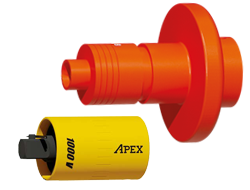
Apex Bits and Power Drives are made from tool steel and receive a special heat treatment that eliminates typical problems such as chipping and premature wear. The service life of the apex bits is therefore considerably longer than that of ordinary chrome vanadium bits.

Bits — Precision Inserts for Industrial Screw Connections
Bits are standardized, interchangeable tool tips for frictionally transmitting torque between a screwdriver holder and a screw. In industrial manufacturing, maintenance, and mobile service, their quality, geometry, and surface coating influence the lifespan of the connection, the repeatability of tightening, and the failure rate due to cam-out or material wear. This text explains materials, designs, dimensional standards, holders, coatings, application limits, as well as concrete practical examples for the selection and correct use of bits.
Materials and Hardness Requirements
For bits, high-alloy tool steels (e.g., S2, 6150, 1.2379/HS6-5-2), powder metallurgical steels, and carbide for extremely abrasive applications dominate. Standard S2 bits are characterized by a balanced combination of toughness and wear resistance and are suitable for the majority of mechanical screwing processes. For high torsion, many cycles, or powerful cordless/torque machines, powder metallurgical variants or steels with controlled alloy composition are advantageous. Carbide tips are used for cutting or extremely abrasive screwing tasks where steel fails too quickly.
Dimensions, Fit Accuracy, and ISO Standards
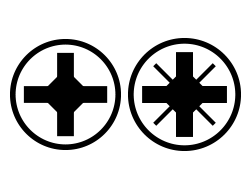
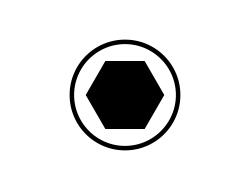
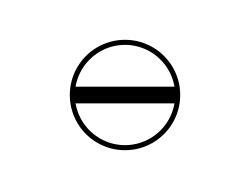
Bits are standardized according to ISO/DIN; the decisive parameters are profile geometry, tolerances, and fit to the screw head. Torx, Phillips, Pozidriv, slotted, and hex profiles follow precisely defined dimensional tables to ensure repeatability and minimal play. A non-standard bit leads to increased wear, runout problems, and screw head damage. For critical applications, bits with precision-ground profiles are to be preferred because they transmit torque evenly and reduce the risk of cam-out.
Designs and Drive Variants
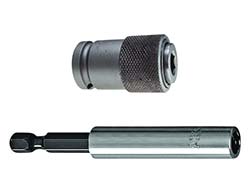
Bits differ in length, shank shape, and drive end. Short bits (10–25 mm) are suitable for confined spaces, long bits (≥50 mm) for deep holes or hard-to-reach screws. Shanks exist round, hexagonal (typically 1/4" 6.35 mm), or with special locking mechanisms (e.g., 1/4" quick-release). For automatic screwing systems, bits with ceramic or metallic stoppers for length fixation are used.
- Common drive types: Torx, Allen/Hex, Phillips, Pozidriv, Slotted, Tri-Wing, PZ, RIBE, HEX-Plus.
The connection to the screwdriver holder is made via 1/4" hex, 3/8" or 1/2" drives, SDS-adapted adapters, or custom quick-release systems. Magnetic holders facilitate handling; for automatic screwdrivers, bits with cylindrical or cylindrical-conical heads without magnetic function are common, so that automation systems can grip precisely.
Surfaces, Coatings, and Wear Protection
Coatings extend lifespan and improve friction behavior. Black oxide reduces corrosion, DLC (Diamond-Like Carbon) reduces friction at high torques, TiN/TiAlN increase hardness and temperature resistance. For corrosive environments and the food industry, corrosion-resistant versions or special stainless steel bits should be chosen. The layer thickness, adhesion, and freedom from microcracks are crucial for performance; cheap PVD coatings without appropriate heat treatment quickly lead to chipping and thus to damaged screw connections.
Seals, Sealing, and Bit Design for Sealing Screws
For screw connections with sealing elements (e.g., oil or water tightness), bit selection and tightening strategy influence the sealing result. Precise bit tips prevent overtightening and protect sealing surfaces. In applications with soft seals, bits with a defined stop are useful; for elastic seals, the use of torque tools in combination with bits that fit positively and do not transfer sharp edges to the screw head is recommended.
Maintenance, Marking, and Storage
Used bits should be regularly checked for profile wear; visible rounding or burrs are criteria for replacement to avoid screw head damage. Color coding or laser engraving allows for quick identification of bit size and profile in storage or on the production line. Storage in organized inserts reduces the likelihood of accidentally using damaged bits.
Connection to Screwing Systems, Measurement, and Process Control
In automated manufacturing cells, torque feedback and cam-out detection are essential. Bits with integrated markers for optical or magnetic inspection facilitate changeovers and quality controls. For process reliability, precise bits are combined with torque tools, data loggers, and control algorithms to monitor defined tightening torque, direction of rotation, and number of cycles.
Practical Examples — Structured Application Scenarios
Example 1: Assembly of an Electric Motor Housing
For screwing sheet metal and threaded bushings in an electric motor housing, assemblers use Torx-shaped, precision-ground S2 bits, 25 mm long, with PVD coating. The bits fit positively into the screw heads, ensuring even transmission of the set tightening torque. The combination of bit and controlled screwdriver prevents overtightening and protects the laminated sheet metal packages from press-fit damage.
Example 2: Series Screwing in a Gearbox Assembly Line
In a fully automatic line, 50 mm long, powder metallurgical bits with hardened shanks and 1/4" quick-release holders are used. An optical inspection system monitors bit condition and fit. A wear warning is transmitted to the maintenance control after a defined number of cycles. In case of increased wear, bits are automatically changed to avoid rejects due to damaged screw heads.
Example 3: Maintenance of Pipeline Flanges Outdoors
For corrosion protection and weather resistance, maintenance uses stainless steel bits with a black oxide finish and a longer design. Hand screwdrivers with torque-limiting clutches prevent excessive pressure on sealing sets. The bits are checked for profile wear after each use and replaced at the first sign of runout.
Selection Criteria for Purchasing
Select bits based on the following characteristics: drive type and exact standard, material and hardness, length requirement, coating for friction and corrosion, holder compatibility, and inspection/marking options for automated processes. Investments in higher-quality bits pay off in reduced failure rates, less rework, and consistent process quality.
Further Information and Application Examples
Detailed technical data sheets, material tables, and practical guides can be found on our technology page: https://maku-industrie.de/technik. Concrete application cases and practical solutions are documented at https://maku-industrie.de/anwendungsbeispiele.
FAQs
1. How do I know when a bit needs to be replaced?
A bit should be replaced as soon as the profile shows visible rounding, burrs, or material breakouts, or if the runout in the screw head is no longer positive; also, in case of increased cam-out or when the specified number of cycles according to the manufacturer's instructions has been reached.
2. Which bit material is suitable for high tightening torques and many cycles?
For high torques and series applications, powder metallurgical steels or high-alloy S2 tools with specified heat treatment are to be preferred; for extreme stress, carbide tips are used. Coatings such as TiAlN improve temperature resistance and wear behavior.
3. What role does bit length play in process quality?
Bit length determines accessibility and leverage ratios. Short bits minimize bending and play; long bits are necessary for deep screw connections but increase the risk of lateral stress and should only be chosen with appropriate stiffness and combined with guiding measures.