
Order collets for grinding spindles now
Grinding spindles by Mannesmann Demag for CNC machines.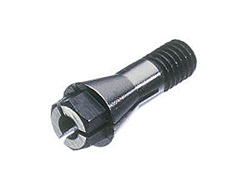
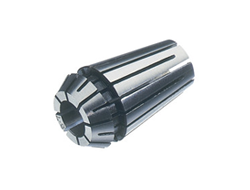
Order Collets for Grinding Spindles Now
Collets for grinding spindles are precision-engineered connecting elements that secure tools, grinding wheels, or inserts with minimal runout and maximum holding force. For industrial grinding applications, M5, ER11, and ER16 collets are widely used, as they offer an optimal balance of clamping range, force, and through-hole capacity. Critical factors include material selection, manufacturing tolerances, balancing properties, and compatibility with the respective spindle taper. This text provides technical information on the selection, installation, application, and maintenance of collets, along with concrete practical examples and links to supplementary technical information.
Construction and Materials
Collets are predominantly made from hardened tool steel or alloy steels with precise internal and external machining. Materials such as 1.2842/42CrMo4 or hardened spring steels ensure lasting elasticity and wear resistance. For corrosive environments and wet grinding processes, coated or stainless variants (e.g., 1.4301/1.4404) are used. The surface roundness and smoothness of the collet's internal contour influence the coefficient of friction and tool life; polished internal surfaces reduce wear on shafts and tools.
Shapes, Dimensions, and Tolerances
ER11 and ER16 collets follow internationally defined standards for clamping range and taper surface. The clamping jaws are designed to vary the clamping range in small increments to securely grip tools of different shank diameters. M5 collets are often intended for very small tool holders or special solutions with fine shank dimensions. Essential are tolerances for runout (usually < 0.01 mm), coaxiality, and conical seat. Always check the tolerance class when replacing, as deviations can lead to increased runout and premature wear.
Clamping Range and Clamping Force
A collet must securely fix the shank without material deformation. ER11 variants typically cover shank diameters from approx. 0.5 to 7 mm, ER16 up to approx. 1 to 10 mm, while M5 specifies smaller diameters in the non-standard range. The clamping force results from the preload of the collet nut, the friction between the shank and the collet, and the contact area. Strong clamping force is required for high-speed grinding and axial loads; however, the machining quality must not suffer due to shank deformation. Therefore, correct tightening torque and the use of suitable collet nuts are essential.
Compatibility with Grinding Spindles
The spindle interface is critical: the thread, taper shape, and internal taper of the collet must match the spindle receptacle. Many grinding spindles use universal ER receptacles, but some special spindles require adapter- or custom-specific collets. Before ordering, check the spindle's data sheet or measure the reference machine. Balancing rings, spacer sleeves, and adapters influence overall balancing; for high-speed spindles, dynamic balancing up to 25,000 rpm is often required.
Seals, Shields, and Cooling
For wet grinding, seals on the collet holder are necessary to keep lubricants and coolants away from bearing and drive components. Elastomeric seals and labyrinth seals minimize the ingress of abrasive particles. For abrasive media, additional protective sleeves and corrosion-resistant materials are recommended. Cooling channels are usually placed at the tool edge of the workpiece; collets with optimized geometry prevent splash water transport towards the spindle bearings.
Balancing, Runout, and Measurement Methods
Runout measurements with dial indicators and dynamic balancing tests are mandatory for precision grinding processes. A runout error of 0.01 mm can significantly impair surface quality and tool life. For reproducible results, carefully clean and correctly assemble collets, nuts, and tools before measurement. For high speeds, balanced system components (collet+tool+nut) with G15/G6.3 specification are recommended.
Assembly, Tightening Torques, and Inspection Routines
Assembly errors are the most common source of faults: dirt, incorrectly seated collet nut, or under/over-tightened torques lead to increased runout or tool loss. Use a torque wrench and observe the manufacturer's specifications for the collet nut. Regular visual inspection for grooves, metal abrasion, and spring action, as well as periodic replacement after defined operating hours, increase process reliability. In inspection routines, tightening torque, runout, and system temperature should be documented.
Application Areas and Process Integration
Collets are used in precision grinding, tool grinding, cylindrical grinding, surface grinding with specific holding requirements, and in integrated machine construction. The selection depends on shank diameter, speed, axial and radial load, and coolant environment. For automated loading systems, quick-change collet nuts and specified access to cleaning surfaces are relevant. Collets can be used in robot cells as simple passive holding devices or in servo-driven grippers with a defined tolerance zone.
Practical Examples
Example 1 — Tool grinding of a carbide end mill with ER11: A carbide end mill Ø3 mm is clamped in a spindle with an ER11 collet. After cleaning the collet, the shank is inserted, the collet nut is tightened with the specified torque, and runout is checked with a dial indicator. A corrosion-protected variant is used during wet grinding. Result: Runout ≤0.01 mm, constant cutting edge geometry, and reproducible surface roughness.
Example 2 — High-speed cylindrical grinding with ER16: In an application at 20,000 rpm, an ER16 collet with a high-hardness coating is used. The system (collet+nut+tool) is dynamically balanced. Sealing sleeves prevent coolant penetration. Correct balancing reduces vibrations, increases grinding wheel life, and maintains dimensional accuracy.
Example 3 — Fine machining of small bores with M5 collets: M5 collets are used in a machine for internal machining where the smallest shank diameters must be held precisely. Special spring-loaded variants compensate for small diameter tolerances and reduce chatter marks. Replacement intervals are short and are stored in maintenance plans to avoid process failures.
Selection Criteria for Purchase
Crucial factors are clamping range, material, surface coating, runout accuracy, compatibility with your spindle receptacle, and availability of spare parts and accessories such as collet nuts and balancing rings. Pay attention to manufacturer specifications regarding permissible speed, recommended cleaning intervals, and warranty conditions. For further technical details and machine-specific adaptations, visit our technical pages at https://maku-industrie.de/technik or view real-world applications at https://maku-industrie.de/anwendungsbeispiele.
- Types: M5, ER11, ER16; Material: hardened tool steel/stainless; Use: wet/dry grinding; Test parameters: runout ≤0.01 mm; Maintenance: cleaning, replacement after wear
Maintenance, Replacement, and Storage
Clean, deburr, and store free of coolant. Do not overload collets or use them as workpiece lifters. Replace if visible grooves, edge abrasion, or loss of spring force occur. Store dry, at controlled temperature, and in inserts to prevent impact damage, which reduces distortion. Document life cycles in maintenance plans and perform random runout measurements.
Procurement and Spare Parts Management
For industrial manufacturing, stocking based on consumption statistics is recommended, especially for M5 variants, which wear quickly. Keep compatible collet nuts and balancing rings in stock. For special receptacles or adapter solutions, check mixed orders and OEM part numbers to avoid delays. Order directly from our grinding technology shop at https://maku-industrie.de/shop/de/kategorien/schleiftechnik/schleifspindeln/spannzangen/ to check availability and delivery times.
Sustainability and Life Cycle Assessment
Longer service life through correct selection reduces material consumption. Repair and coating options can improve CO₂ and resource balance. Recyclable materials and take-back programs for worn collets reduce disposal costs and align with industrial sustainability goals.
FAQ
1. Which collet is suitable for my grinding spindle?
Check shank diameter, spindle receptacle (thread/taper), permissible speed, and type of use (wet/dry). ER11 covers small to medium shanks, ER16 larger and more stable applications, M5 is intended for very small special diameters. If unsure, measure the dimensions of the spindle receptacle or consult the machine manufacturer's technical documents.
2. How do I measure runout and what tolerance is acceptable?
Measure runout with a dial indicator on the assembled collet including the tool. The industrial standard for precision grinding is ≤0.01 mm. Values above this cause surface defects and premature tool wear; measure before each critical series and retighten after assembly.
3. How often must a collet be replaced?
Replacement intervals depend on load, speed, abrasiveness of the application, and maintenance. Implement condition-based intervals: visual inspection, spring force test, runout measurement. Replace if visible signs of wear, loss of spring force, or exceeding the permissible runout occur.