
Light, handy angle grinders from Mannesmann Demag for comfortable work
Angle grinders with different speeds and angle heads enable precise grinding work.


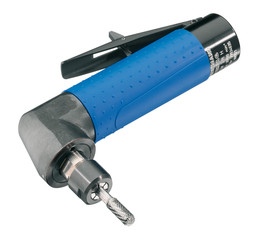

Angle grinder GW 218 HV
Price on request
Lightweight, Handy Angle Grinders from Mannesmann Demag for Comfortable Work
Power density, ergonomics, and safety are the core requirements for angle grinders in industrial work environments. The lightweight models from Mannesmann Demag combine low intrinsic weight with high speed stability, precise bearing play control, and robust protective housings. This makes them suitable for both light assembly areas and series processing on production lines where quick setup times and reproducible cutting or grinding results are crucial.
Core Components and Designs
In handy angle grinders, compact motors with high specific power and short gear housings dominate, reducing the attack surface for operators and facilitating handling in confined spaces. Typical housing materials include fiberglass-reinforced plastics or die-cast aluminum, which keeps the device resistant to drops and impacts while maintaining a low weight. The all-metal planetary gears are designed for continuous power transmission; the bearing paths often use high-quality tapered or angular contact ball bearings with hardened shafts to safely absorb axial and radial loads at high speeds.
Protective hoods and covers are often made of steel sheet with a corrosion-resistant coating and are designed to direct sparks in a defined direction. Bolted hoods allow for quick changing and cleaning, while additional quick-adjustment slides enable tool-free positioning. Operating handles are usually equipped with non-slip TPE or rubber coatings and offer an ergonomic shape that reduces vibrations and minimizes fatigue during multi-shift operation.
Drives, Connection Types, and Control Options
Powerful DC and AC motors are used equally; for mains-powered devices, 230 V/50–60 Hz connections are standard, while 400 V versions are also available in manufacturing cells with central energy supply. Many models feature soft-start electronics to limit inrush currents and prevent jerky motor failures upon disc contact. Electronic speed control via potentiometer or electronic circuit allows for adjusting the speed to the material and application, increasing the lifespan of the grinding discs. For automatic processes, compatible IP67-rated connectors are available, allowing for easy integration into production lines.
Grinding Discs, Mounting, and Compatibility
Important for industrial applications is the selection of the appropriate disc type: flat cutting discs are suitable for cuts in steel and stainless steel, flap discs for contour grinding and surface removal, and lamellar grinding discs for deburring and finishing. The spindle mount is usually M14 or 5/8"-11; Mannesmann Demag offers adapter rings and clamping flanges that allow for quick conversion. Balanced and approved grinding discs must be selected for the respective device's maximum speed range to avoid vibrations and hazards. For applications on stainless steels, abrasive-free, temperature-stable materials are recommended to prevent discoloration.
Seals, Maintenance, and Lifespan
For industrial use, dust-tight housings and labyrinthine shaft seals are important to minimize the ingress of grinding dust into the gearbox. NBR or FKM O-rings are used at critical points to prevent oil and grease loss. Regular maintenance includes lubricant changes in the gearboxes, inspection of carbon brushes in brushed motors, and replacement of worn bearings. A documented maintenance strategy extends the lifespan and ensures constant performance parameters, especially during continuous 8–24 hour use in shift operations.
Safety Features
Industrial devices have enhanced protective functions: restart protection after power interruption, soft start, motor temperature monitoring, and mechanical pawls on the protective hood. Additional functions such as a kickback brake (short-circuit brake) stop the disc within fractions of a second in case of blockage. For working on conductive materials, ISO-compliant protective measures and insulated handles are preferred. Personal protective equipment remains mandatory: safety glasses, hearing protection, gloves, and, in case of sparks, appropriate clothing.
Application Areas and Material Recommendations
Lightweight angle grinders are universally applicable: cutting metal profiles, chamfering welds, deburring castings, and finishing work on sheet metal. For steel construction and mechanical engineering applications, hard, high-grit cutting discs or diamond-coated cutting discs should be chosen. For stainless steel, the use of non-contaminating abrasives and grinding discs with heat-resistant bonds is recommended to avoid oxidation edges. When grinding aluminum, softer bonds and special abrasive types are useful, as aluminum clogs quickly; here, an open grain structure facilitates removal and prevents melting.
Practical Examples
Example 1: In a production line for manufacturing metal frames, lightweight angle grinders with electronic speed control are used to deburr welds before painting. Employees use a 115 mm angle grinder with a P60 flap disc for controlled material removal; thanks to the flattened gear shape, even inner edges in frame profiles can be reached. Regular inspection of bearings and replacement of worn discs every 100 operating hours minimizes rework.
Example 2: In small parts manufacturing, cutting discs on 125 mm angle grinders are used to cut threaded bolts and overhangs. The devices are equipped with a quick-release nut and integrated restart protection. By using M14 adapter rings, switching between cutting and flap discs is possible within 60 seconds, significantly reducing cycle time. A suction connection to the extraction system via a specially mounted hood reduces fine dust and improves component quality.
Example 3: In the maintenance of a machine park, handy angle grinders are used to prepare rusty surfaces before post-processing. In this case, lamellar grinding discs with corundum grit and open bonding are the first choice. Short operating times and low vibration levels reduce stress for technicians and enable more precise rework.
Integration into Manufacturing Processes and Accessories
Angle grinders can be integrated into processing stations: holders with quick-change adapters, swivel arms, or manual clamping devices enable repeatable positioning. For automated cutting tasks, a combination with position sensors and speed monitoring is suitable, which detects malfunctions early and prevents machine downtime. Accessories such as suction hoods, dust bag adapters, replacement brushes, sealing kits, and reinforced protective hoods are available in the range. More on technical components and useful accessories can be found at Technik and specific application cases at Anwendungsbeispiele.
Selection Criteria for Purchase
When selecting a suitable angle grinder, check power (watts), no-load speed, disc diameter, and weight in relation to the planned operating time. Pay attention to available safety certificates (CE, EN 60745) and scope of delivery such as additional handles, wrenches, or protective hoods. For recurring, demanding applications, devices with better cooling, more robust gearboxes, and longer warranty coverage are more economical, as downtime and spare parts costs are reduced. The coordination of disc type, speed range, and material hardness is crucial.
Frequently Asked Questions (FAQs)
- Which disc size is suitable for lightweight angle grinders? For handy devices, 115 mm and 125 mm are most common; they offer a good balance of handiness and cutting performance. 230 mm devices provide greater cutting depth but are heavier and less suitable for confined spaces.
- How often should carbon brushes and bearings be checked? In shift operation, a visual inspection of the carbon brushes is recommended every 100 operating hours, and a bearing inspection including lubrication at least every 6 months or after 500 operating hours; in case of increased dust exposure, the intervals are shortened.
- What protective measures should be observed for stainless steel? Use non-contaminating abrasives, temperature-stable bonds, and suitable grit sizes to avoid thermal discoloration. Additional cooling or breaks reduce local heating and improve the surface finish.