
Buy female x female sockets made of brass or stainless steel online


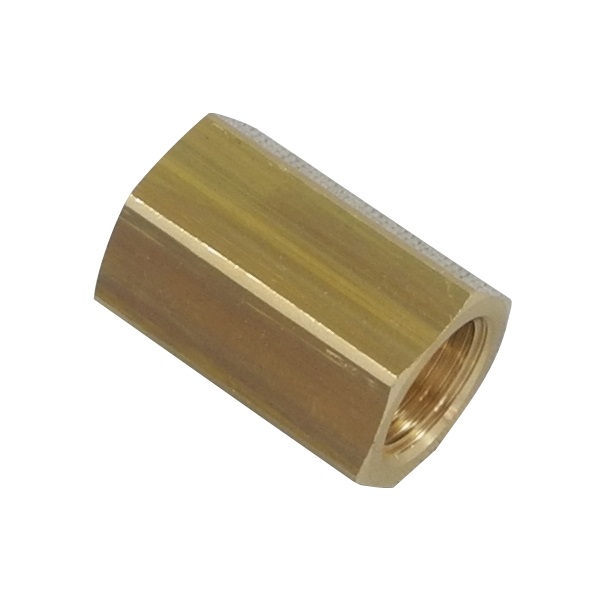
Brass or Stainless Steel Sleeves: Technical Selection, Material Properties, and Practical Application
Sleeves securely and tightly connect pipe sections, hoses, and fittings in industrial fluid and gas installations. At maku, we offer Parker Rectus sleeves in brass, nickel-plated brass, and stainless steel 1.4305 and 1.4404. This text explains material and construction differences, connection types, sealing systems, mechanical limits, and typical application scenarios. The goal is to provide a quick, well-founded decision-making basis for design, maintenance, or purchasing, free of promotional language.
Material Selection: Brass vs. Nickel-Plated Brass vs. Stainless Steel (1.4305 / 1.4404)
Brass (CuZn alloys) offers high corrosion resistance to untreated water, good formability, and strong conductive heat and electricity transfer. Brass sleeves are economical and the first choice for many hydraulic and pneumatic applications. Nickel-plated brass has an additional surface passivation that improves abrasion resistance and corrosion resistance in slightly aggressive environments, as well as reducing friction and galling in threaded connections. Stainless steel 1.4305 (similar to AISI 303/304) provides better resistance to organic media and chloride-containing environments than uncoated brass, but is not optimal for highly chloride-containing or near-seawater applications. Stainless steel 1.4404 (AISI 316L) offers significantly higher resistance to pitting and crevice corrosion due to added molybdenum alloying and is considered standard in the process industry, food technology, and for medical technology requirements.
Design and Types
Sleeves are available as internal/external thread sleeves, reducing sleeves, union nuts, and sleeves with flange connections. Parker Rectus supplies precisely machined threads according to ISO, DIN, and BSP/UNF standards; matching cones and sealing surfaces are manufactured to ensure that assembly forces create reproducible seals. For lines subject to vibration, sleeves with a conical sealing surface and additional retaining rings are recommended, as metallic seals alone can fail under dynamic loads. Material choice influences manufacturing tolerances: stainless steel components often require tighter tolerances and special surface treatments to avoid thread stress cracks and distortion.
Connections, Threads, and Sealing Techniques
Thread types: BSP (G), BSPT (R), NPT, metric ISO thread, and UN/UNF are used. Parker Rectus sleeves are often designed with cylindrical internal threads (G) or tapered threads (R/NPT). For cylindrical threads, an additional seal is required; for tapered threads, the thread seat creates a form-fitting seal, which should be supplemented with PTFE tape or flat gaskets in high vibration applications. Sealing systems range from PTFE thread, profile inserts (O-rings made of NBR, FKM/Viton, EPDM) to flat metal seals for high temperatures and pressures. Selection criteria include temperature range, media compatibility, pressure, and frequency of assembly.
Temperature and Pressure Limits
Brass sleeves are typically permissible up to approximately 120 °C continuous operation and pressures up to several hundred bar, depending on wall thickness and thread type. Nickel-plated brass marginally changes thermal properties but improves wear behavior. Stainless steel 1.4305 can be used up to approx. 300 °C, 1.4404 up to approx. 400 °C, provided static loads and notch effects are considered. In pressure applications, sleeves with greater wall thickness or with internally supported construction (e.g., drawn-in bushings, reinforcing ribs) are preferable. For cyclic pressure loads, fatigue strength and connection type are crucial; threaded connections can be optimized by pre-tensioning and securing elements (e.g., lock nuts, Loctite threadlockers).
Corrosion Mechanisms and Surface Treatment
Common corrosion mechanisms include pitting corrosion due to chlorides, stress corrosion cracking (with unsuitable heat treatment), galvanic corrosion between different metals, and erosive corrosion due to solid particles in the medium. Nickel plating reduces galvanic potential differences and improves wear resistance. For stainless steel sleeves, electropolished or passivated surfaces reduce roughness and thus the tendency for aggressive substances to accumulate. In contact-intensive applications, a combination of compatible materials and elastomeric seals is recommended to minimize the risk of leaks.
Practical Application Examples
Practical Example 1 – Hydraulic Test Benches: In a test bench for hydraulic units, nickel-plated brass sleeves connect pressure lines to measuring instruments. The nickel-plated surface reduces wear during repeated disassembly, while an FKM O-ring seals dynamic pressure surges. Installation note: Tighten nuts to a defined torque, lightly moisten the O-ring with the medium before installation, check for readjustment after initial commissioning.
Practical Example 2 – Chemical Process Line: In a process plant for chloride-containing solutions, sleeves made of stainless steel 1.4404 were used to prevent pitting corrosion. Low-friction PTFE seals were chosen for chemical resistance. Installation recommendation: Clean flanks and sealing surfaces before assembly, pay attention to pipe alignment, minimize stress through pipe fixation.
Practical Example 3 – Food Technology: For water supply and cleaning lines in food production, stainless steel 1.4305 sleeves with a smooth, electropolished surface and EPDM seals are used. EPDM is suitable for hot steam cleaning. Hygiene note: Aim for a surface roughness Ra < 0.8 µm, plan regular CIP cleaning.
Assembly Instructions and Quality Control
Before assembly, threads, sealing surfaces, and O-rings must be checked for damage. Use suitable lubricants compatible with the seal and medium. Observe the tightening torque specified by the manufacturer; overtightening can cause thread damage and seal failure. After assembly, a leak test with a defined test pressure and cycle testing for dynamic applications is recommended. Replacement intervals depend on the medium, temperature cycles, and frequency of assembly; documented service intervals extend service life and reduce unplanned failures.
Procurement and Specification
For a clear order, the following information should be available: material (brass, nickel-plated brass, 1.4305, 1.4404), thread type and size, seal type, pressure and temperature requirements, and surface requirements (e.g., electropolished). Parker Rectus article numbers and technical data sheets simplify selection. Additional technical details can be found on our technology page: https://maku-industrie.de/technik. Practical installation examples and application cases are documented at https://maku-industrie.de/anwendungsbeispiele.
Typical Sources of Error and How to Avoid Them
Common errors include incorrect thread selection, unsuitable seals, inadequate surface cleaning, and insufficient pipe fixation. These lead to leaks, premature wear, or corrosion damage. Avoidance: Check material compatibility, match sealing material to medium and temperature, use assembly tools with torque specifications, and perform a defined leak test after assembly. In applications with electrolytes, control galvanic potentials and, if necessary, use insulating connections.
Disposal, Recycling, and Sustainability
Brass and stainless steel are fully recyclable. When replacing, seals and coatings must be disposed of separately; elastomeric seals should be treated according to respective waste regulations. Recycling reduces the use of primary raw materials and ensures consistent material quality for subsequent components.
- Recommended information for ordering: Material, Thread (Standard), Seal Type, Operating Pressure, Operating Temperature, Surface Requirement
FAQs
1. Which sleeve is better for chloride-containing media: brass or stainless steel?
For chloride-containing media, stainless steel 1.4404 is preferable. Brass is prone to pitting and galvanic corrosion in the presence of chlorides; 1.4404 offers significantly better protection against pitting and crevice corrosion due to the addition of molybdenum.
2. Which seal is suitable for high temperatures and aggressive chemicals?
PTFE seals offer the best chemical resistance at high temperatures. For elastic requirements and moderate temperatures, FKM (Viton) and EPDM are suitable alternatives depending on the medium; check selection based on media compatibility and temperature profile.
3. How do I know if a sleeve needs to be replaced?
Replacement is necessary in case of visible corrosion damage, recurring leaks despite correct assembly, mechanical deformation of the threads, or if the seal has been replaced multiple times and the sealing surfaces are worn. Performing a pressure test and visual inspection before replacement is recommended.