
Buy reducing bushes made of brass or stainless steel online




Technical Selection and Use of Reducing Nipples
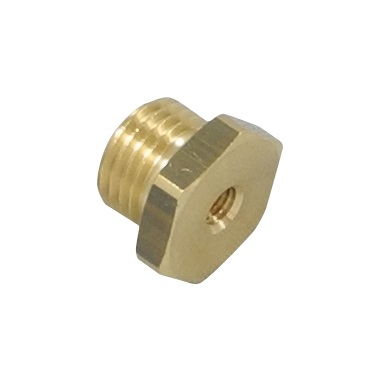
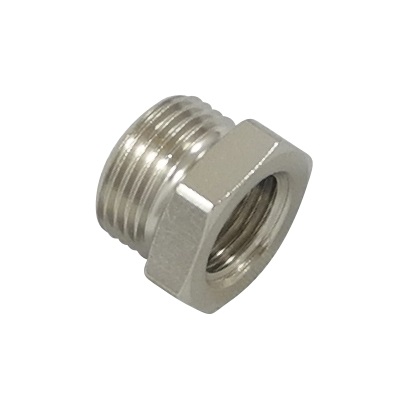
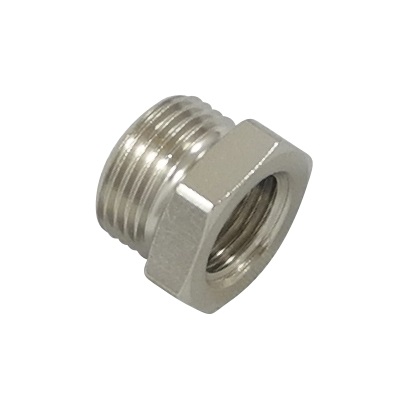
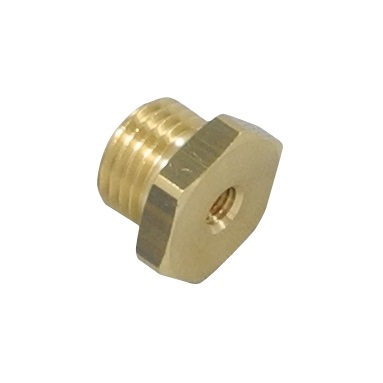
Reducing nipples connect lines with different nominal diameters and must be functionally leak-tight, pressure-stable, and corrosion-resistant. In industrial applications, material selection determines the area of use and service life: Brass offers good machinability and thermal conductivity, nickel-plated brass variants increase wear and corrosion protection, stainless steel 1.4305 (austenitic, increased toughness) is suitable for general industrial applications, while stainless steel 1.4404 (316L) offers increased resistance to chloride-containing media and higher temperatures. Plastics such as POM and PVDF complement the range where metallic materials are chemically attacked or where lower thermal conductivity is advantageous.
Materials and Their Technical Properties
Brass reducing nipples stand for good machinability, moderate chemical resistance, and electrical conductivity. Nickel-plated brass increases surface resistance to abrasive wear and reduces contamination from copper release. Stainless steel 1.4305 has good corrosion resistance in mild environments and is insensitive to organic media; 1.4404 (316L) offers better protection against intergranular corrosion due to its low carbon content and is preferred in food, pharmaceutical, and chemical-related processes. POM (polyoxymethylene) offers high stiffness, low friction, and good dimensional stability at moderate temperatures. PVDF (polyvinylidene fluoride) provides excellent chemical resistance and high purity for aggressive media and cleanroom applications.
Designs, Threads, and Connections
Reducing nipples are available as cylindrical inserts, conical transitions, and combined fittings with internal and external threads. Parker Rectus offers standardized thread profiles such as BSP/G, as well as special designs like NPT or inch threads for international interfaces. Conical seating surfaces enable metal-to-metal sealing connections, while cylindrical connections often work with elastic sealing elements. Typical connection configurations are male thread to female thread, male thread to hose barb, or screw connections with union nuts. In pipe installations, seals are crucial: NBR O-rings fulfill general sealing requirements in oil and air applications, EPDM resists hot water and steam better, FKM/FPM (Viton) is more chemically resistant to fuels and oils, while PTFE-coated seals show the best chemical resistance.
Pressure and Temperature Behavior
The maximum permissible pressures vary with material and thread type. Brass reducing nipples are approved for medium operating pressures; stainless steel versions achieve higher pressure and temperature resistance and offer greater safety reserves in high-pressure lines. POM can be used at low to moderate temperatures and pressures, while PVDF resists higher temperatures and aggressive media. When selecting, consider: permissible operating pressure according to the data sheet, operating temperature range, medium (corrosive, abrasive, gaseous), and possible thermal cycles that can cause material fatigue.
Assembly and Sealing Technology – Practice-Oriented
Proper assembly ensures leak-tightness and long service life. For threaded connections, tightening torques must be observed according to the manufacturer's specifications to avoid mechanical overloads and leaks. For metal-to-metal sealing conical connections, a defined tightening torque is sufficient; additional sealing is usually not necessary here. For cylindrical connections, O-rings or flat gaskets are used; the groove and seat geometry must match the selected O-ring to prevent extrusion at high pressure. Teflon tape (PTFE thread) is common as an assembly aid but does not replace a suitable sealing body for dynamic loads or vacuum applications. To avoid stress cracks in stainless steel, appropriate screwing tools must be used, and corrosion protection for bolted connections can be achieved through coatings.
Fields of Application and Practical Examples
Reducing nipples are used in pneumatics, hydraulics, medical technology, process industry, food and pharmaceutical plants, as well as in laboratory and analysis systems. Practical examples structure the selection and assembly steps:
- Pneumatic distribution station in manufacturing: For air lines from Ø10 mm to Ø6 mm, a brass reducing nipple with G1/8xG1/4 male thread is used. Assembly steps: Clean threads, apply PTFE thread in the direction of rotation, screw in the nipple with a defined torque, perform a pressure test. O-ring use only for smooth pipe stub connections.
- Chemical dosing system: PVDF reducing nipples connect a DN25 line to DN15 in contact with aggressive media. Assembly steps: Clean sealing surfaces, replace FKM O-ring with a PVDF-compatible version, monitor leak-tightness during initial commissioning and after 24 hours.
- Water treatment / Drinking water: Stainless steel 1.4404 reducing nipples minimize corrosion risks. Assembly steps: Pre-flush, tighten according to torque, avoid galvanic corrosion by using insulating sleeves when connecting to copper lines.
Quality Assurance and Standards
For industrial applications, material certificates and test reports are often mandatory. Material certificates for stainless steel 1.4404 (material numbers, grain size, heat treatment) and measurement reports for dimensional accuracy ensure traceability. For Parker Rectus parts, technical data sheets with pressure/temperature ratings and assembly instructions are available. Observe standard interfaces such as DIN and ISO thread profiles, as well as food conformity (e.g., KTW, WRAS) for media-contacting parts in drinking water applications.
Selection Criteria – Briefly Summarized
When selecting reducing nipples, the following criteria are crucial:
- Medium type and chemical resistance
- Operating pressure and temperature
- Thread profile and compatible connection dimensions
- Seal type and installation space
- Standards, certificates, and material proofs
Maintenance and Error Prevention
Regular visual and leak tests prevent silent leaks. Check screw connections for corrosion, cracks, and loose seals. For frequent thermal cycles, elastic seals with appropriate temperature limits should be chosen. Replacement parts should be identical in material and thread pattern; foreign threads increase the risk of leaks. Document assembly and test steps for traceability and warranty issues.
Further Information
Technical details on materials, seal selection, and assembly-appropriate tightening torques can be found on our technical pages: maku Industrie — Technik. Application examples and practical installation cases are documented under maku Industrie — Anwendungsbeispiele. Our product selection includes Parker Rectus reducing nipples in brass, nickel-plated brass, stainless steel 1.4305 and 1.4404, as well as in POM and PVDF; technical data sheets are stored with each item.
FAQs
1. Which material is best suited for my application with chloride-containing media?
For chloride-containing media, stainless steel 1.4404 (316L) is the preferred choice due to its higher resistance to pitting and stress corrosion cracking. PVDF can be an alternative if metallic materials are unsuitable due to galvanic effects or purity requirements.
2. When is an O-ring more sensible than a metallic seal?
O-rings are useful for cylindrical connections where small tolerances, vibrations, or thermal expansions require flexible sealing. Metallic seals are preferable when high temperatures, continuous pressures, or abrasive media are present that would degrade elastic seals.
3. How do I ensure that a reducing nipple is mounted pressure-tight?
Observe the correct thread profile, use the appropriate sealing system (O-ring, flat gasket, metallic cone seal), apply PTFE thread in the direction of rotation if necessary, and tighten components with the manufacturer's recommended torque. Perform a pressure test at operating pressure and document the result.