
Buy motors for drilling made of stainless steel by Mannesmann Demag now
Air motors with collets or chucks are perfect for precise drilling and brushing applications.The air motors are available in a broad speed range with several special features for build in applications.
Main features of the air motors:
• Stainless steal housing
• Rotating splash guard
• Without valve for central remote control
• Small housing diameter for minimum centre-to-centre spacing
• Type "SL" for anti-clockwise rotation
• Type "MRD" with guided exhaust air
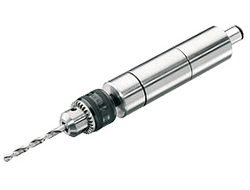
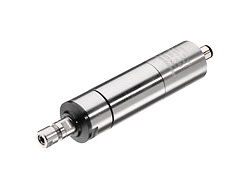
Stainless Steel Drilling/Brushing Motors from Mannesmann Demag: Technical Selection, Application, and Integration
Drilling motors and brushing motors made of stainless steel offer decisive advantages in industrial manufacturing: corrosion resistance, ease of cleaning, and mechanical robustness. Mannesmann Demag supplies motors in various designs, specifically tailored for applications in the food industry, pharmaceuticals, chemistry, and production environments with aggressive media. On this category page, you will find versions with collet chucks and with drill chucks, different speeds, power classes, and connection variants—designed for permanent integration into manufacturing and assembly processes.
Construction and Materials
The housing of the offered models is predominantly made of V2A/V4A stainless steel (material type 1.4301/1.4401) to ensure chemical resistance and mechanical stability. Bearings and shafts are often made of hardened steel with a corrosion-resistant coating or also of stainless steel to minimize wear. Seals are supplied as Viton, EPDM, or NBR versions, depending on the medium, to ensure compatibility with cleaning and process media. For customized requirements, PTFE-coated seals or metallic sealing solutions are also available.
The motor windings are typically equipped with thermal protection devices (Class F or H), and insulation complies with industrial standards for intermittent or continuous operation. The bearings can be designed as sealed ball bearings with lubricant for long service life or as low-maintenance sintered bearings. The rotor and stator design is engineered to minimize vibrations and allow for precise drilling or brushing operations.
Drive and Mounting Variants
The category includes models with collet chucks in standardized sizes (e.g., 0.5–6 mm) and with conventional drill chucks (1/4" to 1/2" depending on the power class). Collet systems offer high concentricity precision and are optimized for precision drilling and use with small milling cutters or brushes. Drill chuck models allow for quick tool changes and are suitable for varying tool diameters. Both mounts are compatible with commercially available tools made of carbide, HSS, and brush attachments made of steel, brass, or plastic.
Various connection types are available for electrical connection: standardized supply lines with open strands, industrialized M12 connectors for quick module integration, or customized connection boxes with protective functions (IP65/IP67). Models with three-phase drive, direct current (DC), or brushless BLDC versions are available; BLDC motors usually offer higher efficiencies and finer speed control with less heat generation.
Electrical Control and Regulation
Motor-specific sensors such as Hall sensors or encoders are offered to enable speed control, positioning, and process monitoring. For applications with variable speeds, motor controls with stepless regulation facilitate adaptation to material and tool. Typical control parameters include instantaneous speed, maximum inrush current, soft start, and feedback of status data for predictive maintenance. For integration into manufacturing cells, the use of standardized fieldbus interfaces or integration via frequency converters with digital control is recommended.
Seals, Protection Classes, and Cleanability
The stainless steel housings in conjunction with tight shaft seals enable protection classes up to IP65 or IP67; if required, hermetically sealed variants with IP69K are possible, which are approved for high-pressure/hot water cleaning. Seal selection depends on the cleaning method: aggressive chemical cleaning agents require fluorine-based sealing materials, while mechanically gentle CIP/SIP processes prefer EPDM. Surface roughness is optimized in many models (Ra ≤ 0.8 µm) to prevent germ formation and improve cleaning processes.
Application Areas and Practical Examples
Drilling and brushing motors from Mannesmann Demag are used in assembly and production lines where precision and process reliability are required. In mechanical engineering, they serve as localized processing tools for drilling pilot holes in stainless steel sheets, preparing counterbores, or setting ventilation holes. In food processing, brushing motors are used for gentle surface treatment of packaging materials; the brush materials (stainless steel, brass, nylon) are selected according to product compatibility. In pharmaceutical manufacturing, high-speed, precise motors enable deburring and fine drilling of stainless steel components.
Example 1 — Assembly workstation for handheld devices: A drilling motor with a collet chuck (0–3 mm) is integrated into a pneumatically fixed handpiece. The motor operates at 12,000 rpm, an incremental encoder provides speed information for quality control; an IP65 protection class allows cleaning with spray mist. This combination enables quick tool changes and reproducible drilling depths.
Example 2 — Inline production line with brushing station: A brushing motor with BLDC drive is installed in a conveyor line to deburr edges of metal strips. Steel filament brushes remove burrs, while a sensor adjusts the conveyor speed. The stainless steel construction allows daily CIP cleaning, the motor is equipped with EPDM seals and connected via an M12 cable.
Example 3 — Precision drilling in housing manufacturing: A drilling motor with a drill chuck is mounted on a gantry axis and used in conjunction with a CNC control. A frequency converter controls the speed and starting torque, the motor shafts are equipped with a hardened, coated surface to reduce friction and wear during long-term operation.
Mounting, Connection, and Maintenance
During mounting, alignment and concentricity tolerances must be observed: collets should be tightened according to manufacturer specifications to avoid imbalance. Electrical connections must be made according to the protection class and operating mode; for BLDC models, control lines for sensors must also be considered. Maintenance intervals depend on operating conditions; normally, an annual inspection of bearings and seals and a check of insulation values are sufficient. For dusty or abrasive applications, shorter intervals or special protective measures must be implemented.
Selection Criteria and Technical Specifications
Select a model based on these characteristics: required torque, no-load speed, mounting type (collet vs. drill chuck), protection class, desired sealing materials, and connection type. Other relevant data points include power consumption, efficiency, continuous vs. intermittent operation (S1/S3), and available sensors. For hygienically critical areas, surface roughness and approval for CIP/SIP are crucial. Use the product filters in our shop to specifically select models by protection class, material, and connection, or visit technical overviews at https://maku-industrie.de/technik for detailed data and integration notes.
Compatibility and Retrofit
Many motors are designed to be integrated into existing machines. Adapter flanges, standardized shaft diameters, and compatible bolt patterns facilitate the replacement of old motors with corrosion-resistant stainless steel variants. For retrofit projects, pay attention to electrical adaptation requirements such as control logic, motor types (DC vs. BLDC), and available communication interfaces to ensure that safety and control systems continue to operate reliably.
Procurement and Individual Requirements
For special requirements, we offer customized adaptations: different sealing materials, special surface treatments, customized connection solutions, or certified documentation for hygiene-relevant industries. Technical specifications and certificates are available upon request. Further practical examples and application descriptions can be found at https://maku-industrie.de/anwendungsbeispiele.
- Key selection points: torque, speed range, mounting type, protection class, sealing material
FAQs
1. Which sealing materials are suitable for aggressive cleaning agents?
For aggressive cleaning chemicals, fluorinated elastomers such as Viton are recommended; for high-temperature sterilization cycles, PTFE-coated seals are suitable. EPDM offers good resistance to alkaline cleaners, NBR is suitable for oil-based substances.
2. Are BLDC models suitable for continuous operation in production lines?
Yes, BLDC motors offer high efficiency and lower heat generation, making them well-suited for continuous operation. Pay attention to certified bearing design and appropriate cooling for high loads.
3. How can the cleanability of the motors be assessed?
Assess cleanability based on the protection class (IP69K stands for high-pressure/hot water cleaning), surface roughness (Ra value), and the sealing materials used. Models with smooth stainless steel surfaces, minimal gaps, and suitable seals are best suited for CIP/SIP processes.