
Order service units for compressed air circuits
Order service units for compressed air circuits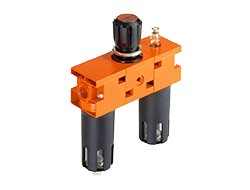
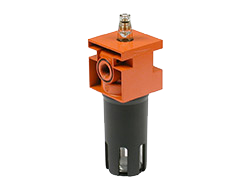
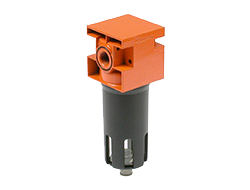
Ordering Maintenance Units for Compressed Air Systems
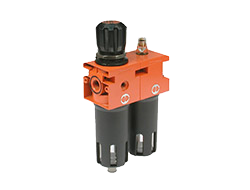
Maintenance units (also known as FRL units) ensure the required quality of compressed air in industrial pneumatic systems. They combine filters, regulators, and lubricators in modular designs to remove solids, water, and oil mist, smooth out pressure fluctuations, and – if necessary – apply lubricant in a metered fashion. Selection depends on flow rate (l/min or m³/h), connection sizes, regulation accuracy, residual moisture after filtration, and the compatibility of sealing materials with process media.
Functional Components and Technical Features
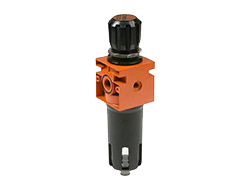
The filter removes particles and condensate. Element types range from sintered metal to fiber and activated carbon fabric; typical filter finenesses range from 5 µm for coarse protection to 0.01 µm for fine filtration applications. Glass or polycarbonate bowls are common; for aggressive environments or high temperatures, metal containers (aluminum or stainless steel) are recommended. Condensate drainage occurs manually, semi-automatically, or via automatic drain valves with condensate management; the latter are mandatory for systems with frequent condensate formation.
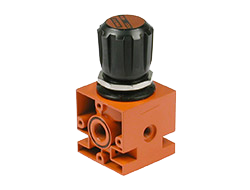
The regulator (pressure reducer) maintains constant downstream pressure. Important parameters include adjustment range, hysteresis, pressure holding capacity under load, leakage rate, and response behavior under dynamic load. Regulator diaphragms are typically made of NBR, FKM (Viton), or EPDM; the material choice depends on oil and temperature resistance. Precision regulators offer fine adjustment up to ±0.1 bar, standard regulators ±0.5 bar. Measurement ports and display instruments can be designed as mechanical manometers or digital pressure gauges.
The lubricator adds a controlled oil mist to the compressed air for lubricating cylinders, valves, and bearings. Droplet count, droplet size, and compatibility with the lubricants used are crucial. Lubricators operate either as liquid percolators (visible adjustment scale) or as oil atomizers. Container materials range from transparent plastics to aluminum with a refillable cartridge. When using synthetic or biodegradable oils, compatibility with seals and valve materials must be observed.
Design Variants, Mounting, and Connections
Maintenance units are available as individual modules, combi-blocks, or pre-assembled multi-units with integrated manometer, safety valve, and quick couplings. Mounting types: wall mounting with a mounting plate, DIN rail mounting, or direct inline installation near the consumers. Common connection standards are G (BSP), NPT, ISO 6150/ISO 228, or quick couplings according to DIN/ISO. Standard sizes for operating temperatures and pressures are 0–16 bar; variants for high pressure up to 40 bar are available. Pipe connection sizes range from 1/8" to 1" or as metric threads/flange solutions for high volume flows.
Seals are important: O-rings and diaphragms made of NBR cover standard applications, FKM is the first choice for high oil and temperature resistance, EPDM for steam and weather insensitivity. For aggressive media or food applications, PTFE seals or metallic sealing systems are used. Screw connections and flanges should be corrosion-resistant; in humid environments, stainless steel (AISI 316) is preferred.
Materials and Corrosion Protection
Housing materials vary depending on the application: Lightweight aluminum housings allow for quick assembly and good heat dissipation; steel housings guarantee mechanical robustness; stainless steel housings are resistant to corrosion and chemical attacks and are necessary for high hygiene requirements. Polycarbonate sight bowls are economical; alternatives with metal mesh protection or metal containers are preferable in case of splintering or explosion hazards. Surface coatings such as anodizing, powder coating, or galvanic galvanization increase service life in harsh industrial environments.
Maintenance, Inspection Intervals, and Spare Parts
Regular maintenance is technically and economically crucial: Filter elements must be replaced after operating hours or pressure drop changes; visual inspection of condensate containers is part of the daily visual check, while functional checks of regulators and lubricators should be performed at least semi-annually. Inspection points include pressure difference across the filter, tightness at connections, droplet count of the lubricator, and response pressure of the regulator. Spare parts that should be kept in stock include filter inserts, O-rings in relevant materials, manometers, bowls, and drain valves. Use documented maintenance protocols and clean dirt ingress before disassembly to avoid particle residues in the circuit.
Selection Criteria — Brief and Practical
- Flow rate, connection size, filter fineness, control range, sealing materials
Practical Examples
Example 1: In an assembly hall with multi-station pneumatic screwdrivers, a combi-maintenance unit with 0.01 µm fine filtration, automatic condensate drain, and precision regulator is used. The unit is mounted directly in front of the manifold to compensate for pressure fluctuations due to volume withdrawals. FKM is used as the sealing material because the screw oils used generate high temperatures and hydrocarbon loads. Result: reduced downtime of the screwdrivers, more consistent torque values, and extended valve life.
Example 2: In a paint shop, compressed air for spray guns is treated. Here, a stainless steel filter housing is combined with activated carbon and fine filters to eliminate oil residues and odors. The lubricator is deliberately omitted, as any oil addition degrades paint quality. The unit is installed at the air intake/distribution point, and condensate disposal is connected to a central, approved container. Result: improved surface quality and less rework.
Example 3: In a food processing plant, maintenance units with PTFE seals and food-grade lubricants are used. The units have easily removable metal housings for easy cleaning (CIP-compliant). A combination of coarse filter, cyclone separator, and fine-pored sterile filter is installed between the compressor and distribution. Result: hygienically pure compressed air, compliant operating documentation, and secure auditability.
Integration into Existing Systems and Standards
Maintenance units must be harmoniously integrated into existing compressed air networks. Sizing according to required volume flow, pressure drop analysis, and redundancy planning (e.g., 1+1 redundancy for critical processes) are necessary. Pay attention to standard compliance: ISO 8573 (air quality), ISO 4414 (pneumatic operational safety), and relevant machinery directives. Document the selection with manufacturer's technical data sheets and perform functional tests during commissioning.
Suppliers, Variants, and Digital Functions
Modern maintenance units offer optional digital displays and condition monitoring with sensors for differential pressure, humidity, and oil mist measurement. Via Industry 4.0 interfaces, condition data can be integrated into maintenance planners. When choosing a supplier, pay attention to available spare parts, test reports, and availability of services. Further technical information and comparison tables can be found under Technik and specific application examples under Anwendungsbeispiele. For direct product selection, visit the category: Wartungseinheiten.
Procurement and Safety Aspects
When ordering, note: complete technical specification (flow, connection, inlet/outlet pressure, ambient temperature), material specifications, desired sealing materials, and, if applicable, certificates (ATEX, food approval). Explosion-protection-relevant areas require special designs (ignition-proof materials, electrically conductive bowls, special drain systems). Also, check disposal requirements for condensate with oil content and provide safe drainage paths.
Conclusion
Maintenance units are central components for reliable, precise, and process-safe compressed air supply. The right combination of filter fineness, regulator accuracy, lubricator design, material selection, and sealing technology reduces downtime, increases tool life, and ensures product quality.
FAQs
Q1: How often do filter inserts need to be changed?
The change interval depends on the pressure difference across the filter and operating hours; for normal industrial contamination, 6–12 months are common, significantly shorter in dusty applications. Technically, replacement is due when the maximum permissible Δp according to the manufacturer is exceeded.
Q2: Which sealing material is best for oil-containing compressed air?
For oil-containing and high-temperature applications, FKM (Viton) is the first choice due to its high resistance to oils and hydrocarbons. For general applications NBR, for steam applications EPDM, for aggressive chemicals PTFE.
Q3: Do I need a lubricator in my system?
Only if subsequent components (plain bearings, certain cylinders or valves) require lubrication. In painting and food processes, a lubricator is contraindicated. Check manufacturer specifications of the end devices and perform a risk assessment based on product quality and maintenance effort.