
Get solenoid and pneumatic valves by high quality manufacturers here
Solenoid Valves & Valves: Design, Materials, Application, and Selection
Solenoid valves control media through electromagnetically actuated closures; valves in a broader sense regulate flow, pressure, or direction in fluidic systems. For industrial applications, reliability, response time, leak-tightness, and ease of maintenance are crucial. This text describes construction, materials, connection types, sealing systems, operating modes, and typical application scenarios to help you select the appropriate component for compressed air, hydraulic, water, or gas applications.
Basic Design and Functional Principle
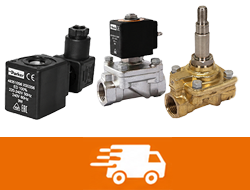
A solenoid valve typically consists of a housing, coil, armature/plunger, seat, and seal. The coil generates a magnetic field that axially moves the armature, thereby opening or closing the flow. There are direct, indirect (pilot-operated), and semi-direct designs. Direct valves switch without a minimum differential pressure; they are compact but power-hungry for larger cross-sections. Pilot-operated valves use the media or auxiliary pressure differential to actuate the main seat. Semi-direct solutions combine low switching energy with higher flow rates.
Important Materials and Their Applications
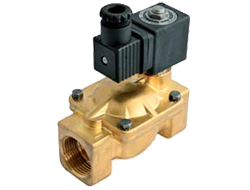
Housing materials range from brass to aluminum to stainless steel (1.4404/316L). Brass is cost-effective and suitable for water, compressed air, and neutral gases. Aluminum excels in low weight and complex geometry, often used in pneumatic valves. Stainless steel is corrosion-resistant and mandatory for aggressive media, food, and pharmaceutical applications. For high temperatures and abrasive media, special materials such as duplex steels or coated workpieces are used.
Seals and materials for moving parts must be matched to the medium, temperature range, and compatibility. EPDM is suitable for water and many alkalis, NBR (nitrile) for hydraulic oil and compressed air, FKM/Viton for high temperatures and aggressive chemicals, PTFE/Teflon for universal resistance and low friction. In cryogenic or very hot applications, special elastomers or metallic seals are used.
Designs, Connections, and Installation
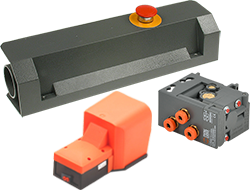
Solenoid valves are available as inline, angle, or block versions. Inline versions integrate directly into pipelines; angle valves minimize cavitation risks during direction changes; block valves combine multiple functions on a common base plate. Connection types: Threaded connections (G, Rp, NPT) are standard. For industrial automation solutions, connection systems with flanges (DIN/ANSI), push-in connectors (for pneumatics), or pre-assembled plug connections (DIN EN 175301-803 / AMP Superseal) are common.
Installation notes: Solenoid valves must not be installed against the flow; coils have polarity specifications; ambient temperature and protection class (IP65, IP67) must be observed. For pilot valves, clean pressure lines and filter systems must be ensured, as particles can block the pilot bores. Electromagnetic interference can affect signal lines; shielding and proper cable routing are required.
Electrical and Pneumatic Specifications
Voltage and power data are essential: common voltages are 24 V DC, 12 V DC, 230 V AC (50/60 Hz), and 115 V AC. Power consumption, duty cycle (ED), and protection class (IP) determine the operating limits. For DC models, polarity must be observed; a protective diode or suppressor is often integrated or required for EMC reduction. Switching times (pull-in and drop-out time) are relevant for control loops: typically in the millisecond to second range depending on design and medium.
Pneumatic characteristics: Kv-value (flow coefficient), Kv-100, or SCFM specifications at specified pressure differentials provide information about throughput. Pressure range (e.g., 0–10 bar, up to 350 bar for special valves) and operating temperature must be selected depending on the medium.
Sealing Systems, Maintenance, and Service Life
Sealing systems are crucial for leakage rates and service life. Elastomer seals are easy to maintain but have limited thermal and chemical limits. Metallic seat systems offer higher temperature and abrasion resistance but require precise manufacturing and are often expensive. Service-friendly designs allow the replacement of coils or sealing parts without removing the housing. Inspection intervals depend on operating hours, number of cycles, and media exposure; industrial valves are often inspected after 1–2 years or defined cycles. Service life specifications are given in cycles (e.g., 10 million switching cycles) and depend on load, particles in the medium, and switching frequency.
Application Fields and Practical Examples
Solenoid valves and valves are used in automation, packaging technology, the food industry, water treatment, chemical and pharmaceutical industries, as well as in energy and process engineering. Media compatibility, response time, and leak-tightness are crucial here.
Practical examples:
- In a food filling line, a 3/2-way stainless steel solenoid valve with an FDA-compliant PTFE seal regulates the filling of hygienic heads. Selection criteria: food approval, easily cleanable surfaces, minimal dead spaces. Implementation: Valve with 24 V DC, IP67, mounted on a pneumatic manifold block; cleaning cycles consider CIP requirements.
- In a paint booth, a proportionally controlled solenoid valve controls air volumes. Selection criteria: sensitive throttling, low hysteresis, high switching frequency. Implementation: Valve with analog control signal (4–20 mA), integrated temperature compensation, and upstream filter to prevent particles.
- In the coolant dosing of a production, a pilot-operated stainless steel valve ensures precise dosing at high flow rates. Selection criteria: pilot operation at high volume, robust seat geometry against abrasive additives. Implementation: Pilot line with pressure monitoring, pre-filter, and regular seat inspection.
Selection Criteria and Decision-Making
Select valves based on medium, temperature, pressure, flow requirements, switching frequency, and approvals. Consider the compatibility of sealing material and housing material with aggressive media. Dimension flow rate using Kv values and consider pressure losses. Check electrical data, protection class, and EMC requirements, especially in combined automation. For critical processes, redundancy, shut-off or safety versions, and reset mechanisms are relevant.
Specific selection aid in brief:
- Analyze medium, temperature, pressure range, Kv value, sealing material, material, connection type, protection class, and switching cycle; external aids: https://maku-industrie.de/technik and https://maku-industrie.de/anwendungsbeispiele.
Testing, Certificates, and Standards
Industrial valves often must comply with standards: DIN/ISO specifications, ATEX for explosive atmospheres, FDA/EC 1935/2004 for food contact, PED (Pressure Equipment Directive) for pressure applications, and CE markings. Type tests, leak tests, and material certificates are relevant for quality assurance documentation. For media-critical processes, test protocols and traceability of manufacturing elements are required.
Maintenance and Spare Parts Concept
A robust spare parts management includes coils, seal kits, spring, and seat components. Standardized replacement dimensions reduce machine downtime. Document replacement intervals and analyze wear causes (e.g., particles, cavitation, overtemperature). Use filters and pressure dampers to increase service life. Regularly check electrical connections and protection classes.
Integration into Automation Networks
Solenoid valves can be controlled via relays, PWM, digital I/O, or fieldbuses (Profinet, EtherCAT, Modbus). Pay attention to electrical protection measures against back currents and overvoltages. For high switching frequencies, the thermal load on the coil and the duty cycle (ED) must be checked. For precise control, proportional solenoid valves or integrated valve islands offer advantages.
FAQs
1. Which sealing material is suitable for aggressive chemicals?
For aggressive chemicals, PTFE-coated seals and PTFE/FFKM materials are standard; stainless steel housings combined with PTFE offer broad media resistance. Selection depends on concentration, temperature, and dissolution behavior.
2. When is a pilot-operated solenoid valve useful?
For high flow rates or when the direct switching force of an early electric coil would be too great, a pilot-operated valve reduces the electrical power requirement and enables large Kv values in compact designs.
3. What tests are necessary before use?
Recommended are leak testing, functional testing under operating pressure, material certificates for media-contacting parts, electrical insulation and protection class testing, and, if relevant, ATEX or PED conformity certificates.