
Order service units for compressed air circuits
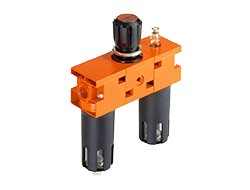
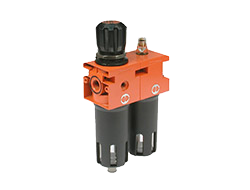
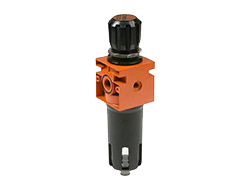
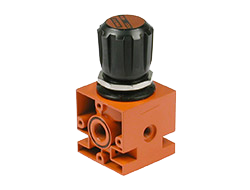
Maintenance Units for Compressed Air Systems: Design, Selection, and Practical Application
Maintenance units condition compressed air through filtration, pressure regulation, and lubricant addition. They protect downstream valves, cylinders, and measuring devices from particles, moisture, and uncontrolled oil supply. The correct unit reduces wear, downtime, and rejects by providing clean, consistently regulated air.
Functional Components and Designs
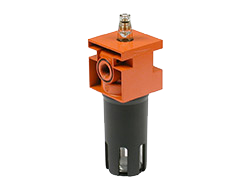
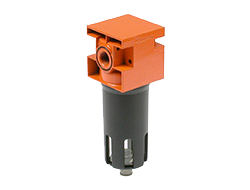
Standard maintenance units consist of three core components: filter, pressure regulator (incl. manometer), and lubricator. Filter elements are available in sintered metal, glass fiber, or solid plastic; the choice influences particle separation (up to 0.01 µm for coalescing filters) and chemical resistance. Housing materials range from aluminum and die-cast zinc to stainless steel for aggressive environments or food applications. Transparent polycarbonate bowls offer visual inspection of condensate, while metal bowls provide higher impact and temperature resistance.
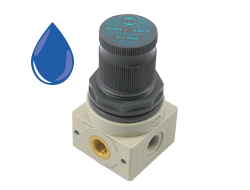
Regulators are designed as direct-acting or pilot-operated. Direct-acting regulators are compact and suitable for low air consumption; pilot-operated types provide precise regulation for larger flow rates and fluctuating inlet pressure. Adjustment knobs can be lockable or tamper-proof, preventing unauthorized manipulation.
Lubricators operate on the drip, vortex, or electronic injection principle. Drip lubricators mechanically dispense oil drop by drop, vortex systems atomize oil more finely, and electronic injectors dispense very precisely, suitable for minimal lubricant quantities in high-performance or measurement applications. Dosing ranges typically lie between 0.1 and 12 ml/1000 l of air; finer adjustments are necessary for critical processes.
Connections, Seals, and Installation Aspects
Connection sizes are based on standardized pipe and hose dimensions: G 1/8, G 1/4, G 3/8, G 1/2, and G 3/4, as well as NPT variants in markets outside Europe. Pay attention to flow coefficients (Kv or l/min at 6 bar inlet pressure) and pressure drop curves. For short pipelines with high flow rates, larger connection sizes or multiple units in series are preferable to minimize pressure drop.
Sealing materials are crucial for leak-tightness and chemical resistance. NBR (nitrile) is standard for oil/water resistance, EPDM is suitable for hot, steam-laden applications, and silicone for low temperatures. PTFE seals offer the highest chemical resistance but are expensive and less elastic. Select seals according to lubricant and condensate composition.
Mounting brackets and rails (ISO 15407-/VVG-compatible holders) facilitate alignment with valve islands or pipe runs. Screwable or swivelable housings simplify the removal of bowls for cleaning or filter element replacement. Drainage options include manual ball drains, semi-automatic drain valves, and electro-pneumatic condensate drains with electronic control for systems with high water ingress.
Filter Types and Maintenance
Dirt particles and oil droplets are captured by different filter media. Sintered metal and glass fiber elements offer high retention rates; coalescing filters combine fine filtration with droplet separation. Important parameters include pore size, pressure drop at flow rate, and maximum operating temperature. Regular inspection of transparent bowls, replacement of filter elements according to operating hours or pressure differential indicators, and correct condensate drainage are mandatory maintenance steps.
When using biodegradable or synthetic lubricants, check compatibility with filter and sealing materials. Oil-incompatible filter media swell or lose strength; special designs with PTFE membranes prevent this effect.
Fields of Application and Selection Criteria
Maintenance units are required in metal processing for grinding machines, in spray painting systems, for pneumatic presses, and in measurement and test stands. In automotive manufacturing, they protect valves in paint booths and assembly robots; in the food industry, corrosion-resistant housings and certified lubricants are used.
The following points are crucial for selection:
- Inlet and outlet pressure range, maximum permissible overpressure, flow rate (l/min) at specified pressure
Furthermore, temperature range, material compatibility, condensate management, and mounting environment (indoor/outdoor) must be evaluated. For machines with low air consumption, compact units suffice; for central compressed air networks, a modular concept with pre-filters and fine filters, intermediate regulators, and main regulators is recommended.
Practical Application — Structured Examples
Example 1: Assembly line with pick-and-place actuators. Initial situation: Cylinder pressure fluctuations cause cycle errors. Solution: A pilot-operated filter regulator with integrated manometer at the supply point ensures a constant 6 bar; an electric lubricator sets 0.5 ml/1000 l to minimally lubricate sliding guides. Result: Improved cycle stability, extended maintenance intervals for actuators.
Example 2: Paint shop with high moisture levels. Initial situation: Droplet formation in the atomizer due to water in the air. Solution: Coalescing pre-filter with stainless steel housing and automatic condensate drain combined with a fine filter immediately before the spray gun. Additionally, a special oil mist separator protects the paint spray nozzles. Result: Reduced spray defects and significantly less paint mist in the process.
Example 3: Test stand for pneumatic tools in a workshop. Initial situation: Tools wear out due to abrasive particles. Solution: Sintered metal filter with adjustable pore size, G 1/2 connection to the test station, transparent bowl with quick-release for fast element change, and EPDM seals due to slightly elevated ambient temperature. Result: Increased repeatability of test cycles, reduced failure rate.
For further technical details and typical applications, please see our technology page: https://maku-industrie.de/technik and specific application examples: https://maku-industrie.de/anwendungsbeispiele.
Integration Notes for Existing Compressed Air Networks
Install maintenance units in the direction of flow so that the filter is the first element to capture contaminants. For longer pipe runs, a pre-filter at the network source and fine filters near the consumption unit are recommended. When connecting multiple consumers in parallel, pay attention to pressure drop distribution; if necessary, pressure control loops in sub-networks are required.
Electrical installations for condensate draining components must comply with local protection classes. For systems with explosive atmospheres, ATEX-certified units must be used. Document replacement intervals and pressure differential data in the maintenance plan to avoid predictable failures.
Testing and Certification Requirements
For industrial applications, CE conformity, RoHS (for electronic components), and, if applicable, ATEX are required. In food processing areas, check for NSF/ANSI-compliant lubricants and FDA-compatible materials. Specific testing needs such as burst and leak tests, as well as cycle tests, should be requested for critical applications.
Procurement and Spare Parts
Procure filter elements by part number and specify material requirements (e.g., stainless steel 1.4404, aluminum EN AW-6082) on order forms. Ensure stockholding of critical spare parts such as seal kits, diaphragms, and transparent bowls. For large installations, a maintenance contract with defined SLAs is recommended to minimize downtime.
FAQs
1. How often do filter elements in maintenance units need to be changed?
Change intervals depend on particle density and operating hours; typical intervals are between 6 and 12 months under normal load. In case of increased dirt ingress or if the pressure differential exceeds the manufacturer's value, change immediately. Use differential pressure indicators for reliable change control.
2. Which seal design is recommended for high humidity and corrosive environments?
EPDM is suitable for humid environments and higher temperatures; for corrosive media and aggressive lubricants, PTFE-based seals are preferable. Stainless steel housings with appropriate surface coatings further increase service life.
3. Can I supply multiple consumers with a single maintenance unit?
Yes, if the unit provides sufficient flow rate and constant pressure regulation. Check the Kv value or l/min specifications at 6 bar, as well as pressure drop curves. For heterogeneous consumers or sensitive devices, decentralized units close to the consumer are advantageous.