
Order precise isolating valves by Parker Legris online
The Parker Legris range of isolating valves, including standard ball valves, axial and needle valves, provides a reliable means of opening and closing fluid systems.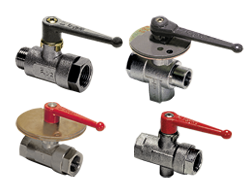
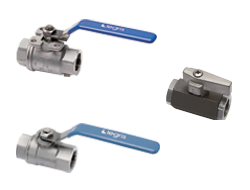
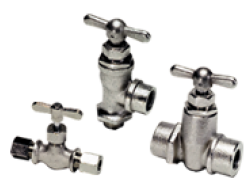
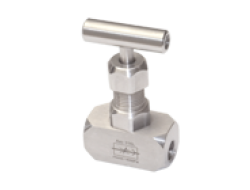
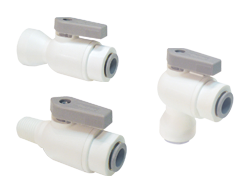
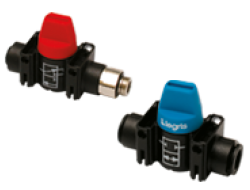
Shut-off Valves: Precision and Reliability for Compressed Air and Fluid Circuits
Shut-off valves from Parker Legris stand for precise manual flow control, easy maintenance, and long service life in industrial applications. In this category, you will find ball valves, needle valves, and globe valves in materials such as stainless steel (1.4404/316L) and brass, designed for compressed air and fluid circuits with various temperature and pressure requirements. The product range includes 2/2-way and 3/2-way, as well as 3/3-way configurations, angle and inline designs, lockable variants, and ball valves with a venting function. This diversity allows for tailored selection for applications in utility supply, process control, laboratory and medical technology, machine tools, and assembly systems.
Design Features and Materials
The choice of material influences resistance to chemicals, temperature range, and mechanical load capacity. Stainless steel offers corrosion resistance and is suitable for aggressive media, hygienic applications, and higher temperatures. Brass reduces weight and cost, suitable for compressed air, water, and many non-aggressive media. Sealing materials such as PTFE, FKM (Viton), and EPDM determine chemical resistance and achievable tightness. PTFE seals ensure low friction and good chemical resistance; FKM is used at higher temperatures and with oils; EPDM is suitable for steam and many organic media.
Housing and ball machining, surface finish, and sealing concepts are crucial for leakage rates and switching characteristics. Precision-engineered ball valves from Parker Legris often feature ground ball surfaces and custom-fitted seals for continuous sealing even after many switching cycles. Needle valves rely on finely adjustable spindle geometries that allow for very fine flow control, often combined with metric or fine-threaded spindle gearing for reproducible adjustment values.
Designs, Connection Types, and Functional Variants
The category covers common connection types: internal/external threads (BSPP/BSPT), metric threads, screw connections for pneumatic hoses (Liquifit), flange connections, and Rc connections for hydraulic integration. Push-in fittings like Liquifit simplify assembly for recurring disassembly. Angle ball valves reduce piping complexity; inline and T-pieces allow for diversion and mixing functions. 3/2-way and 3/3-way ball valves implement switching functions, venting, or bypass tasks where one channel must remain open while the other is closed.
Of particular note are lockable ball valves for safety applications and shut-offs during maintenance, as well as ball valves with integrated venting for controlled pressure relief before complete shut-off. Globe valves are used where compact design, low pressure differential, and quick actuation are required. Axial valves and needle valves offer precise control at high pressures and low flow rates.
Seals, Temperature, and Pressure Classes
Standard pressure ranges for these series extend from a few bar to several hundred bar, depending on material and design. PTFE seals allow operating temperatures typically from -60 °C to +200 °C; FKM up to approximately +200 °C; EPDM is suitable up to approximately +120 °C. For higher pressures, hardened spindles, reinforced seat rings, and multiple sealing systems are used. For safety-critical applications, check specifications for leakage rate (e.g., mbar l/s), service life cycles, and conformity with relevant standards.
Practical Application Examples
In the dry air network of a paint shop, 2/2-way brass ball valves with Liquifit connections are used to quickly and safely isolate individual supply lines. Due to the lightweight, corrosion-resistant material and quick push-in connection, the section can be replaced without tools. In a CNC machining cell, stainless steel needle valves regulate the coolant flow to the tools, with PTFE seals ensuring chemical resistance and reproducible fine flow changes. For systems with regular maintenance, lockable ball valves are installed on the main supply lines; during service, the periphery remains safely depressurized using an integrated vent valve.
On hydraulic test benches, 3/3-way ball valves ensure safe switching between test and bypass circuits, with hardened seat rings guaranteeing high pressure changes and long service life. In water treatment plants, globe valves with EPDM seals are used because they maintain flexible sealing against particles and remain resistant to changing temperatures. In laboratory automation systems, miniaturized needle valves reduce dead volume and allow ultra-fine dosing of reagents.
Selection Criteria and Decision Aid
Select the appropriate shut-off valve based on the parameters of medium, temperature, operating pressure, required leakage rate, installation space, and maintenance strategy. For corrosive media and hygienic requirements, stainless steel is the first choice. For cost-optimized, non-aggressive applications, brass variants are recommended. If frequent actuation or quick disassembly is required, check Liquifit or quick-release connections. Tight control accuracy requires needle valves or finely regulated ball valves with a defined spindle pitch. Safety-relevant shut-offs should use lockable versions with clear operator identification. Further technical specifications and suitable product lines can be found on our technical page: https://maku-industrie.de/technik as well as concrete application examples under https://maku-industrie.de/anwendungsbeispiele.
- Type overview: Ball valve (2/2, 3/2, 3/3), angle ball valve, globe valve, needle valve, axial valve; Designs: stainless steel, brass; Connections: thread, flange, Liquifit
Installation, Maintenance, and Inspection Points
Installation instructions: Keep thread flanks clean, use sealants only according to manufacturer's instructions, fasten connections with the correct tightening torque, check seat nipples for Liquifit push-in connections. Maintenance: Periodic visual inspection for leaks, functional check of the spindle and operating lever, replacement of seals according to manufacturer's intervals. Inspection points before commissioning: tightness under test pressure, switching function under full pressure conditions, venting in closed systems. Document test results for traceability and lifecycle management.
Procurement and Compatibility
When purchasing, pay attention to the exact specification of nominal size (e.g., DN or NPT/BSP), material, media suitability of the seals, connection type, and required certificates (e.g., hygienic standards, RoHS, REACH, if relevant). For easy integration into existing pneumatic or hydraulic systems, check compatibility with Liquifit or other quick-connect systems. Detailed technical data sheets and CAD models facilitate planning and integration into your designs; for these documents, use the product pages in our shop at https://maku-industrie.de/shop/de/kategorien/absperrventile/.
FAQs
1. Which seal is best suited for aggressive media?
PTFE seals offer the broadest chemical resistance and are suitable for many aggressive media. For high temperatures and oily media, FKM is preferred; for steam and certain organic media, EPDM is suitable. Final selection should be made based on a specific media compatibility table.
2. When should I use a ball valve instead of a needle valve?
Ball valves are preferable when fast on/off function, low pressure losses, and robust shut-off are required. Needle valves should be chosen for finely adjustable flow control and precise adjustment of small flow rates.
3. Which connection type reduces installation effort for frequent maintenance?
Liquifit and other quick-connect fittings significantly reduce assembly and disassembly time, as they can be released without screw tools and ensure repeated sealing. For pressure-stable long-term connections, threaded or flanged connections are preferable.