
Order Parker Legris brass accessories quickly online


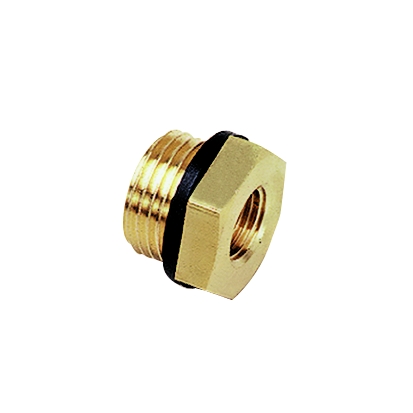

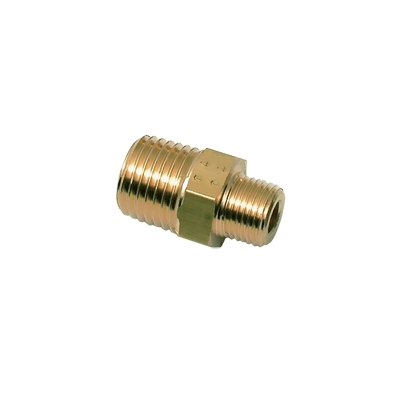
0121 - Straight male orientable adaptor, male thread


0164 - Adaptor male/female thread, male to female

0167 - Adaptor male/female thread, male to female

0929 - Releasable Straight male orientable adaptor, three-piece, male thread
Parker Legris Brass Fittings: Technical Characteristics and Applications
Brass fittings connect lines, components, and equipment in fluid technology circuits. Parker Legris brass accessories offer a combination of mechanical strength, corrosion resistance, and precise sealing technology that withstands pressure and temperature loads while guaranteeing low leakage rates. When selecting, installing, and operating, material quality, thread form, seal type, and connection type are crucial for functional reliability and service life.
Material and Manufacturing: Why Brass?
Brass is a copper-zinc alloy with good machinability and homogeneous strength distribution. Parker Legris typically uses dedicated brass alloys for fittings that minimize mechanical stress, erosion from flowing media, and galvanic effects on construction materials. Brass also offers favorable thermal conductivity, which distributes temperature fluctuations more evenly than plastics. Surfaces are often nickel-plated or passivated to reduce contact corrosion in mixed material combinations. For applications with more aggressive media or higher chloride loads, testing for decimal alloy requirements or using alternative materials is recommended.
Designs and Functional Principles
Parker Legris brass fittings are available in standardized designs: elbows, sockets, threaded adapters, reducing and enlarging nipples, double nipples, and threaded hose barbs. Each design serves a clear purpose: elbows change the flow direction in confined spaces, sockets connect similar external threads, threaded adapters bridge different standard threads or interfaces. Reducing and enlarging nipples compensate for cross-sectional changes and prevent turbulence at transitions. Double nipples are used as intermediate pieces for insertion into fixed structures. The thread design follows standards such as BSP (G), metric ISO thread, or NPT, depending on the market and application.
Connections, Tolerances, and Sealing Systems
The reliable fit of a brass fitting depends on thread tolerances, fit, and the correct seal. Parker Legris offers variants with tapered and cylindrical threads; tapered threads (e.g., NPT) additionally create a metallic sealing effect, while cylindrical threads require flanking seals. For seals, PTFE washers, NBR/FKM O-rings, or special polymer-coated seals are used. FKM O-rings are resistant to higher temperatures and oils, NBR is suitable for general compressed air and water applications. PTFE seals offer chemical resistance to aggressive media. In high-pressure applications, attention must be paid to elastomer hardness and thermal aging; soft seals seal better at low surface pressures, harder seals withstand higher pressures.
Temperature and Pressure Ranges
Parker Legris brass fittings are typically designed for operating temperatures from approximately -20 °C to +120 °C; extended ranges are possible with special seals and surface treatments. Typical pressure values range from vacuum-compatible to several hundred bar, depending on the design, wall thickness, and connection type. In applications containing steam and condensate, condensate treatment and thermal fatigue must be considered. For critical applications, always check the specific pressure-temperature curves of the products.
Corrosion, Galvanic Couples, and Protective Measures
Brass is resistant in many environments but reacts more quickly than stainless steel with ammonia-containing media, seawater, and acidic solutions. Galvanic corrosion occurs with direct contact to more noble metals; insulating inserts or surface coatings prevent current paths. In systems with different water qualities, regularity of water treatment and monitoring of conductivity and pH value are important to avoid dezincification and pitting corrosion.
Quality Features and Testing Procedures
Important test parameters include dimensional accuracy, thread tolerance, surface roughness, leak tightness under defined pressure, and assembly capability in series production. Parker Legris tests components visually, dimensionally, and with a pressure test stand; for special industries, additional tests apply, such as leak rate in mbar·l/s, salt spray test for coatings, and dry leak tests. Material certificates and batch traceability are mandatory for many industrial customers.
Fields of Application and Installation Practice
Parker Legris brass fittings are used in pneumatics, light-duty hydraulics, refrigeration technology, building and plant engineering, laboratory and measurement technology, and general media supply systems. During assembly, clean connection threads, deburring of pipe ends, and appropriate torque specifications must be observed. Excessive tightening leads to plastic deformation, insufficient tightening to leaks. For modular installations, push-in or screw connections with defined insertion depths are provided. For recurring disassembly, O-rings must be checked and, if necessary, replaced. Assembly greases must only be compatible with the sealing material and the conveyed medium.
Practical Examples
Practical Example 1 – Production Connection of a Pneumatic Supply: In an assembly cell, a Parker Legris G1/8″ elbow connects to a hose connection. The elbow facilitates cable routing and reduces kinking stress. Before installation, thread flanks are cleaned, an NBR O-ring is inserted, and the thread is assembled with a defined torque. The tightness is tested at 6 bar; a residual leakage rate of <0.1 l/min is tolerated.
Practical Example 2 – Cold Water Supply in a Test Facility: A test bench requires several reducing nipples to adapt from a 1/2″ pipeline to a 1/4″ measuring section. Parker Legris brass reducing nipples are used, and PTFE sealing tape is applied to the cylindrical thread to facilitate assembly. The nipples used are tinned to minimize galvanic effects on copper-based components.
Practical Example 3 – Bulkhead Fitting for a Laboratory Wall: A bulkhead fitting is necessary for a test stand feed-through module. The Parker Legris bulkhead fitting with EPDM seal is placed through the wall plate and tightened on both sides to ensure a vibration-proof and media-tight connection. The use of an FKM O-ring alternative allows for increased resistance to oil vapors and an extended temperature range.
Selection Criteria for Procurement
When procuring, the following parameters must be observed: thread type and size, material alloy, surface treatment, seal type, and pressure-temperature characteristic curve. Furthermore, certifications, availability of replacement seals, and compatibility with existing interfaces are relevant. Check technical data sheets and product numbers to ensure the correct order item. For further technical information and specific application examples, see Technology and Application Examples.
Maintenance and Service Life
The service life of brass fittings depends on operating conditions: pressure changes, temperature gradients, medium, and assembly quality. Regular visual inspections, leak measurements, and O-ring inspections extend the service life. In cyclical operations, a maintenance plan with defined replacement intervals for elastic seals is recommended. Document replacement procedures with batch numbers to ensure traceability for series products.
FAQs
- Which seal is suitable for my brass fitting? The medium, temperature, and pressure are decisive. NBR is suitable for compressed air and water up to approx. 100 °C, FKM for higher temperatures and oily media, PTFE for aggressive chemicals; check the product data sheets.
- How do I identify correct thread connections? Measure the crest, thread diameter, and pitch; BSP (G) and ISO metric are common in Europe. Use measuring tools or check with certified reference threads.
- When is brass unsuitable? In the presence of highly chloride- or ammonia-containing media, seawater applications with high conductivity, or when galvanic pairings to more noble metals exist; in these cases, stainless steel or special bronzed materials are to be preferred.