
Buy low-priced high quality NBR self-fastening tubings

NBR Push-In Hoses: Properties, Construction, and Application
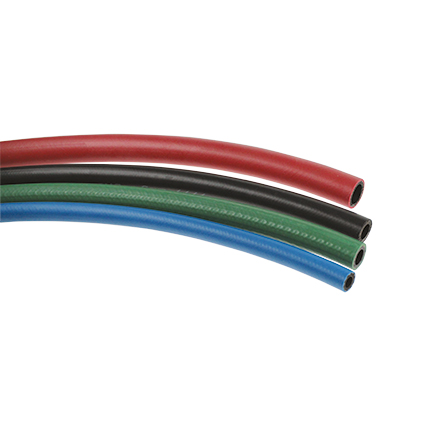
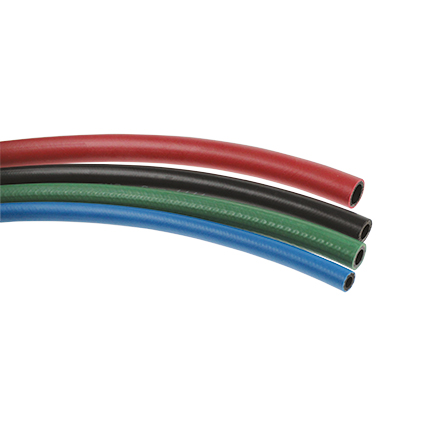
NBR push-in hoses (often referred to as Legris push-in hoses) are specifically designed for industrial supply lines carrying compressed air, water, and mineral oil-based media. NBR (Nitrile Butadiene Rubber) forms the actual sealing and inner layer in these hoses; its material properties combine good oil resistance with high sealing capability and wear resistance, making these hoses the preferred choice in assembly lines, maintenance lines, and machine peripheries. Parker Legris offers these push-in hoses in several colors for quick identification and in designs that allow for simple, tool-free assembly on push-in or quick-coupling systems.
Material Structure and Components
The typical construction of an NBR push-in hose consists of a smooth NBR inner layer, a reinforcing intermediate layer (textile or glass fiber reinforced), and a protective outer layer made of NBR or synthetic polymer. The NBR inner layer guarantees low permeability for air and oils, as well as a smooth surface to minimize pressure losses. The reinforcing layer defines the operating pressures and flexibility; depending on the design, various yarn layers and winding techniques are used to optimize pressure resistance, flexural fatigue strength, and kink resistance. Outer layers are formulated to be abrasion and weather resistant, although NBR remains less tolerant to UV and ozone than special EPDM or FKM compounds; for outdoor use, additional protective measures or alternative materials should be considered.
Designs, Dimensions, and Marking
NBR push-in hoses are available with inner diameters from 4 mm up to typically 12–20 mm; special dimensions are possible for custom orders. Wall thicknesses and reinforcement levels vary depending on the desired operating pressure. The hoses are often color-coded to differentiate between line types (e.g., compressed air, control air, oil) and reduce assembly errors. For applications with frequent movement or in confined spaces, specially flexible variants with reduced bending radius requirements exist. Smooth-bore constructions reduce deposits and facilitate flushing before commissioning.
Connections, Push-In Systems, and Seals
NBR push-in hoses are designed for push-in or quick-connect systems. Compatible connection systems include collet and clamping collet designs, compression fittings with O-rings, and screw-in or threaded adapters with conical sealing surfaces. Parker Legris offers standardized push-fit couplings that allow for tool-free seating and quick disassembly. Seals in the couplings are often also made of NBR; for higher temperatures or more aggressive media, FKM/Viton or EPDM seals are used. The selection of the seal according to medium and temperature is important: NBR seals well with mineral oils and air, while FKM is essential for higher temperatures and chemically aggressive fluids.
Pressure and Temperature Ranges
Operating pressure and temperature depend on diameter, wall thickness, and reinforcement structure. Typical application areas in the pneumatic segment are up to approximately 10–16 bar; with stronger reinforcement, higher pressures may be possible. In terms of temperature, NBR usually covers the range from about -30 °C to +80 °C; higher temperatures are possible for short periods, but sustained exposure leads to embrittlement and loss of elasticity. For hot water or steam applications, as well as for continuous use above 80 °C, robust alternatives such as EPDM or special high-temperature plastics should be chosen.
Media Resistance and Limitations
NBR offers excellent resistance to mineral oils, mineral oil-based hydraulic oils, compressed air, and most lubricants. Limitations exist with oxy-derivatives, ketones, esters, strong oxidizing agents, as well as aromatic hydrocarbons and certain solvents. NBR is not suitable for permanent food contact or medical applications with strict approvals. When in contact with oily-viscous media, it is recommended to test for plasticizer absorption, swelling, and hardness changes in a laboratory test or based on manufacturer compatibility data sheets.
Practical Examples from Industry
In assembly lines, NBR push-in hoses supply compressed air to pneumatic screwdrivers and grippers; the color-coded hoses enable quick troubleshooting and minimal downtime during replacement. In machine peripheries, they serve as lubrication oil supply lines for automatic dosing systems; here, the oil resistance of the NBR inner layer directly impacts service life and sealing integrity. In maintenance and service vehicles, flexible NBR lines are used as mobile supply lines because they are compact, kink-resistant, and easy to reconnect. A typical application is the temporary connection of a compressed air testing device to pneumatic distributors in assembly, where the push-in connection allows for quick and secure coupling. For low-pressure hydraulic pilot lines, NBR hoses offer a practical solution, provided the fluids used are mineral oil compatible and temperature conditions are met.
Assembly and Processing Tips
During installation, the minimum bending radius of the hose must be observed; excessively tight bends lead to kinks and localized stress, causing premature wear or blockages. Cutting with a clean, sharp hose cutter prevents fraying and ensures the sealing surface at the connection. Before coupling, the connection surface must be cleaned; foreign bodies in push-in systems lead to leaks and piston blockages. When using clamping connection elements, the recommended tightening torques and clamping distances must be observed; for hose clamps, ensure even contact pressure. Pressure tests after assembly are mandatory: build up pressure slowly, check for leaks with suitable testing equipment, and document the results.
Maintenance, Service Life, and Replacement Criteria
Regular visual inspections for cracks, hardening, swelling, or abrasion are required. Changes in elasticity, visible damage to the outer layer, or oil and dirt adhesion are indicators for replacement. In changing environments with strong temperature fluctuations, the service life is reduced; also, with chemical exposure to media that attack NBR, more frequent replacement intervals are necessary. For critical processes, a stock of pre-assembled hoses is recommended to quickly resolve downtimes.
Selection Criteria for Purchase
Choose the hose size according to flow requirements and permissible pressure loss; choose the reinforcement according to maximum system pressure; determine the seal type based on the medium carried and the operating temperature. Pay attention to the compatibility of the quick couplings with existing systems, to collet or clamping collet designs, and to the temperature and pressure ratings in the technical data sheets. Color options facilitate process documentation and operational troubleshooting. For Parker Legris products, technical data sheets and compatibility lists are available; further technical information and documentation can be found at https://maku-industrie.de/technik/ and specific application examples at https://maku-industrie.de/anwendungsbeispiele/.
Safety and Testing Requirements
NBR push-in hoses for industrial applications must undergo a pressure test before commissioning. The test pressures and test procedures depend on the operating pressure, hose dimension, and manufacturer requirements. For safety-relevant applications, check valves, pressure relief valves, and additional safety fittings must be integrated. Documentation of test results, serial numbers, and replacement intervals is part of safe operation.
Special Variants and Alternatives
For higher temperatures, aggressive chemicals, or UV/ozone exposure, alternative materials such as EPDM, FKM, or special polyurethanes are preferred. Polyurethane hoses offer higher abrasion resistance and better flexibility at low temperatures, while FKM offers excellent chemical and temperature resistance. NBR remains the economical standard solution when oil resistance and good mechanical properties are required at moderate temperatures.
Specific Selection Aid
Start by determining the medium and temperature conditions, identify the required flow rate and maximum system pressure, check existing connection types, and select the appropriate push-in or quick coupling. Emphasize documentation of material data sheets and seal compatibility; in case of doubt, perform compatibility tests with the actual fluid. Use the technical resources and application examples at https://maku-industrie.de/technik/ and https://maku-industrie.de/anwendungsbeispiele/ to find practical implementation cases and test protocols.
FAQs
1. For which media are NBR push-in hoses suitable?
NBR hoses are suitable for compressed air, water, and mineral oil-based lubricants and hydraulic fluids; they are not optimal for strong solvents, ketones, aromatics, or food applications. Before use, check the manufacturer's resistance tables for your specific medium.
2. How do I choose the correct hose diameter and pressure range?
First, determine the required volumetric flow rate and the permissible pressure differential; choose the inner diameter so that pressure losses remain within tolerances, and the reinforcement so that it safely exceeds the maximum system pressure. Manufacturer specifications for permissible operating pressure depending on diameter and temperature are binding decision aids.
3. When are alternative materials to NBR preferred?
Choose alternatives for continuously high temperatures (>80 °C), contact with aggressive chemicals, or exposed UV/ozone stress. EPDM, FKM, or special polyurethanes offer better resistance depending on the requirement, but must be evaluated based on cost and application specifics.