
Order Rectus accessories quick and easy via onlineshop
Many accessories for the Rectus quick couplings, plugs and hoses can be found here. Sealing kits, swivel joints, blow guns, dust caps and others fulfill the assortment.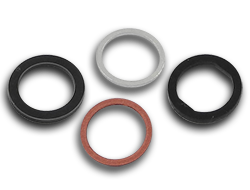
Accessories for Quick Couplings and Plugs – Precise Selection, Secure Connection
Matching accessories for quick couplings and plugs determine the functionality, sealing integrity, and service life of industrial connections. This text focuses on specific criteria for selecting connection components, sealing elements, protective parts, and mounting aids, as well as concrete application solutions in production lines, pneumatic systems, hydraulic installations, and fluid test benches. The goal is to provide quick technical orientation without marketing jargon.Materials and Material Selection
Material selection influences corrosion resistance, abrasion behavior, temperature, and pressure resistance. Stainless steel (AISI 316/304) is suitable for corrosive media and food-grade areas, offering high temperature and pressure tolerance. Brass is cost-effective, electrically conductive, and sufficient for many pneumatic and hydraulic applications, but shows weaknesses in chloride-containing environments. Aluminum reduces weight in mobile applications but has limited chemical resistance and tends to wear at threads and sealing seats. Elastomer seals are typically chosen from NBR (nitrile rubber) for oils and hydraulic fluids, EPDM for water and steam, or FKM (Viton) for increased temperature and chemical resistance. For aggressive media, PTFE inserts or graphite seals are used.Designs and Connection Types
Quick coupling accessories include adapters, reducers, blind plugs, protective caps, check valves, bleed valves, and holders. Important connection types are metric internal and external threads, G/R threads according to ISO 228, BSPP/BSPT, NPT for North America, as well as screw connections with cones and O-rings (e.g., JIC, ORFS). For hydraulic connections, crimpable hose ferrules and press fittings are common; pneumatic connections often use push-to-connect systems or compression fittings. When selecting, pay attention to the compatibility of the sealing seat geometry (conical seat vs. flat seat) and coaxial tolerances, as deviations can cause leaks and increased wear.Seals, Sealing Concepts, and Service Life
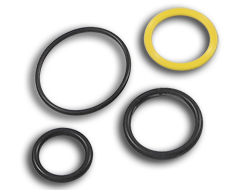
Seals are critical wear parts. O-rings should be specified by material, hardness (Shore A), outer and inner diameter, and cross-section. Documentation of the replacement interval in hours or switching cycles is recommended for systems with high operating frequency. For dynamic movements, U-cup or V-ring seals are often more durable than standard O-rings. Glide rings and disc spring closures increase sealing integrity at high pressures. For applications with temperature gradients, co-extruded sealing solutions or metal-PTFE combinations are advantageous. Check the compatibility of seal materials with media using specific chemical lists; NBR tolerates mineral oils, FKM resists gasoline and fuels.Functional Components: Valves, Shut-offs, Check Valves
Accessories that control flow behavior are crucial for operational safety. Switchable couplings with integrated shut-off valves prevent fluid or gas leakage when disconnected. Check valves integrate unidirectional flow control without additional installation effort. For bleeding tasks, manometer-supported bleeders or automatic bleed valves with finely dosed openings are suitable. For corrosive media or explosive atmospheres, attention must be paid to Ex-protection certification and suitable materials, as well as labeling according to DIN, ISO, or EN standards.Mechanical Fastening and Mounting Details
Secure fastening prevents vibration-induced breakage and leaks. Specific retaining clips, quick-release clamps, and threaded adapters must absorb static and dynamic loads. For hose connections, crimpable ferrules with a defined cross-section and crimping dies must be precisely matched to the hose and fitting diameter. For air or fluid-carrying lines, use strain reliefs and flexible hose lines with bending radii that comply with manufacturer specifications. For permanent connections, documentation of the tightening torque for screw connections and the use of calibrated torque tools is recommended.Environmental Conditions: Temperature, Pressure, Particles
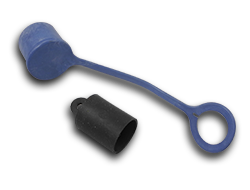
Select accessories based on maximum operating pressures and temperature limits. Hydraulic quick couplings are typically designed for several hundred to several thousand bar, pneumatic components for pressure ranges up to approximately 16 bar. Pay attention to operating and test pressures as well as temperature classes for seals. Particle filtration is mandatory in many applications: built-in screens, inline filter elements, or protective caps with integrated dust filters prevent the ingress of particles that can damage sealing surfaces. For applications in dusty or wet environments, protective caps with drainage holes or ventilation filters are recommended.Practical Application Examples
Example 1 – Assembly workstation in manufacturing: In an assembly cell with pneumatic nut tools, quick couplings with integrated shut-off valves and scratch-resistant protective caps are used. The couplings are made of brass, the O-rings of NBR, mounted on hose lines with crimpable ferrules. The shut-off valve allows the tool to be changed quickly and without air loss; the protective caps prevent contamination of the connection end faces during longer replacement cycles. Maintenance procedure: visual inspection at the start of the shift, leak test monthly, O-ring change every 12 months. Example 2 – Hydraulic test bench for components: On a test bench, stainless steel quick couplings with metal-guided PTFE seals are used to handle high pressures and aggressive test media. Adapters with NPT to G threads reduce leakage risks and ensure compatibility with imported test equipment. Accessories include blind plugs for securing unused outlets and bleed valves for removing encapsulated air before pressure build-up. Test tolerance: max. leak rate ≤ 0.1 ml/min at 500 bar. Example 3 – Mobile service unit outdoors: For a service system, aluminum connectors with corrosion-resistant coatings and FKM seals are chosen. Protective caps with chains prevent loss; quick-release holders allow quick access. Conditions: temperature range -20 °C to +70 °C, saline environment. Maintenance: remove salt deposits after each use, check seals semi-annually.Compatibility and Testing Requirements
Before selection, check the design dimensions, tolerance fields, sealing surfaces, and closing forces. Document material certificates (EN 10204), pressure tests (hydraulic tests DIN 20066 / ISO 19879), and, if applicable, explosion protection documents. Pay attention to the interchangeability of modular components in the field: standardized coupling families facilitate retrofitting. For safety-critical systems, life cycle management with spare parts inventory and regular functional checks is recommended.Maintenance, Spare Parts, and Procurement
A structured spare parts concept reduces downtime. Keep O-rings, protective caps, blind plugs, check valves, and crimp ferrules in stock. Replace seals at the first signs of wear; document material type, hardness, and installation date. For procurement, consult manufacturer data sheets for technical specifications and check compatibility via interface dimensions. Further technical background and application examples can be found at Application Examples and general technical information at Technology.Checklist (brief)
- Material & Sealant, Connection Thread, Pressure/Temperature Range, Protection Types, Mounting Details