
High-quality compression fittings by Parker Legris
Legris compression fittings enable the secure installation of plastic and metal tubing.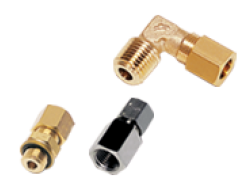
Technical Overview: Compression Fittings from Parker Legris
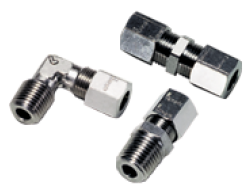
Compression fittings are designed for pressure-tight, releasable connections of thermoplastic and metal tubes. Parker Legris offers versions in brass and stainless steel (AISI 316L) with variants for pneumatic medium-pressure applications and fluid-carrying systems. Typical designs include straight male connectors, elbow and swivel elbow connectors, T-fittings and cross-fittings, as well as hose connectors and specific accessories such as replacement ferrules and seals. The product range covers standardized threaded connections (metric, BSP) and special connections for industrial applications.
Materials and Corrosion Protection
AISI 316L offers high corrosion resistance to chloride-containing media, aggressive cleaning agents, and humid environments. In areas with chemical exposure or food safety requirements, 316L is recommended over 304 due to its better resistance and smaller grain size. Brass is cost-effective, mechanically sufficient for many pneumatic applications, and offers good machinability; however, stainless steel is preferable when in contact with ammonia-containing media or seawater. Surface treatment, passivation, and, for brass, nickel plating, can influence service life and flow resistance.
Designs, Sealing Systems, and Sealing Technology
Compression fittings operate via a conical ferrule which, when tightened, presses against the tube, creating a form-fit and material-fit connection. Sealing is achieved through conical seating surfaces or additional seals such as elastomer O-rings (NBR, EPDM, FKM) or PTFE washers for aggressive media. Elastomers offer good sealing at low to medium temperatures, FKM for higher temperatures and chemical resistance, and PTFE for the highest chemical resistance. The combination of ferrule and O-ring allows for releasable connections with a defined sealing gap and minimizes leaks.
Pressure and Temperature Ranges, Mechanical Properties
Depending on the material, tube cross-section, and design, permissible operating pressures typically range from 0.1 bar (vacuum) applications up to several 200 bar in hydraulic versions. Parker Legris compression fittings for pneumatics and medium pressure usually operate in the 0–25 bar range, with special stainless steel versions achieving higher pressures. Operating temperatures are primarily determined by the seal and material: elastomers up to ~120 °C, FKM up to ~200 °C, PTFE significantly higher. Mechanically relevant data such as tightening torques, permissible bending cycles, and vibration resistance are product-specific and should be taken from the respective data sheets.
Tube Compatibility and Tube Preparation
Compression fittings are suitable for thermoplastic tubes (e.g., PA, PE, PTFE, PFA) and metal tubes (copper, stainless steel). Important criteria include the tube's outer diameter, wall thickness, and the surface quality of the tube ends. Tubes must have clean, burr-free cuts and a clean, deburred inner and outer edge; chamfering the outer edge facilitates ring insertion and prevents seal damage. The insertion depth is product-dependent and should be checked with markings on the tube. For thin-walled thermoplastic tubes, attention must be paid to internal stresses during tightening; for metallic tubes, cold forming by precision rings may need to be considered.
Connections, Threads, and Standards
Threads are available according to ISO/EN (metric), BSPP/BSPT, and in special designs. Male connectors typically use conical sealing surfaces or PTFE sealing rings; threaded connections must be assembled with defined tightening torques to avoid overstretching the sealing surface or damaging tubes. Some products are tested according to relevant standards (e.g., ISO 8434-1/2 for tube fittings); certified surfaces and materials are available for hygienic areas. Pay attention to the specific product labeling regarding media compatibility and permissible operating parameters.
Installation Practice and Tool Recommendation
Installation follows precise steps: check tube length, clean, deburr, and if necessary, chamfer the end, slide on the ferrule and nut, insert the tube until it stops, and tighten the nut with a defined torque. For some systems, a half to three-quarter turn after hand-tightening is prescribed, while others require torque wrench values. Specialized tools such as tube cutters, deburring tools, torque wrenches, and calibration sleeves increase process reliability. For re-installation, replacement ferrules and seals should be used if visible deformation or wear is present.
Cost-effectiveness, Maintenance, and Spare Parts
Brass variants offer lower acquisition costs; stainless steel extends maintenance intervals in corrosive environments. Since compression fittings are releasable, systems can be repaired or reconfigured without replacing entire pipelines. Regular visual inspections, leak tests, and re-tightening after initial commissioning reduce the risk of failure. Spare parts such as ferrules, nuts, and O-rings should be stocked project-specifically to minimize downtime.
Practical Examples
1. Pneumatic supply for an assembly workstation: In a production line, PA tubes (8 mm outer diameter, 1 mm wall thickness) are used. Nickel-plated brass compression fittings with NBR O-rings connect compressor solutions to cylinders. Before assembly, tube ends are deburred, insertion depth is marked, and connection nuts are tightened to the recommended hand-tight plus 90° turn. Leak test at 6 bar. Operation functions trouble-free at ambient temperatures of -10 to +60 °C.
2. Coolant circuit in a machine tool: For a closed coolant circuit with slightly corrosive water-glycol mixture, AISI 316L is chosen. Stainless steel tubing (Ø 12 mm) connects pumps, filters, and nozzles via compression fittings with PTFE disc seals. Assembly with a torque wrench according to the data sheet, system pressure 10–12 bar, operating temperatures up to 90 °C. Regular monitoring of conductivity and corrosion residues reduces downtime.
3. Chemical dosing in a laboratory environment: For dosed acids, PFA tubing is used. Stainless steel compression fittings with PTFE seat seals ensure chemical resistance. Tube ends are cleanly cut, chamfered, and insertion depths are checked with a calibration sleeve. System assembled without pressure and tested with a leak detection using a color indicator.
Availability, Product Selection, and Further Information
Parker Legris offers a wide range of standard parts as well as custom designs. For technical data sheets, material certificates, and detailed assembly instructions, please refer to the category page and other technical resources. Detailed application examples and process descriptions can be found at Application Examples. Technical background information on materials and connection technology is available on our technology page: Technology. For project inquiries with specific media, pressures, and temperature profiles, please provide tube dimensions, medium, and operating conditions.
- Application steps: Clean and deburr tube, chamfer, position ferrule and nut, insert tube until it stops, tighten nut according to specifications, perform leak test.
FAQs
1. Which seal should be chosen for aggressive media?
For aggressive chemicals, PTFE seals or FKM are recommended depending on temperature. PTFE offers the highest chemical resistance, FKM higher temperature stability with good chemical compatibility. Refer to the material data sheet of the respective medium for compatibility testing.
2. When is stainless steel (AISI 316L) absolutely preferable to brass?
Stainless steel is preferable for chloride-containing media, seawater applications, hygienic requirements, or when galvanic corrosion on adjacent components must be excluded. Also for higher temperatures and aggressive cleaning cycles.
3. How do I ensure tightness after assembly?
After assembly, you should perform a pressure test at or slightly above operating pressure, followed by a visual inspection for moisture, and re-tighten after 24–48 hours according to the specified values. Using leak detection sprays or color indicators, depending on the medium, increases error detection. When re-tightening repeatedly, check the ferrule and O-ring and replace if deformed.