
High quality fastening tools by Apex Tool Group
Technical Overview: Apex Tool Group Air-Powered Fastening Tools for Pneumatic Applications
Apex Tool Group fastening tools offer precise, robust solutions for industrial screw connections in production environments. The focus is on pneumatically driven rotary screwdrivers and impulse wrenches in various designs, characterized by definable torques, high operating cycles, and maintenance-friendly constructions. The goal is the reproducible creation of screw connections while adhering to specified tolerances with high process availability.
Product Classes and Typical Designs
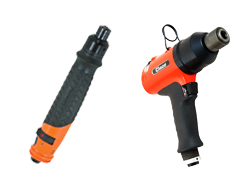
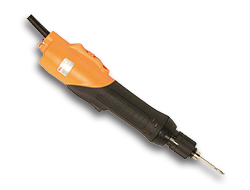
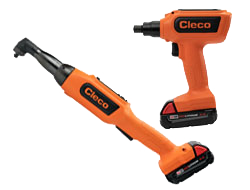
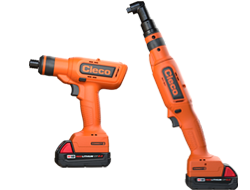
This category includes various designs that differ in power output, size, and interfaces. Angle and straight designs, inline models for confined spaces, and impact wrenches with high tightening torque for coarse fastenings are available. In addition to handheld tools, mounted tools for automated feeding systems exist. Typical drive and connection features include 1/4" to 3/4" square drives, quick couplings according to ISO 6150, and oil mist systems for lubrication.
Key features include: robust bearings (ball bearings or needle bearings), hardened drive shafts, high-quality seals (NBR, FKM for higher temperature resistance), low-wear impact mechanisms made of steel alloys, and housings made of aluminum or glass-fiber reinforced plastic for weight reduction. Noise damping and vibration reduction are achieved through specially tuned impact springs and vibration-damped grip areas.
Technical Specifications and Selection Criteria
Crucial for selection are the required torque, speed (rpm), torque accuracy, and reproducibility of the tightening processes. Apex Tool Group pneumatic rotary screwdrivers typically cover torque ranges from a few Nm up to several hundred Nm. Impulse wrenches deliver high impulse, allowing high tightening torques with relatively low reaction torque transfer to the operator. Torque adjustment is done mechanically via adjustable clutches or electronically in combined systems.
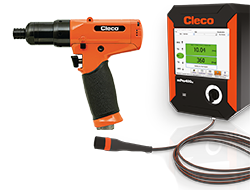
For applications with defined torque specifications, precision-controlled tools with electronic monitoring are recommended. These devices usually offer an interface for process data acquisition (e.g., CAN bus or digital I/O) and enable the transfer of tightening values to an MES. For rough assembly work, such as on frame structures or the assembly of heavy components, robust impact wrenches with high air consumption and short load cycles are more efficient.
Material Compatibility, Seals, and Lubrication
The selection of sealing materials depends on the temperature range, lubricant, and exposure substances. NBR seals are cost-effective and resistant to mineral oils, while FKM seals offer increased resistance to higher temperatures and aggressive chemicals. For stationary assembly lines, centralized oil mist or oil-air lubrication is advisable to increase the lifespan of bearings and impact mechanisms. Mobile tools should be equipped with small oil bottles or quick screw-in oilers to avoid contamination.
Connections, Air Supply, and Consumption
The air supply must be pressure-stable and dry. Recommended supply pressures are usually between 4 and 6 bar; critical tools require pressure regulators with fine filtration and condensate separators. The volume flow depends on size and load; typical values: compact rotary screwdrivers 30–150 l/min, heavy impulse wrenches 200–1000 l/min. The use of dryers and oil removal systems extends service life and reduces maintenance effort. Quick couplings and coiled hoses minimize reaction forces at the tool holder and simplify changes in the production line.
Maintenance, Servicing, and Service Life
Regular maintenance consists of cleaning, lubrication, seal and bearing inspection, and functional checks of the impact mechanism. Common intervals: daily visual check, weekly lubrication for intensive use, complete inspection every 3–6 months. Replacement of critical wear parts such as impact spring, hammer/anvil set, and bearings should be documented. Many Apex models offer a modular design for quick part replacement without special tools. Spare part availability and service concept are relevant criteria for selection in production-critical applications.
Connection Interfaces and Bit Systems
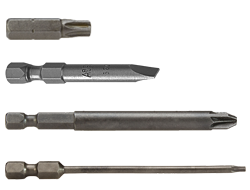
Compatibility with bit systems is crucial for process stability. Application areas range from precision bits for fine fastenings to robust hex and TORX drives. For automated fastening stations, precise metric drives and locking mechanisms are required to prevent bit loss. Screw-fall prevention and magnetic holders improve handling and cycle times in manual workstations.
Practical Examples from Production
Example 1 – Assembly of a Gearbox Housing Unit: In a hall, axle connections with M8-M10 screws are fastened into aluminum housings. Specification: 30 Nm ± 3%. Tool selection: pneumatic rotary screwdriver with mechanical, finely adjustable clutch and 1/4" bit holder, combined with torque monitoring at the fastening station. Setting: air pressure 5 bar, hose 8 mm, oil mist lubrication 1 drop/shift change. Quality check: random sample measurement with torque testing 1x/shift, documentation in MES.
Example 2 – Body Construction, Pre-fastening and Final Tightening: Pre-fastening is done with a light rotary screwdriver (6–12 Nm) for component fixation; final tightening with an impulse wrench for M12 fasteners at 80 Nm. Configuration: angle rotary screwdriver for pre-fastening, straight impulse wrench for final tightening, air supply via ceiling rail at 6 bar, throttle valves to reduce switch-on surges. Testing process: force-measuring fastening stations check every 10th part, documented rework for deviations.
Example 3 – Maintenance of a Production Line: Maintenance crew replaces bearings on conveyor frames and uses a universal rotary screwdriver with variable torque limitation to prevent overtightening. Procedure: set tool to max. 50% of the permissible tightening torque, short impulse cycles, visual inspection of screw position. Advantage: reduced wear on screws and component threads, lower downtime.
Process Integration and Automation
Pneumatic fastening tools can be integrated into automated handling systems. For inline assembly, precise positioning devices, vibration-damped holders, and automatic bit changers are available. Electronic controls for monitoring tightening parameters enable traceability and process control. Interfaces to master computer systems improve scrap minimization and enable data-based maintenance planning (Predictive Maintenance).
Safety and Ergonomics
Safety-relevant aspects include torque limitation, reaction damping, covering of rotating parts, and sound pressure limitation. Ergonomics are reflected in grip designs, weight distribution, and overall height. For repetitive tasks, lightweight variants with vibration-damped hand rests are recommended; for heavy fastenings, counterweight or balancer systems are advisable to reduce operator strain.
Typical Application Areas
The tools are suitable for automotive, mechanical engineering, electrical appliance manufacturing, aerospace components, and maintenance in manufacturing operations. For detailed technical specifications and comparison tables, please visit our technical page: https://maku-industrie.de/technik. Application examples are concisely described at https://maku-industrie.de/anwendungsbeispiele.
- Typical models: pneumatic rotary screwdrivers (precision to powerful), impulse wrenches (short-term high tightening torques), angle and direct drive variants
Procurement and Quality Criteria
When procuring, attention should be paid to torque accuracy, service life specifications (B10/bearing life), availability of wear parts, and service contract options. Test protocols should include calibration intervals. Look for clear serial number identification for traceability and optional interfaces for process data acquisition.
FAQs
1. What air pressure and flow values should I choose for my pneumatic rotary screwdriver?
Standard values are 4–6 bar; compact rotary screwdrivers typically require 30–150 l/min, heavy impulse wrenches 200–1000 l/min. Use pressure regulators, fine filters, and condensate separators; for critical applications, a stabilized 5 bar range is common.
2. How often should impact mechanisms and bearings be maintained or replaced?
Daily visual checks and weekly lubrication are minimum requirements for intensive use. A complete inspection every 3–6 months is recommended; replacement intervals for impact mechanism components and bearings depend on operating hours and load, typically after 6–18 months of continuous operation.
3. When is an impulse wrench the appropriate tool type compared to a rotary screwdriver?
Impulse wrenches are preferable when high tightening torques are needed in short cycles and, at the same time, the reaction force for the operator needs to be reduced. Rotary screwdrivers are suitable when precise, repeatable torque values and gentle tightening on sensitive components are required.