
Buy high quality low-priced seals and PTFE tape for quick couplings
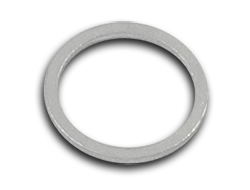
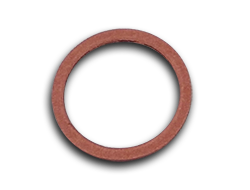
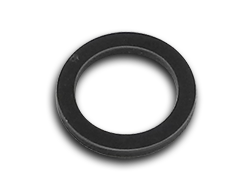
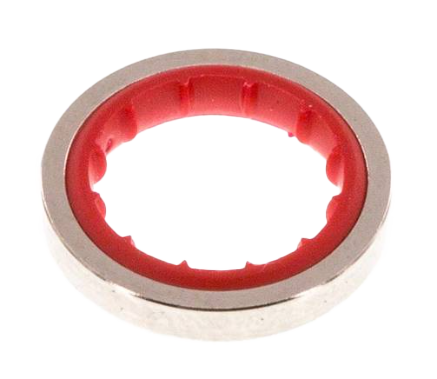
Replacement seals made of aluminum, fiber or PVC for different sizes. Sealing sets replace the O-rings in your quick couplings and plugs.
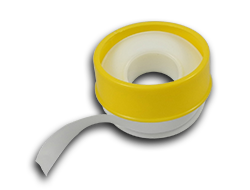
Selection, Materials, and Application of Seals for Quick Couplings
For secure connections on Rectus quick couplings, choose suitable seals and sealing tapes. These components determine the tightness, pressure resistance, media compatibility, and service life of a connection. In technical applications, materials such as PTFE, Fiber, PVC, and Aluminum are prominent—each with clearly defined properties for specific operating conditions. This text provides practical information on materials, designs, sealing principles, connection solutions, and selection criteria for industrial applications.
Materials and Properties
PTFE (Polytetrafluoroethylene) offers extreme chemical resistance, very low friction, and a wide temperature range (typically -200 °C to +260 °C). PTFE seals are particularly suitable for aggressive media, high cycle counts, and applications where contamination must be avoided. A disadvantage is its lower elasticity; in dynamic seals, constructive pre-tensioning or a combination with elastic materials is often necessary.
Fiber seals usually consist of pressed fiber materials with resin binders or reinforced rubber compounds. They offer good compression properties, tightness at medium pressures, and temperature resistance up to approximately 250 °C, depending on the mixture. Fiber is suitable for static and slightly dynamic sealing points, especially with oil-based or water-based media.
PVC seals are characterized by their cost advantage, good chemical resistance to many aqueous solutions, and easy processing. PVC is elastic, can be easily used in molded rings or sealing tapes, and is suitable for temperatures typically from -20 °C to +60 °C. PVC is unsuitable for high temperatures, strong solvents, or all fluorine compounds that lead to swelling.
Aluminum seals are often used as flat sealing washers or more massive sealing rings when high pressure, temperature, and mechanical stress are paramount. Aluminum offers low corrosion resistance without appropriate coating but is lightweight and dimensionally stable. Typical applications include metal-on-metal seals or as carriers for elastic sealing materials.
Designs and Sealing Concepts
Seals for quick couplings come in several forms: O-rings, flat gaskets, ring seals, sealing tapes, and molded sealing inserts. O-rings made of elastic material effectively seal axial and radial gaps but require appropriate groove dimensions and material selection. Flat gaskets made of fiber or PTFE are useful for flat flange surfaces. Sealing tapes are used to compensate for gap dimensions or as a temporary repair solution for leaky connections.
For quick couplings, the sealing effect is often combination-dependent: the combination of a metal support ring and an elastic sealing ring leads to reliable tightness under changing pressures and temperatures. Equally important are the surface roughness and tightening torque of the connection fittings; overtightening can cause seal damage, while undertightening leads to leaks.
Connections, Tolerances, and Assembly
Seals must be selected to match the connection geometry of the coupling. Important parameters include groove width, groove depth, flange diameter, and installation position. For quick couplings, it is important to observe the permissible immersion depth and free radial movement to prevent the sealing ring from being squeezed or displaced. Assembly includes cleaning the sealing surfaces, checking for burrs and damage, light lubrication with a media-compatible lubricant (for O-rings), and insertion without twisting.
After assembly and initial commissioning, check the connection for tightness under operating pressure. In many cases, an initial pressure test with inert gas or the process medium at reduced temperature is recommended to observe setting behavior and material expansion.
Application-Oriented Practical Examples
Example 1 — Chemical Manufacturing, Aggressive Media: In a line for corrosive acid solutions, Rectus quick couplings with PTFE O-rings are used. The changeover occurs when batches are switched. PTFE prevents swelling and chemical decomposition; the seal is designed as a half-ring to accommodate axial movements. Before commissioning, a leak test with nitrogen is performed at 1.5 times the system pressure.
Example 2 — Pneumatics in the Assembly Hall: For pneumatic tools in series assembly, PVC seals are installed in plug couplings. The seals serve as a cost-effective replacement item for frequent coupling cycles. Regular visual inspection and replacement intervals based on operating hours ensure availability. In case of heavy contamination, a seal variant with an additional protective ring is used.
Example 3 — Hydraulic Lubrication Circuits: In hydraulic units with oil mist lubrication, fiber flat gaskets are used between the coupling flange and the line. The fiber gasket provides surface adaptation, controls leakage under high pressure, and minimizes the risk of cavitation effects. Assembly requires clean surfaces and tightening torques according to manufacturer specifications.
Selection Criteria and Service Life Assessment
Crucial for selection are operating pressure, temperature, medium, mechanical stress, and installation position. Calculate the maximum temperature fluctuation the material must withstand and choose material families that demonstrate chemical resistance to the process medium. Service life characteristics are based on test cycles, durometer hardness of elastomeric materials, thermal aging, and fatigue due to pressure changes. Documented tests or manufacturer data sheets provide typical failure modes and replacement intervals.
For selection support, consider the following points:
- Material resistance to specific media; pressure and temperature limits of the material; seal design suitable for the connection geometry.
Maintenance, Storage, and Spare Parts Strategy
Maintenance includes visual inspection, leak testing, and planned replacement before the end of the expected service life. Seals should be stored cool, dry, and protected from light to prevent embrittlement and material aging. A spare parts logistics with storage of common sizes reduces downtime. For critical processes, redundancy is recommended: two separate couplings with independent seals allow for a change under pressure or during short downtimes.
Standards, Documentation, and Test Procedures
Observe relevant standards for seals, materials, and test procedures (e.g., ISO forms, DIN specifications). Test documentation includes material certificates, test reports for pressure resistance, media resistance tests, and, if applicable, service life tests. For sensitive applications, certificates for purity and particle control are important. For documentation and spare parts ordering, use the exact type designation of the coupling and the cross-sectional dimensions of the seal.
Further technical information and application examples can be found on our pages: Technology and Application Examples.
Procurement and Cost Aspects
Short-term inexpensive seals only pay off if they meet operational requirements. PTFE and aluminum variants have higher acquisition costs but provide longer service lives in highly stressed or corrosive environments. PVC and fiber offer favorable spare parts costs and easy availability. Calculate spare parts requirements based on cycles, temperature cycles, and previous failure rates; consider labor costs for replacement and potential production losses.
Recommended Test Steps Before Final Selection
Perform material compatibility tests with the actual process medium, check dimensions on existing couplings, test the seal under the intended operating pressure and temperature changes, and in the planned installation position. Document the results and determine replacement intervals and stock levels based on the collected data.
FAQs
Which seal is suitable for aggressive chemicals?
PTFE seals offer the best general chemical resistance and are suitable for most aggressive media; check specific compatibility data sheets for special chemicals.
How do I determine the correct seal size for my Rectus quick coupling?
Determine groove dimensions, flange diameter, and installation position on the coupling, use manufacturer specifications for groove and ring specifications, and check the clear tolerances in the technical drawing of the coupling.
How long does a seal typically last?
The service life depends on the material, pressure cycles, temperature, and medium; typical intervals range from a few months in aggressive operating conditions to several years with moderate operating parameters. Rely on documented test cycles and scheduled replacement before the expected end of service life.