
Buy reducing bushes made of brass or stainless steel online
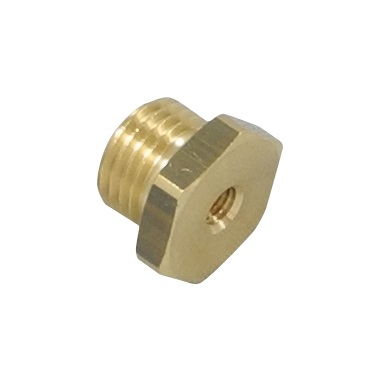
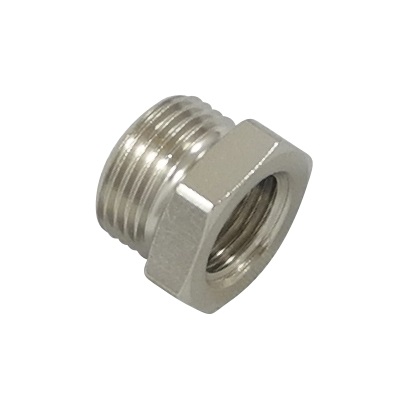
Order Parker Rectus reducing bushes made of brass, brass nickel plated, stainless steel 1.4305 and 1.4404, POM and PVDF online at maku.


on Stock

on Stock



on Stock
on Stock
Buy Brass or Stainless Steel Reducing Nipples Online
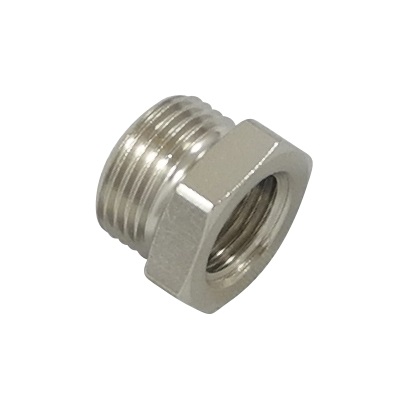
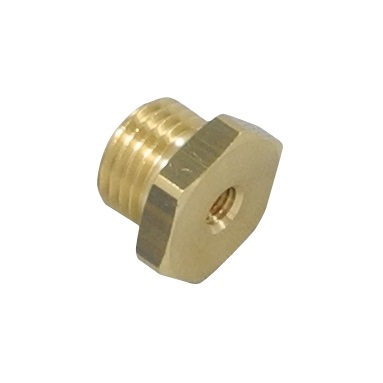
Reducing nipples reliably and space-efficiently connect pipe and hose systems with different diameters. The choice of materials, thread types, and sealing solutions determines functional reliability, service life, and maintenance effort. At maku, you will find Parker Rectus reducing nipples in brass, nickel-plated brass, stainless steel 1.4305 (303/304-like) and 1.4404 (316L), as well as versions in technical plastics such as POM and PVDF. This text describes material properties, designs, sealing concepts, connection combinations, and concrete practical examples for direct applicability in industry.Materials and Their Application Advantages
Brass offers high formability and excellent corrosion resistance in neutral media. Chrome-plated or nickel-plated brass reducing nipples increase abrasion resistance and provide additional protection against lubricant contact. Stainless steel 1.4305 is corrosion-resistant in slightly aggressive environments and suitable for food, beverage, and many chemical applications, as long as chloride-containing media are limited. Stainless steel 1.4404 (316L) is used when increased resistance to pitting and crevice corrosion is necessary, for example, in offshore or chloride-containing process media. POM nipples provide high wear resistance, good sliding properties, and are suitable for dry or lightly stressed chemicals, while PVDF (Kynar) offers outstanding chemical resistance to strong acids and solvents and remains stable at higher temperatures.Designs and Thread Variants
Reducing nipples are available as male/female thread, conical, or cylindrical variants. Conical threads (BSPT) do not reliably seal with parallel threads without additional materials; here, conical versions or sealants are required. Cylindrical threads (BSPP, NPT-parallel) require seals such as O-rings or sealing tape. For fine installations in hydraulic or pneumatic systems, ISO, G, and NPT standards must be observed. Thread lengths, wrench sizes, and sealing profiles influence assembly access and leakage risk. Parker Rectus models often offer metric and imperial interfaces in one product range, which facilitates the combination of different system standards.Sealing Solutions and Connection Technology
The correct seal is crucial. Metallic sealing surfaces made of stainless steel can be designed to seal metallically, but are sensitive to contamination and surface roughness with small tolerances. Elastomer seals (NBR, FKM, EPDM) are common: NBR for mineral oils and air, FKM (Viton) for higher temperatures and aggressive oils, EPDM for hot water and steam. PVDF and POM versions are often designed for use without additional seals, or with integrated molded seals for easy assembly. In food technology applications, FDA-compliant sealing materials must be selected. For oxygen or medical applications, fat-reduced, oxygen-compatible coatings and sealants are mandatory. For permanently tight screw connections, a combination of suitable thread profile, flat seal, and controlled tightening torque is recommended.Corrosion, Chemical Resistance, and Maintenance
The choice of material depends on the media, temperature, and external influences. Stainless steel 1.4404 is preferred when chloride-containing media, seawater, or aggressive chemicals are present. Brass is economical, corrosion-resistant in neutral to slightly acidic environments, but less suitable for ammonia, sulfur-containing media, and certain organic solvents. POM and PVDF are chemically resistant to many acids and alkalis; PVDF also remains stable at higher temperatures and is characterized by low permeation. Regular visual inspection, leak testing, and, if necessary, retightening after initial operation extend service life and prevent micro-infiltrating corrosion. In potentially explosive atmospheres, antistatic versions or grounded metallic nipples are necessary.Connection Combinations and System Integration
Reducing nipples are used to couple differently dimensioned pipe sections, fittings, measuring instruments, or hose connections. Typical combinations are male thread to female thread, male thread to hose barb with crimp or hose clamp, or thread to quick couplings. In system integration, the pressure range is crucial: pneumatic systems require different tolerances and sealing materials than hydraulics up to 400 bar. Temperature changes and thermal expansion must also be considered during selection; material pairings with different thermal expansion can lead to leaks under cyclic loading.Practical Examples
Practical Example 1 – Food Technology Production Line: In a filling plant, a reducing nipple made of stainless steel 1.4404 is used to connect a CIP-capable pipeline with a measuring device with a smaller connection thread. Seal: FDA-compliant EPDM O-ring. Assembly note: Select tightening torque so that the O-ring surface is homogeneously compressed; regular CIP temperatures up to 90 °C are tolerated by the material without elastomer damage. Result: Sterile tightness and easy disassembly for cleaning cycles. Practical Example 2 – Chemical Dosing System: For acids and solvents, a reducing nipple made of PVDF is used to reduce a 1/2" pipe to a 1/4" dosing hose. Internal sealing by form-fitting flange contour, no additional elastomer seal required. Assembly note: Check clean cut surfaces, soft sealing seats, use hose with material compatibility (e.g., PTFE-lined hose). Result: Chemically resistant connection without galvanic corrosion. Practical Example 3 – Hydraulic Service Area: In a maintenance station, a nickel-plated brass reducing nipple is used to temporarily couple hydraulic hoses with different connection sizes. Sealing by PTFE sealing tape and NBR O-ring at low temperatures. Assembly note: No excessive forces; nickel-plated surface minimizes wear during repeated screwing. Result: Quick conversions without contamination risk from wear particles.Selection Criteria and Ordering Information
Select material, thread, and seal based on process parameters: medium, temperature range, pressure, required corrosion resistance, as well as assembly and maintenance requirements. Check thread type and standard (BSPP, BSPT, NPT, M-profiles). Pay attention to surface roughness for metallic sealing and to clearance dimensions in confined installation spaces. For mixed materials (e.g., stainless steel to plastic), pay attention to different thermal expansion and galvanic compatibility. For special applications such as food, medical, or oxygen, specific material certificates and declared sealants are recommended. * Unsure about selection? Use the technical overview at maku Technik or check specific application examples at maku Anwendungsbeispiele.Quality, Standards, and Tests
Reducing nipples for industrial applications should be manufactured according to relevant standards and possess material certificates or factory test certificates, especially in food or medical technology areas. Check specifications for leak tests, pressure test loads, and heating behavior. For safety-relevant systems, operators require test certificates and batch traceability. Parker Rectus products often offer corresponding documentation and spare parts lists.Brief and Precise Assembly Instructions
Before assembly, clean internal and external threads, check sealing surfaces for damage. Lightly lubricate elastomer seals, protect metallic sealing surfaces with suitable paste if specified. Apply tightening torque according to manufacturer's specifications to prevent overstretching or damage to the thread. For recurring disassemblies, pay attention to corrosion protection and, if necessary, provide for replacement of the seal.Procurement and Logistics
Order nipples in appropriate quantities and size classes, considering storage capacity and usage cycles. For spare parts management, standardization to a few material and thread variants is recommended to minimize changeover times and reduce inventory costs. Use the product filters at maku to quickly find material, thread, and size.FAQs
1. Which material is best suited for aggressive chemical media?For aggressive acids and organic solvents, PVDF is the first choice. Stainless steel 1.4404 is suitable for chloride-containing media if organic solvents are not a factor. Brass is not recommended for aggressive chemicals. 2. Do I need to use a sealant with conical threads?
Conical threads (BSPT/NPT) create a metallic fit that often requires sealants or sealing tape to remain permanently gas and liquid tight. Parallel threads (BSPP) require a seal such as an O-ring or flat gasket. 3. What should be considered when combining metal and plastic nipples?
Pay attention to different thermal expansion, possible stresses during temperature changes, and galvanic effects. Choose compatible seals and limit the tightening torque to avoid thread cracks in the plastic.