
Order low-priced fittings brass nickel plated by Parker Legris
Parker Legris nickel-plated brass threaded connectors offer a wide variety of shapes and thread types to provide thread-to-thread connection solutions for harsh environments. Max working pressure: 60 bar, température: -10°C to +80°C.

0900 - Straight male orientable adaptor, male thread
Fittings Brass nickel plated, Straight male orientable adaptor, male thread, Brass nickel plated

0901 - Straight male orientable adaptor, male thread
Fittings Brass nickel plated, Straight male orientable adaptor, male thread, Brass nickel plated

0902 - Sleeves, female thread
Fittings Brass nickel plated, Sleeves, female thread, Brass nickel plated

0903 - Reducer, male to female
Fittings Brass nickel plated, Reducer, male to female, Brass nickel plated

0904 - Reducer, male to female
Fittings Brass nickel plated, Reducer, male to female, Brass nickel plated

0905 - Reducer, male to female
Fittings Brass nickel plated, Reducer, male to female, Brass nickel plated
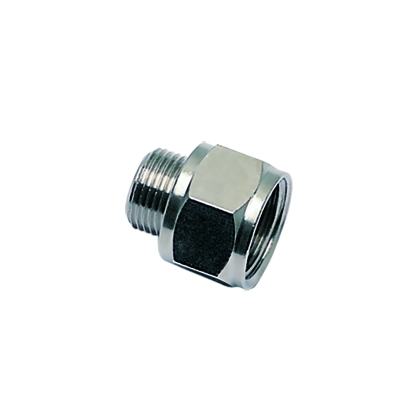
0906 - Increasers, male to female
Fittings Brass nickel plated, Increasers, male to female, Brass nickel plated
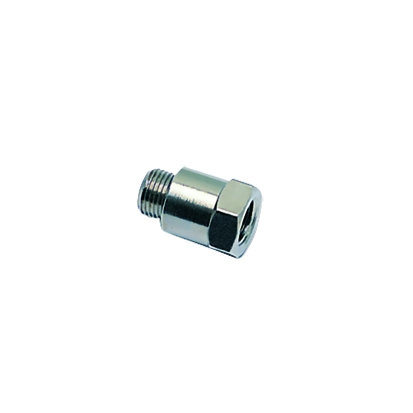
0907 - Extended adaptor, male to female
Fittings Brass nickel plated, Extended adaptor, male to female, Brass nickel plated

0908 - Crosses, female thread
Fittings Brass nickel plated, Crosses, female thread, Brass nickel plated

0909 - Crosses, male to female
Fittings Brass nickel plated, Crosses, male to female, Brass nickel plated

0910 - Y manifold, female thread
Fittings Brass nickel plated, Y manifold, female thread, Brass nickel plated
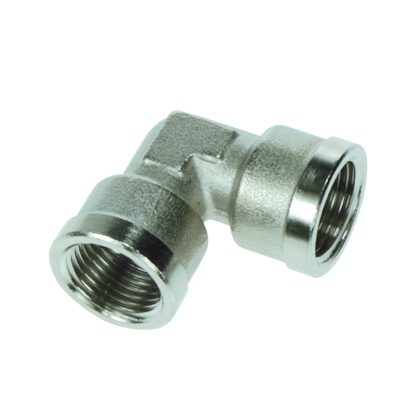
0912 - Elbow connections, female thread
Fittings Brass nickel plated, Elbow connections, female thread, Brass nickel plated

0913 - Elbow connections, male to female
Fittings Brass nickel plated, Elbow connections, male to female, Brass nickel plated

0914 - Elbow connections, male thread
Fittings Brass nickel plated, Elbow connections, male thread, Brass nickel plated

0915 - Equal tees, female thread
Fittings Brass nickel plated, Equal tees, female thread, Brass nickel plated

0916 - Equal tee, male to female
Fittings Brass nickel plated, Equal tee, male to female, Brass nickel plated

0917 - Equal tee, male to female
Fittings Brass nickel plated, Equal tee, male to female, Brass nickel plated

0920 - Bulkhead fittings, female thread
Fittings Brass nickel plated, Bulkhead fittings, female thread, Brass nickel plated

0927 - Equal tee, male thread
Fittings Brass nickel plated, Equal tee, male thread, Brass nickel plated

0928 - Equal tee, male to female
Fittings Brass nickel plated, Equal tee, male to female, Brass nickel plated
Delivery time on request

0922 00 19 Elbow male thread
Fittings Brass nickel plated, Elbow connection, male thread, M5x0,8 - M5x0,8
Price on request
Delivery time on request

0923 00 19 Equal Tee female/male thread
Fittings Brass nickel plated, equal tee, male to female, 3 x M5x0,8
Price on request
Delivery time on request

0924 00 19 Equal Tee female/male thread
Fittings Brass nickel plated, equal tee, male to female,
Price on request
Nickel-Plated Brass Fittings: Technical Properties, Applications, and Selection Criteria
Nickel-plated brass fittings reliably and corrosion-resistantly connect pipes, hoses, and components in fluid circuits. The nickel-plated surface combines the mechanical strength of brass with improved chemical and abrasion resistance, resulting in elbows, T- and Y-distributors, cross fittings, sleeves, threaded adapters, and hose barbs used in industrial production facilities, pneumatic and hydraulic systems, and supply lines. For planners and purchasers, in addition to leak-tightness and material compatibility, norm quality, thread precision, and ease of assembly are paramount. Parker Legris nickel-plated brass hose barbs and fittings offer a wide variety of types and precise manufacturing tolerances for standardized connections and special installation situations.Material and Surface Finish
Brass as an alloy provides good strength and formability; nickel plating serves as a protective layer against oxidation, increases surface hardness, and reduces friction during installation and removal. Typical nickel plating thicknesses in industrial applications range between 5 and 25 µm, depending on corrosion protection requirements. For media with abrasive particles or slightly aggressive chemicals, nickel plating offers a significant advantage over bare brass. For high-temperature applications, the metallic layers are insensitive up to approximately 150–200 °C; above this, the layer and alloy can change and affect seals.Designs and Connection Variants
The available designs cover all common installation scenarios: straight sleeves and double nipples for inline connections, 90° and 45° elbows for directional changes, T- and Y-distributors for branches, and cross fittings for complex distribution networks. Thread types include imperial and metric versions (e.g., BSP, NPT, ISO threads) as well as clamp or crimp connections for hose systems. Legris hose barbs are specially profiled to minimize hose resistance and slippage; they are compatible with various hose materials such as NBR, EPDM, PTFE, and PU. For screw-in or push-in connections, the thread tolerance is crucial for leak-tightness; precisely manufactured threaded adapters and reducing nipples prevent flank misalignment and assembly errors.Seals and Sealing Concepts
Sealing concepts for nickel-plated brass fittings are based on a combination of metallic precision and elastic seals. Threaded connections often use PTFE sealing tape or form-fitting O-rings, which must be selected according to the material: NBR for oils and mineral oils, EPDM for hot water and steam, FKM (Viton) for aggressive media and higher temperatures, and PTFE for chemically aggressive environments. For screw connections to thin-walled components, a washer or an O-ring seating surface is recommended to prevent material deformation. Screw fittings with a conical seating surface require clean, burr-free surfaces; contaminated threads or bent sealing surfaces are the main cause of leaks.Technical Data, Pressure and Temperature Ranges
Nickel-plated brass fittings cover typical operating pressures from vacuum to several hundred bar, depending on design, wall thickness, and thread. Typical pressure ratings for pneumatic connections are up to 16 bar, while for liquid and hydraulic applications, special nickel-plated brass parts can be designed for up to 300 bar. Temperature limits depend on the brass alloy, nickel plating, and sealing materials used. Compatibility with media (water, air, oil, hydraulic fluids, gases) must be checked before selection, especially for gaseous media with increased diffusion behavior or thermally fluctuating processes.Assembly, Handling, and Maintenance
Ease of assembly is a key advantage of nickel-plated brass fittings: the smooth surface reduces wear when inserting hoses and prevents seizing on threads. When assembling threaded parts, a controlled tightening torque must be observed to avoid seal compression. Hose barbs require suitable hose clamps or crimp sleeves, depending on system requirements; for dynamic pressure applications, crimp connections are preferred. Maintenance intervals depend on operating conditions; for abrasive media and elevated temperatures, shorter inspection cycles are advisable. Visual inspection for corrosion spots, loose connections, and cracks in seals is part of every maintenance. For safe disassembly, the system should be depressurized and, if necessary, flushed to remove residues.Compatibility, Material Pairings, and Galvanic Effects
When combining nickel-plated brass with other metals, electrochemical compatibility must be considered. While nickel plating reduces the risk of contact corrosion, direct connection with aluminum or significantly nobler materials can lead to galvanic corrosion in the presence of an electrolyte. Plastic hoses and PTFE lines are unproblematic; for copper or steel lines, transition pieces or insulating washers should be used. For applications with conductive media, the use of corrosion-resistant intermediate pieces or specially coated fittings is recommended.Practical Examples
In a paint shop, a nickel-plated T-distributor is used to supply compressed air to two spray guns; the smooth surface reduces particle adhesion and allows quick disassembly for cleaning. In food processing, a nickel-plated threaded barb connects a CIP line to a pump system; EPDM O-rings ensure leak-tightness and media-compatible elasticity. In an assembly line, a 90° elbow provides space-saving routing for pneumatic cylinders, with crimp connections on PU hoses allowing repeated assembly cycles without performance loss. For laboratory applications, nickel-plated threaded adapters are used to securely connect gaseous sample lines to measuring devices; here, exact thread tolerance is crucial for reproducible measurement conditions. Further specific application cases and assembly instructions can be found at https://maku-industrie.de/anwendungsbeispiele/ and technical components for installation at https://maku-industrie.de/technik/.Selection Criteria for Procurement
When selecting, the primary factors are material, connection type, and sealing system. Choose nickel-plated brass fittings when corrosion protection, mechanical strength, and surface hardness are required. Pay attention to documentation on pressure and temperature range, test certificates (e.g., TÜV, EN standards), and material certificates for the brass alloy used. Check whether the offered elbows, distributors, sleeves, and threaded adapters are compatible with existing nominal sizes and hose types, and whether seals are available as spare parts. For series procurement, standardization to a few connection sizes and repeatability of manufacturing are crucial for reduced inventory costs. Checklist before ordering:- desired connection size
- thread type (BSP/NPT/ISO)
- medium
- operating pressure
- operating temperature
- seal type
- required certificates.