
Cleco nutrunners as inline, angled and pistol grip
Pneumatic nutrunners by Cleco angled, straight and pistol grip for high quality standards in processing and application you can get here.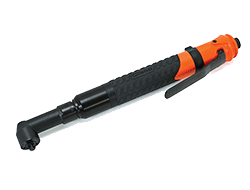
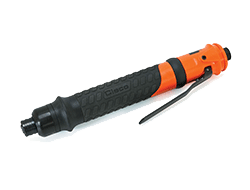
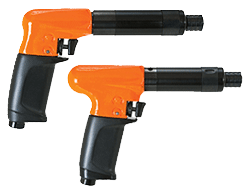
Cleco Rotary Screwdrivers in Angle, Straight, and Pistol Grip Forms
Cleco pneumatic rotary screwdrivers in angle, straight, and pistol grip configurations offer precise torque control, robust design, and modular connection options for industrial production lines. These tools are designed for series assembly, fine assembly, and downstream final inspections. Key factors include torque accuracy, repeatability, ergonomic design, and reliability of the air supply. In this category, you will find variants with continuously adjustable torques, electronic controls, or mechanical clutches for overload shutdown.
Components, Materials, and Sealing Systems
Cleco rotary screwdriver housings are predominantly made of anodized aluminum or glass-fiber-reinforced composite material to minimize weight and ensure corrosion resistance. Shafts, pinions, and clutch elements are typically made of hardened tool steel or alloyed stainless steel to reduce wear during high cycle rates. Bushings, bearings, and seals are crucial for service life and maintenance intervals: radial and needle bearings optimize torque transmission, while HNBR and fluorocarbon rubber (FKM) seals improve resistance to oil, fuels, and cleaning agents. For applications in the food or pharmaceutical industry, special FDA-compliant materials are available.
Connections, Air Supply, and Accessories
Compressed air is supplied via standard 1/4" or 3/8" NPT/BSP connections; rotating quick couplings, swivel air connectors, and external air filters with water separation extend tool life. Cleco rotary screwdrivers offer either internal air regulators or the option for external motor throttling. Regulated compressed air lines with a pressure range of 4–8 bar, oil-free or oil-lubricated supply depending on the model, and inline lubricators for lubricating moving parts are important. Electronically controlled models additionally require electrical control via sensor I/O or fieldbus (e.g., Profinet) for integration into manufacturing cells.
Designs and Ergonomic Aspects
Angle rotary screwdrivers allow for restricted installation space and accessibility in narrow grooves; straight or inline versions are preferred for linear assembly stations with automated feeding; pistol grip forms reduce muscle strain during manual, repetitive operations. Ergonomic features include vibration-damping handles, balanced center of gravity, and variable triggers. The choice of design depends on the accessibility of the screw head, desired cycle rate, and assembly environment.
Drive and Clutch Variants
Cleco offers mechanical safety clutches, collapsing torque cams, and electronically controlled shut-off systems. Mechanical clutches are robust and low-maintenance; electronic shut-off devices enable precise shutdown upon reaching the preset torque and provide process data for SPC systems. For high-speed applications, direct drives with short gear ratios are useful, while for high force requirements, multi-stage planetary gears are employed. The choice influences start-up and braking behavior as well as adherence to specified torque tolerances.
Applications and Practical Examples
Practical Example 1: Assembly of a gearbox component in the automotive industry. In an assembly line with confined space, an angle rotary screwdriver with a mechanical clutch is used. The screw head is a 1/4" hex socket, air connection 1/4" BSP with a rotary coupling. The seals are FKM to ensure solvent resistance during the degreasing process. A torque of 12 Nm with a tolerance of ±3% is set. The machine sends a signal to the PLC after each cycle to detect and reject faulty screw points.
Practical Example 2: Series production of electric motors. Here, a straight rotary screwdriver with electronic torque control and feedback is installed. Air is supplied via inline filters and a central oil-air lubrication system. The workpiece is held in a clamping device; the screwing process is automated with pick-and-place robotics. Measured values such as torque, speed, and cycle time are written to a database and exported for analysis purposes to detect trend deviations early.
Practical Example 3: Fine assembly in the aerospace supplier industry. Pistol grip rotary screwdrivers with vibration-damped handles are used for manual assembly to increase ergonomics and repeatability. Electronic shutdown and optical feedback minimize manual errors. The tools are equipped with special HNBR seals that tolerate temperature-sensitive adhesive residues and cleaning agents. An operator manual and regularly documented inspection intervals ensure verifiable proof for audits.
Maintenance, Inspection Intervals, and Spare Parts
Regular maintenance includes air filter replacement, lubrication of moving parts, and checking seals for wear. Standard measures: daily check of oil-air fine filters, weekly refilling of inline lubrication units, monthly inspection of bearings and clutches for play. Spare parts such as shaft seals, check valves, and air motors are available as kits and should be kept in stock to minimize downtime. Calibration of electronic shut-off systems must be performed at defined intervals and documented to ensure quality assurance and traceability.
Selection Criteria and Integration into Manufacturing Processes
When selecting a Cleco rotary screwdriver, precise requirements must be defined: desired torque range, repeatability, working environment (dust, humidity, temperature), type of air supply connection, and data interfaces for production control. Integration includes mechanical mounts, electrical or pneumatic control lines, and software adjustments for data logging. For systematic selection, a decision based on the following points facilitates the process:
- Torque range and accuracy, design, air connection, sealing material, control interfaces, maintenance requirements
Documented inspection plans, connection diagrams, and spare parts lists should be provided directly during setup. Additional information on technical specifications and installation instructions can be found in our technical section at https://maku-industrie.de/technik. Examples of application and integration are described at https://maku-industrie.de/anwendungsbeispiele.
Safety and Standards
Cleco rotary screwdrivers comply with common industrial and safety standards. Electronic shut-off devices must be shielded according to EMC directives and protected against overvoltage. Personal protective equipment, prescribed sound damping, and barriers must be considered for high-speed tools. ATEX-certified variants are available for potentially explosive atmospheres. Tools used in safety-critical applications should be inspected and documented at regular intervals according to DIN and ISO specifications.
FAQs
Which design is best suited for confined assembly areas?
For tight access, the angle version is preferred as it increases accessibility while still being able to transmit high torque values.
How often do Cleco rotary screwdrivers need to be calibrated?
Calibration depends on usage intensity and process requirements; typical intervals are between 3 and 12 months. In highly regulated industries, shorter intervals and documented inspections are common.
What air preparation is required?
Clean, dry, and correctly filtered compressed air with upstream fine filters, water separators, and an inline lubrication unit extends service life; operating pressure typically 4–8 bar, oil addition recommended depending on the model.