
Order impulse nutrunners with shut-off and non-shut-off online
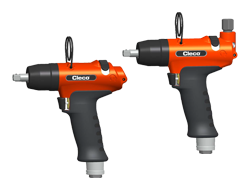
Cleco pneumatic impulse nutrunners by Apex Tool Group with and without shut-off as well as accessories such as quick-change chuck can be ordered here.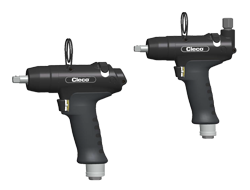
Pulse Tools with and without Shut-off — Selection, Technology, and Industrial Practice
Pulse tools for industrial manufacturing are specialized pneumatic tools that deliver high torques in short, controllable pulses. Models from Cleco (Apex Tool Group) primarily differ in the presence or absence of a mechanical or electronic shut-off, their design, bearing and sealing concepts, connection sizes, and available quick-change chucks. For reliable reproducibility in assembly processes, where component and thread protection are as important as cycle time, these differences are crucial.
Operating Principle and Technical Characteristics
A pulse tool does not operate with continuously transmitted power like a classic impact wrench, but rather transfers energy in short, highly dynamic torque impulses. This allows for high peak torques with simultaneously low reaction speed, reducing the risk of overtightening or thread damage. Key parameters include nominal torque, peak torque, no-load speed, pulse frequency, air consumption (l/min at specified compressed air), as well as weight and ergonomic design for series assembly.
Shut-off (mechanical or electronic) enables the defined termination of the screwing process as soon as a preset parameter is reached. Models without shut-off typically require additional rotation or torque monitoring in the production station to ensure final position and tightening torque.
Materials, Seals, and Service Life
Housing materials vary between die-cast aluminum, glass-fiber reinforced plastics, and steel components. Aluminum offers low weight and sufficient strength for mobile applications, glass-fiber reinforced plastics reduce vibrations and improve insulation, and steel parts at critical stress points increase durability. Pistons, drive shafts, and impact mechanisms are usually hardened or coated to minimize wear against metallic chips and abrasive particles.
Sealing concepts are central to pneumatic tools. High-quality pulse tools use FKM or NBR seals in piston and bearing areas; FKM is suitable for higher temperatures and chemical resistance, NBR offers good wear protection in standard applications. For aggressive environments, PTFE-coated guides and special seals are available. With regular maintenance intervals, the use of cleaned, oil-free compressed air with inline filter/oil mist systems significantly extends service life.
Connections, Air Supply, and Assembly Integration
Air connections are typically 1/4" or 3/8" NPT/ISO threads or quick couplings according to industrial standards. For long hose lengths, pressure loss and air supply lines must be dimensioned to maintain stable no-load speed and pulse energy. Recommended operating pressure is usually between 6 and 8 bar; if the pressure exceeds the specification, peak torque increases, but the service life of internal components is reduced.
For automated production lines, pulse tools with Namur or electrical interfaces, mounting flanges, and multiple adapters for robot mounting are available. For process integration, screwdrivers with integrated torque or speed sensors or with option cards for data acquisition that transmit process data to PLCs or MES are suitable.
Functions, Designs, and Accessories
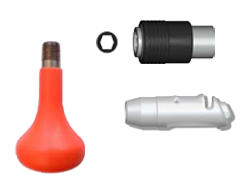
There are inline, angle, and pistol designs. Inline models are suitable for narrow, straight access and automated assembly systems, angle models provide access for lateral or deep holes, and pistol versions improve handling in manual applications. Additional features include damped handles, low-vibration housings, and various silencers. Quick-change chucks reduce setup times for bit changes and are particularly suitable for varying screwing tasks. For stubborn screw connections, longer drive shafts or reinforced engagement teeth in the chuck are useful.
Application Areas and Practical Scenarios
Pulse tools are used where repeatable tightening torques at high cycle rates are required: body assembly, mechanical engineering, HVAC and metal construction, and in the component manufacturing of electric motors and gearboxes. Typical screwing applications include sheet-to-sheet connections with rivet or screw connections, more sensitive friction-fit connections on threads made of aluminum or softer alloys, and the assembly of bearings and housing covers.
Example 1: In a body assembly line, a Cleco pulse tool with shut-off is used to connect sheets to plastic bushings with torque limits. The shut-off is programmed to a peak torque; the tool delivers multiple pulses that gently build up the required tightening torque. Directly connectable torque readout provides control data to the line control system.
Example 2: In a gearbox assembly station, an inline pulse tool without integrated shut-off is used, coupled to an external torque sensor. The tool offers high peak torque for setting bearings. The station monitors the number of pulses and stops after reaching a defined torque curve to prevent thread damage.
Example 3: During the assembly of electric motors, angle pulse tools with quick-change chucks are used to quickly handle various screwing tasks with short setup times. FKM seals and regular oil/maintenance intervals ensure reliability despite fine particle emissions in manufacturing.
Selection Criteria for Purchasers and Planners
The degree of manufacturing integration is crucial for deciding between models with or without shut-off. If process monitoring and data logging are already in place, tools without shut-off can be economically viable. If reproducible screwing tasks with high reliability and minimal integration effort are required, a pulse tool with shut-off reduces the complexity of the station. Furthermore, the material of the screw components, seal type, connection size, air consumption, and weight are important parameters, as is the availability of quick-change chucks and mounting flanges for automation.
For targeted product selection, it is recommended to check the following criteria:
- Required nominal and peak torque in relation to the material and thread of the assembly.
- Existing compressed air infrastructure and necessary pipe cross-section to avoid pressure loss.
- Interfaces to existing control and data acquisition systems (electrical, digital, PLC-compatible).
- Ergonomics, weight, and design according to the accessibility of the screwing point.
- Maintenance intervals, spare parts availability, and availability of quick-change chucks.
Maintenance, Spare Parts, and Quality Assurance
Regular maintenance consists of filter inspection, lubricant replenishment (where provided), seal inspection, and measurement of no-load torque. Recommended interval specifications are provided by the manufacturer; in production-intensive environments, daily visual inspections and weekly functional tests are advisable. Spare parts such as seal kits, piston rings, bearings, and quick-change chucks should be kept in stock to minimize downtime. For process reliability, the calibration or traceability of built-in torque sensors at planned intervals is part of quality assurance.
Further technical details, specifications, and application examples can be found in our technology and application sections: Technology and Application Examples. You can find the available Cleco pulse tools directly in our shop under the corresponding category.
FAQs
1. When is a pulse tool with shut-off useful?
A tool with shut-off is useful when reproducible final torques need to be ensured without additional measurement or monitoring hardware, especially for sensitive components or when setup times and error rates need to be reduced.
2. Which seals are recommended in dusty or oily environments?
In dusty or oily environments, FKM seals and PTFE-coated guides are preferable. FKM withstands higher temperatures and oil contact better than standard NBR; PTFE coatings minimize abrasion on guides.
3. How do I choose the right quick-change chuck?
The right quick-change chuck depends on the bit reception, load, and setup requirements. For high peak torques, reinforced chucks with hardened engagement elements are required; for frequent bit changes, plug-in systems with locking and easy replacement are more economical.