
Order high quality blanking plugs now online


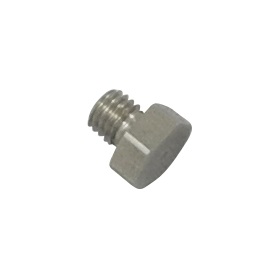


Plug Screws – Technical Details, Materials, and Application
Plug screws (also known as blanking plugs) serve as sealing connection elements in fluid and pneumatic systems to permanently or temporarily close housings, fittings, and pipe outlets. On this category page, you will find plug screws for fittings made of nickel-plated brass and stainless steel in various thread sizes and designs. Key factors for selection include material, thread type, sealing principle, and surface finish, as these directly influence pressure resistance, corrosion resistance, and sealing performance.
Materials and Corrosion Protection
Nickel-plated brass offers a cost-effective solution with good wear and corrosion resistance in moderately corrosive environments. Stainless steel (mostly AISI 303, 304, or 316/316L) is used where chemical resistance, hygienic requirements, or higher temperatures are demanded. For stainless steel parts, fits and thread finishes are more critical: material properties can influence strength and thread stiffness, which is why we recommend stainless steel screws for saline environments, cleaning processes with media, and high thermal loads.
Thread Types and Compatibility
Plug screws are available with metric ISO threads (M-), Whitworth variants (G/BSP parallel), and BSPT/PG designs. The thread selection must be made based on the existing fitting or housing connection. Metric threads are suitable for precise, repeatable connections in mechanical engineering applications. BSP and BSPT threads are common in hydraulic and pneumatic systems, with BSPT being a tapered thread that relies more heavily on the sealing principle of the thread itself, while BSP parallel often works with an additional seal.
Sealing Principles and Operating Conditions
Depending on their design, plug screws seal either through a metallic seating system (conical sealing surface), elastic seals, or a combination thereof. Elastomer seals such as NBR or FKM offer good elasticity and media resistance for oils, water, and air. PTFE or FEP inserts are necessary for high chemical requirements and temperatures. For applications with high pressures or fluctuating temperatures, compensating sealing systems are useful to ensure pressure relief and re-sealing.
- NBR: Temperature range approx. -40 to +120°C, good against mineral oils; FKM: -20 to +200°C, good chemical resistance; PTFE: up to +260°C, very chemically resistant.
Designs, Heads, and Drives
Plug screws are available as cylindrical blanking plugs, hexagonal, or internal hexagon variants. Hexagonal heads allow for easy tightening with socket or ring wrenches, while internal hexagon types are space-saving and protect the head geometry from damage. Surfaces and transitions are often polished or coated to reduce galling and corrosion. For safety-critical systems, we offer screw-on safety caps with locking wires or integrated sealing measures.
Technical Parameters and Installation Instructions
Essential parameters include nominal pressure, thread size, seal type, and maximum temperature. When selecting, pay attention to the pressure rating of the fitting or pipe. Installation: Clean threads and seating surface, check the seal for damage, use an appropriate tightening torque and torque tools with a scale if necessary. Excessive tightening torque can crush seals or cause thread damage; insufficient tightening force leads to leaks. Recommended tightening torques vary depending on material and thread size; manufacturer specifications or standard tables for screws serve as a guide. For metal-on-metal seats, a few Newton meters of preload are often sufficient, while sealing systems with rubber require a defined compression force.
Surfaces, Coatings, and Cleanroom Suitability
Nickel-plated brass plug screws offer a smooth surface to prevent deposits and are easy to clean. For applications in the food or pharmaceutical industry, low-wear, easily sterilizable surfaces and materials such as AISI 316L should be chosen. For cleanroom environments/semi-clean areas, material combinations and surface qualities that minimize particle formation and are easy to passivate are recommended.
Practical Examples
Example 1 – Machine Housing in Manufacturing: A metalworking machine requires temporary brass plug screws with NBR seals at several test outlets. Installers use nickel-plated screws with internal hex drives, clean the seating surface, insert NBR O-rings, and tighten with a torque wrench to the manufacturer's recommended torque. Result: No leakage under 10 bar test pressure, easy disassembly for maintenance.
Example 2 – Chemical Process Line: In a corrosive environment, AISI 316 blanking plugs are used. The pipe ends have BSPT connections with tapered threads; here, the metallic sealing principle is relied upon, and an additional PTFE sealing washer is used to isolate aggressive media. Installation is dry and with moderate torque, connections are verified after commissioning with a leak check via pressure test.
Example 3 – Pneumatic Testing on Systems: For test fixtures in pneumatics, metric plug screws with a flat seat and Buna-N seal are used. Technicians install the blanking plugs at room temperature, perform cyclic pressure tests up to 8 bar, and document tightness. The combination of precise thread and elastic seal allows for repeated assembly without replacing the seal over several test cycles.
Testing, Marking, and Quality Criteria
Plug screws should be checked before use for correct thread execution, freedom from burrs, sealing surface condition, and seal integrity. Series components usually have batch marking, material certificates (e.g., EN, DIN, ISO), or test reports. For critical applications, we supply components with material certificate 3.1 or 2.2 according to EN 10204. Test methods include visual inspection, thread and seat gauges, leak testing with compressed air or water, and, if necessary, corrosion resistance tests.
Compatible Accessories
For correct function, suitable seals, washers, retaining clips, and torque wrenches are required. For reuse, seals made of durable materials such as FKM or PTFE are recommended to minimize setting and deformation processes. Further technical components and suitable fittings can be found on our technology page at https://maku-industrie.de/technik and specific application examples at https://maku-industrie.de/anwendungsbeispiele.
Selection Aid in One Sentence
Choose nickel-plated brass for moderate environments, stainless steel for chemical resistance and high temperatures; decide between tapered thread for metallic sealing or parallel thread with an additional elastomer seal depending on the connection type and media properties.
FAQ
What types of seals are available for plug screws?
Elastomer seals (NBR, FKM) for common media and moderate temperatures, PTFE or FEP inserts for aggressive chemicals and high temperatures, and metallic seating surfaces (conical) for pressure-resistant, temperature-stable applications.
How do I determine the correct thread?
Check the connection of your fitting: metric ISO threads for machine interfaces, BSP parallel for pneumatic/hydraulic systems with a seal, BSPT/conical if the thread itself seals. Use thread and seat gauges or measure thread depth and pitch for clear identification.
What tightening torques should be observed?
Tightening torques depend on material, thread size, and seal; follow manufacturer specifications or standard tables. In practice: moderate tightening for preload with metal-to-metal seats, defined compression force with elastomer seals, controlled with a torque wrench to avoid overtightening and material damage.