
Order low-priced quick-acting barbed fittings brass
Parker Legris brass barbed adaptors are designed to enable rapid connections of threaded ports to tubing or hose.

0132 - Quick-acting barbed fitting for NBR-hoses
Quick-acting barbed fittings made of brass, Quick-acting barbed fitting for NBR-hoses, Brass
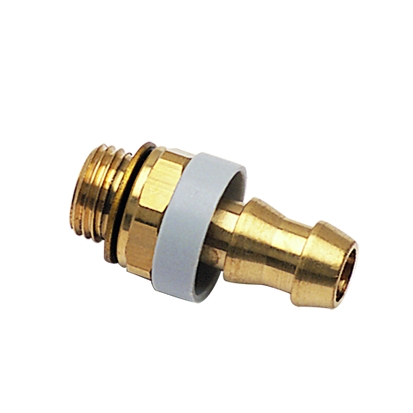
0133 - Quick-acting barbed fitting for NBR-hoses
Quick-acting barbed fittings made of brass, Quick-acting barbed fitting for NBR-hoses, Brass
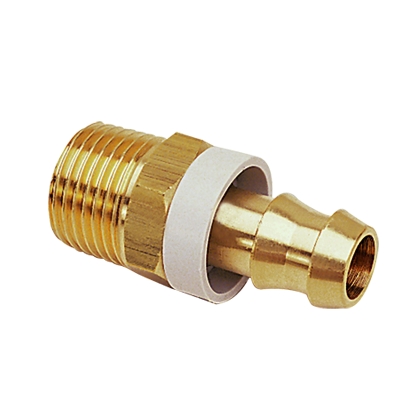
0134 - Quick-acting barbed fitting for NBR-hoses
Quick-acting barbed fittings made of brass, Quick-acting barbed fitting for NBR-hoses, Brass
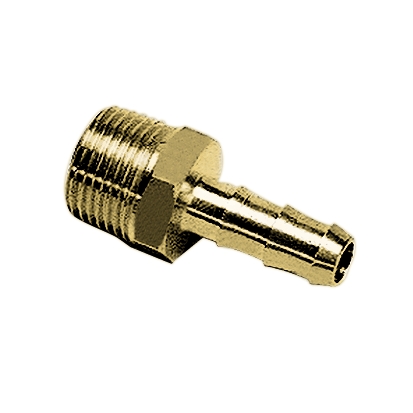
0123 - Tailpiece adaptors, male thread
Quick-acting barbed fittings made of brass, Tailpiece adaptors, male thread, Brass

0136 - Tailpiece adaptors for plastic hoses, male thread
Quick-acting barbed fittings made of brass, Tailpiece adaptors for plastic hoses, male thread, Brass
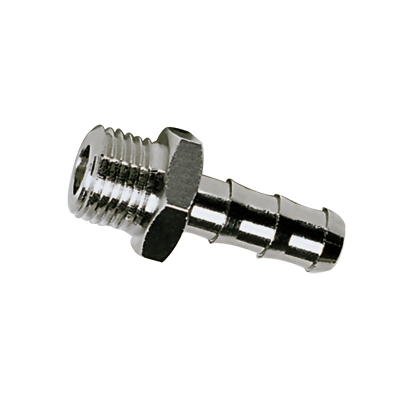
0191 - Fittings Brass nickel plated - Tailpiece adaptors for plastic tube male thread
Quick-acting barbed fittings made of brass, Fittings Brass nickel plated - Tailpiece adaptors for plastic tube male thread, Brass nickel plated

0931 - Fittings Brass nickel plated - Tailpiece adaptors for plastic tube, male thread
Quick-acting barbed fittings made of brass, Fittings Brass nickel plated - Tailpiece adaptors for plastic tube, male thread, Brass nickel plated
Brass Screw-in Fittings – Technical Selection and Correct Application
Parker Legris brass screw-in fittings connect hoses and tubes quickly and securely. Designed for nominal pressures up to **250 bar**, they are used in manufacturing environments and maintenance areas where leak-tightness, mechanical strength, and chemical resistance are required. This text describes materials, designs, sealing concepts, connection types, and typical installation scenarios to help you precisely select and safely operate the appropriate fitting. Detailed application examples illustrate specific industrial use cases.Materials and Surfaces: Brass, Nickel-Plated, and Alloy Variants
Brass remains the standard material for screw-in fittings due to its combination of mechanical strength, corrosion resistance, and machinability. Parker Legris offers variants in standard brass (CuZn), dezincification-resistant brass (DZR), and nickel-plated versions. **DZR brass** is preferable for applications with more aggressive media or in humid environments, as it significantly reduces the risk of contact corrosion. Nickel-plated fittings offer additional protection against corrosion and simplify cleaning processes in semi-public or hygienic areas.Designs and Dimensions
Screw-in fittings are manufactured as cylindrical versions with straight or tapered threads, as flange or L-shaped variants for directional changes, and in compact forms for confined installation spaces. Important geometric parameters include external and internal threads, screw-in length, collar diameter, and insertion depth for the hose. Parker Legris produces fittings according to metric (M) and imperial (BSP, NPT) thread standards; the selection depends on the existing pipe or housing connection. For high-pressure applications, designs with reinforced collars and greater screw-in length are preferred to mechanically relieve the thread engagement.Connection Types and Compatibility
Screw-in fittings can be screwed directly into a drilled component, into a screw connection, or into couplings. Typical connection types include internal threads for accommodating pipes or hoses with union nuts, external threads for screwing into valves, and push-in adapters for direct hose connection. **Compatibility** requires matching thread type, thread size, and sealing concept. In mixed systems (e.g., metric thread on a BSP pipe), suitable transition adapters or original Parker Legris components should be used to avoid leaks and mechanical stresses.Sealing and Sealing Concepts
Leak-tightness in screw-in fittings is achieved through a combination of metal-to-metal seating, O-rings, and sealing washers. For high pressures or dynamic loads, elastic seals (NBR, FKM) are common. NBR is suitable for general hydraulic and compressed air applications, while FKM (Viton) is used for higher temperatures and aggressive media. Parker Legris uses pre-assembled O-rings in many models, ensuring a defined sealing plane. For tapered threads, the metallic thread seat is often relied upon; here, a tapered Teflon tape or anaerobic thread sealant is recommended, unless the system is supplied factory-sealed.Temperature and Pressure Resistance
Brass fittings are temperature-resistant over a wide range; however, the practical limit is determined by the sealing materials used. With NBR seals, typical operating temperatures of -30 °C to +100 °C are possible, while FKM seals extend the range to approximately +200 °C. Mechanically, Parker Legris brass fittings are designed for static nominal pressures up to **250 bar**; for cyclic or shock loads, the permissible operating pressure must be reduced. Always observe the manufacturer's data sheets, especially when combining with thin-walled hoses or softer line materials.Installation Instructions and Testing Steps
Before installation, the thread must be cleaned of chips and dirt. When screwing into housings, uniform tightening with appropriate torques according to Parker Legris specifications is required to avoid thread damage and unclear sealing surfaces. Lightly moisten O-rings with a compatible lubricant (e.g., silicone grease) before assembly to prevent pinching. After assembly, a pressure test is standard: slowly bring to operating pressure, hold briefly, and visually and acoustically check for leaks. For high-pressure critical applications, a long-term pressure test and monitoring for temperature changes are recommended.Application Fields and Practical Examples
In compressed air distribution, screw-in fittings connect brass lines to hoses in machine cells; a frequently used variant is the combination of a nickel-plated screw-in fitting with an NBR O-ring and a 6 mm PU hose to minimize the risk of leaks in paint booths. In hydraulic systems in tool and mold making, DZR brass fittings are used when water is employed as a coolant; here, the dezincification-resistant alloy prevents pitting corrosion. In assembly machines in electronics manufacturing, compact L-shaped fittings are used to achieve tight bending radii without hose kinking, thereby maintaining stable material flow and cycle times. A concrete practical example: In a stamping plant, nickel-plated screw-in fittings with FKM sealing rings were installed to ensure constant leak-tightness during temperature cycles of 20–150 °C and 180 bar hydraulic pressure. Detailed application cases and implementation recommendations can be found at [Anwendungsbeispiele](https://maku-industrie.de/anwendungsbeispiele/) and technical background information at [Technik](https://maku-industrie.de/technik/).Specification and Selection Criteria
Select the correct screw-in fitting based on the following criteria: thread type, pressure class, media compatibility, temperature range, seal type, and surface treatment. Parker Legris product data sheets provide information for each type regarding permissible operating pressure at defined temperatures, recommended torques, and material characteristics. For series production plants, standardization on a few thread and seal variants is recommended to increase storage and assembly reliability. For retrofit or repair work, use original spare parts or specified equivalents to avoid material incompatibilities and warranty issues.Corrosion Protection, Maintenance, and Service Life
The service life of brass fittings depends on process conditions such as temperature, medium, contact corrosion, and mechanical stress. Regular inspection of connection points for oxidation, cracking, or corrosion products is mandatory. Clean threads and sealing surfaces with each disassembly and replace O-rings with every second reassembly or if elastomers harden due to aging. Nickel-plated surfaces extend maintenance intervals in aggressive environments, and DZR brass long-term reduces the risk of localized material degradation. Document replacement intervals for preventive maintenance.Quality Assurance and Standards
Parker Legris products comply with common industry standards for threads, leak tests, and material certificates. When purchasing, pay attention to manufacturer markings, batch numbers, and test reports. For safety-relevant applications, traceability to the material certificate is important; request test certificates if necessary.Quick Overview: Selection Checklist
* Thread type and size * Desired pressure class * Medium * Temperature range * Sealing (O-ring/tapered) * Material choice (Standard/DZR/nickel-plated)FAQs
**1. Which seal is typical for 200 bar hydraulics?**For 200 bar, elastic FKM O-rings in conjunction with a metal support surface are recommended; for dynamic loads, check the manufacturer's specifications for maximum cyclic loads. **2. When is a nickel-plated version useful?**
Nickel-plated screw-in fittings are useful for increased corrosion requirements, frequent cleaning cycles, or in environments with splash water and slightly acidic media; they extend the service life compared to bare brass. **3. Can metric threads be exchanged for BSP?**
Direct exchange is not possible without an adapter. For the transition, use suitable adapters from Parker Legris or adapt the connection components so that thread size and sealing system match to avoid leakage and load-bearing capacity problems.