
Order sanders by Apex Tool Group in Germany
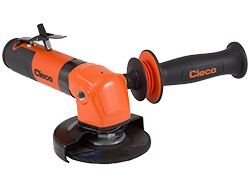
Ordering Grinding Machines from Apex Tool Group in Germany
Grinding machines from Apex Tool Group offer modular design, precise angular accuracy, and durable components for industrial manufacturing processes. This category includes belt grinders, eccentric grinders, cylindrical and surface grinders, as well as stationary and portable angle grinders. The machines are designed for long service life, low vibration, and reproducible surface qualities. Key selection criteria include material, component geometry, required roughness (Ra/Rz), feed types, and clamping concepts.
Types, Designs, and Construction Features
Apex grinding machines are available with robust welded or cast frames, usually featuring heat-treated precision guides and pendulum-mounted grinding units. Belt grinders often use hardened, precision-ground rollers for plane-parallel surface processing, while eccentric grinders produce fine surfaces without scoring using eccentric oscillation systems. Cylindrical grinders combine rotating workpieces with coordinated grinding spindle movement for tight runout and cylindricity requirements. Surface grinders often utilize magnetic or vacuum clamping systems for precise component fixation.
Materials of machine components influence service life and precision: guides made of hardened steel or coated roller steel reduce wear; spindles with ceramic or hybrid ceramic bearings increase rotational speed stability; cast iron housing components dampen vibrations. Drives are available as frequency-controlled electric motors or servo-motorized axis drives to precisely control grinding wheel speed, feed rate, and infeed.
Connections, Supply, and Interfaces
Industrial-grade grinding machines from Apex feature standardized electrical interfaces (400 V 50 Hz three-phase supply), optional 24 V DC control circuits for peripherals, and fieldbus interfaces such as Profinet, EtherCAT, or Profibus for easy integration into manufacturing cells. Pneumatic connections are common for clamping systems and coolant pumps, typically 6–8 bar. Coolant supply is realized via closed circuits with filtration units; pump connections in the range of 1/2" to 3/4" with quick couplings are common. Extraction and filter systems require DN 150–DN 300 connections depending on chip volume and process dynamics.
Seals, Protection Systems, and Maintenance Accessibility
Special attention is paid to sealing systems on grinding wheel flanges and spindle deflections. Elastomer seals with NBR or FKM materials are used at standard temperatures; for higher temperatures or chemically aggressive coolants, PTFE or FEP-coated seals are advisable. Protective hoods are often made of fire-retardant composite plastic or steel sheet with polycarbonate viewing windows. Maintenance points are arranged so that grinding wheel changes, regrinding of clamping jaws, and filter changes are possible without disassembling complete units.
Application Scenarios and Practical Examples
The following structured practical examples illustrate typical applications of Apex grinding machines.
- Practical Example 1 — Fine finishing of CNC-milled steel flanges: A medium-sized company uses a stationary surface grinder with a magnetic clamping plate and temperature-compensated grinding wheel axis. After milling, flanges are brought to a flatness of 0.02 mm. Coolant control with inline filtration reduces surface corrosion and ensures reproducible roughnesses of Ra ≤ 0.8 µm. The machine control is linked to the CNC machine via Profinet, so workpiece data is loaded automatically.
- Practical Example 2 — Deburring and finishing of stainless steel pipe ends: A manufacturer of pipelines uses a rotary belt grinder with a production-side extraction system and vacuum clamping system. Pipe ends are synchronously ground in a cycle line; feed and belt speed are servo-controlled to precisely limit material removal. Exact grit changes allow transition from coarse to fine in one pass.
- Practical Example 3 — Cylindrical grinding of precision shafts in batch sizes of 1 to 100: A supplier of drive components uses a CNC cylindrical grinding machine with hybrid ceramic bearings and multi-layer seals. Workpieces are automated using hydraulic collets and length stops. The machine delivers runout deviations ≤ 3 µm and surfaces in the class Ra ≤ 0.2 µm, required for reducing running noise in drive shafts.
Material-Specific Grinding Strategies
For hard and heat-sensitive materials such as hardened steel or titanium, lower cutting speeds and finer grits should be chosen. Ceramic abrasives or CBN coatings reduce heat generation and corrosion. Aluminum and soft non-ferrous metals require special abrasive belts with anti-stick coated backings and higher peripheral speeds to prevent clogging. For glass fiber reinforced plastics, lower infeed rates and special abrasive bonds are necessary to avoid fiber pull-out.
Process Parameters, Quality Assurance, and Measuring Equipment
For reproducible results, defined parameters must be documented: grinding wheel speed, peripheral speed, feed, infeed per pass, coolant concentration, and abrasive grit. Inline measuring systems such as non-contact length measurement, runout testers, or surface profilers can be integrated into Apex machines. SPC-controlled feedback can automatically adjust feed or speed to compensate for tolerance deviations early on.
Selection Criteria for Purchasing
Selection depends on the production environment, material spectrum, cycle time, and degree of automation. Important criteria include machine availability, total cost of ownership, spare parts accessibility, and service contracts. Pay attention to modular upgradeability, e.g., adding robotic handling solutions, additional measuring axes, or an automatic workpiece magazine. Further information on technology and integration possibilities can be found at https://maku-industrie.de/technik.
Maintenance, Spare Parts, and Wear Parts
Regular inspection of grinding wheel flanges, grinding spindles, guides, and the coolant circuit extends service life. Typical wear parts include abrasives, filter foams, seals, and bearings. Apex offers service kits with defined replacement intervals. Document oil and coolant changes as well as corrosion on electrical contacts to avoid unplanned downtimes.
Integration into Manufacturing Processes and Automation
Apex grinding machines can be integrated into production lines with robots, conveyor technology, and measuring islands. For zero-defect strategies, automatic calibration cycles and tool life management are suitable. The machine control supports recipe management, user rights, and production history, ensuring traceability and securely storing production parameters for auditing.
Environment, Safety, and Standards
Grinding machines must be CE-compliant; additionally, industry-specific standards such as ISO 9001, ISO 14001, or specific explosion protection requirements (ATEX) may be relevant. Extraction and filter technology reduce fine dust emissions; coolants must be disposed of properly according to operating instructions. Safety features include housing interlocks, emergency stop switches, and monitoring functions for bearing temperatures and vibrations.
Further Information and Application Examples
In-depth application examples and case studies with process data and measurement results can be found at https://maku-industrie.de/anwendungsbeispiele. For technical drawings, 3D models, and integration data sheets, Apex Tool Group offers extensive documentation; for individual questions, machine configurations and commissioning packages are available as an option.
FAQ
Which machine is suitable for hardened shafts with IT5 tolerance requirements?
For hardened shafts with IT5 requirements, a CNC cylindrical grinding machine with hybrid ceramic bearings, servo-controlled feeds, and a temperature-compensated spindle is recommended. Additionally, CBN or ceramic grinding wheels and a closed coolant system should be used.
How often do grinding wheels and seals need to be changed?
Change intervals depend on material, production volume, and coolant quality. Grinding wheels are changed after reduced material removal rates or quality deviations; typical intervals are between 40 and 400 operating hours. Elastomer seals should be checked at least annually and replaced immediately if signs of cracking appear.
Which interfaces are required for Industry 4.0 integration?
Relevant interfaces are EtherCAT, Profinet, and OPC UA for integration into MES/ERP systems. Additionally, digital I/O, 24 V control circuits, and standardized data formats for recipe management and condition monitoring are necessary to implement predictive maintenance and SPC feedback.