
High-quality compression fittings by Parker Legris
Legris compression fittings enable the secure installation of plastic and metal tubing.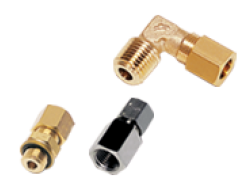
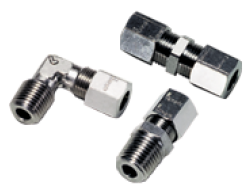
Overview of Parker Legris Compression Fittings
Parker Legris compression fittings reliably and media-tightly connect thermoplastic and metal tubes for compressed air and liquids. The seal is created by a compression ring (olive) that forms a positive fit on the tube during assembly and axially fixes the connection. The range includes variants made of stainless steel (mostly 1.4404/316L) and brass (mostly CW614N/CW617N; often nickel-plated), in metric and imperial dimensions, and with common connection threads (G/BSPP, R/BSPT, NPT, partly UNF). The designs cover straight couplings, reducers, elbows, tees, crosses, and transitions to internal and external threads.
The series is designed for industrial pneumatics, neutral liquids, and selected chemicals. In conjunction with suitable support or insert sleeves, the fittings are also suitable for flexible thermoplastic tubes (e.g., PA, PE, PU). For metal tubes (e.g., copper, stainless steel), a metallic, vibration-resistant bite is created. Depending on the thread form, the thread seal is achieved via flat sealing surfaces with sealing edges, O-ring/flat gasket (for G/BSPP), or via conical threads (R/NPT) with additional thread sealant.
Materials and Surfaces
Stainless Steel (1.4404/316L)
- Corrosion-resistant in maritime atmospheres, with many cleaning agents, and in slightly aggressive chemicals.
- Suitable for food and process industries where media-side material conformity is required (check project-specific approvals).
- Temperature range typically –20 to +200 °C, depending on sealing concept, tube material, and thread seal.
- Ferrule/compression ring also made of stainless steel for homogeneous material pairing and uniform bite.
Brass (CW614N/CW617N, often nickel-plated)
- Robust, conductive standard version for pneumatics and neutral liquids (e.g., water, low-viscosity hydraulic oils, glycol-water mixtures; check media compatibility).
- Optional nickel coating for increased surface hardness and basic corrosion protection.
- Temperature range typically –20 to +120 °C; depending on sealing concept, elastomers, and tube material.
- Compression ring in brass for thermoplastic and metallic tubes; always use a support sleeve in conjunction with soft plastics.
Note: For applications with deionized water, ammonia-containing media, or chloride-containing environments, the media resistance of the respective material must be checked. For drinking water, pharmaceutical media, or oxygen, always observe material- and medium-specific approvals and cleaning regulations.
Tube and Hose Compatibility
Suitable Tube Materials
- Thermoplastics: Polyamide (PA6/PA12), Polyethylene (PE), Polyurethane (PU; hard), PEX (cross-linked PE). Support sleeves are mandatory for soft walls.
- Metals: Copper (seamless, calibrated), Stainless steel (seamless, e.g., 1.4404), possibly Aluminum (calibrated; check bite behavior).
Tube Dimensions
- Metric: typical outer diameters 4, 6, 8, 10, 12, 14, 15, 16, 18 mm
- Imperial: e.g., 1/8", 5/32", 3/16", 1/4", 5/16", 3/8", 1/2" OD
- Tolerance requirement: tightly tolerated outer diameter (calibrated); minimize ovality and eccentricity.
- Surface condition: clean, free of scratches and burrs; for metal tubes, no scale/coating residues in the clamping area.
Wall Thickness and Support Sleeves
- Thermoplastic tubes: Support sleeve prevents constriction and improves axial holding force. Match sleeve to wall thickness and material.
- Metal tubes: Support sleeves are generally not required, provided the tube is used without threads, seamless, calibrated, and with suitable wall thickness.
Sealing Concepts and Threads
Tube Seal (Clamping Point)
- Primary seal: Positive fit via compression ring/olive against the tube outer diameter.
- Holding function: Axial wedging ensures tensile strength and vibration resistance.
- Reusability: For metal tubes, the clamping point is embossed after the first tightening; reassembly on the same impression is possible, but not intended for constant disassembly. For thermoplastics, a new olive/support sleeve is recommended.
Thread Seal (Port Side)
- G/BSPP (cylindrical): Sealing via flat seat with O-ring, flat gasket, or integrated sealing edge; do not use thread sealants on the thread.
- R/BSPT (conical): Sealing via thread flanks with PTFE tape or sealing thread; observe appropriate torque.
- NPT (conical): analogous to R/BSPT; ANSI-compliant assembly with sealant.
- UNF/SAE: often with 24° cone or O-ring flare; use only matching counterparts.
Pressure and Temperature Ranges
The permissible operating data depend on material, size, medium, temperature, and tube material. Typical guideline values (project-specific data sheets are decisive):
- Brass: up to approx. 20–60 bar in pneumatics and low-pressure liquids; temperature –20 to +120 °C.
- Stainless steel 316L: up to over 100 bar possible depending on size; temperature –20 to +200 °C (metallic seal). Elastomer-dependent seals may have lower maximum temperatures.
- Thermoplastic tubes often limit the pressure more than the fitting; pressure resistance decreases with increasing temperature.
For pulsating loads, vibration, and rapid temperature changes, a safety factor must be planned. For vacuum: Compression fittings are suitable for vacuum if tube stiffness and surface quality are appropriate; thermoplastic lines require short clamping lengths and support sleeves.
Designs and Variants
- Straight connectors: Tube-to-tube, equal or reducing
- Elbows 90° / 45°: Tube-to-tube and tube-to-thread
- Tees and crosses: equal-sided and reducing
- Transitions: Tube-to-internal thread (G, R, NPT), tube-to-external thread
- Plugs and caps: for temporary sealing
- Bulkhead fittings: for wall penetrations with locknut
- Double and multiple distributors: compact air/media distribution
- With integrated O-ring on the port side (BSPP): quick, leak-proof assembly without additional flat gasket
Application Spectrum
- Compressed air distribution: main and secondary lines, actuator connections, pneumatic panels
- Liquids: cooling circuits, rinsing and cleaning media, water-glycol, heavy-duty and low-viscosity oils
- Measurement and analysis technology: sampling, purge lines (observe material compatibility)
- Machine and plant construction: vacuum grippers, lubrication lines, test benches
- Building technology/Utility: inert gases, technical gases (no fuel gases without separate approval)
Distinction: Compression fittings (olive) are not identical to cutting ring fittings according to DIN 2353. Different geometries and standards apply to DIN hydraulic tubes with cutting ring/union nut.
Assembly Instructions (Practice-Oriented)
Preparation
- Cut tube at right angles; deburr (inside/outside) and clean the cut edge.
- For thermoplastics, insert suitable support sleeve until it stops.
- Check components: nut, compression ring(s), body, thread seal (O-ring/flat gasket if present).
Pre-assembly on the Fitting
- Push tube into the fitting until it reaches the mechanical stop.
- Tighten union nut hand-tight.
- Tighten with a wrench until the assembly specification is reached:
- Guideline brass/thermoplastic tube: from hand-tight, additionally approx. 1–1¼ turns.
- Guideline stainless steel/metal tube: from hand-tight, additionally approx. 1¼–1½ turns (depending on size).
Note: Assembly angles are manufacturer- and size-dependent. Parker-specific specifications have priority. Alternatively, use torque values if available. Do not overtighten; this can damage the tube or deform the olive.
Retightening and Reopening
- To loosen, loosen the nut, do not twist the tube axially. When retightening, tighten until noticeable resistance, then slightly retighten until the seal is achieved.
- For thermoplastics, use new compression rings/olives if the old clamping point does not seal reliably.
Thread Side
- G/BSPP with O-ring/flat gasket: Keep sealing surface clean; do not tape with PTFE.
- R/NPT: Apply suitable sealant (PTFE tape/sealing thread/liquid sealant) sparingly and evenly; leave the first threads free.
- Observe torques according to thread standard and material; counter-hold the housing to avoid torsion on the tube side.
Construction Details and Quality
- Geometry of the seat cone: matched to the compression ring profile for defined deformation and controlled bite.
- Union nut: manufactured with precise thread tolerance; hexagon for standardized wrench sizes.
- Surface roughness: kept low in the sealing seat for reproducible sealing.
- Cleaning: particle-low manufacturing; for sensitive media, consider optionally cleaned/degreased variants.
Compatibility and Standard Reference
- Thread standards: ISO 228-1 (G/BSPP), ISO 7-1 (R/BSPT), ASME B1.20.1 (NPT).
- Tube standards: metric precision tubes according to DIN/EN, imperial OD tubes according to ASTM/ISO; observe tolerance class.
- No mixing of BSPP/BSPT/NPT in the same connection; use adapters if necessary.
Media Compatibility and Sealing Materials
- Metallic clamping point: media-neutral on the material side, provided the materials are resistant.
- O-rings/flat gaskets (if used): often NBR (mineral oils, compressed air, water up to approx. 60–80 °C), FKM (higher temperatures, many chemicals), EPDM (hot water/steam limited, glycol, not for mineral oil). Check exact elastomer specification of the respective item.
- Cleaners/disinfection: avoid chloride-containing media with brass; link stainless steel resistance to chloride-containing media to concentration and temperature.
Pressure Surge, Vibration, Safety
- Pressure surge resistance: plan sufficient safety factor, especially with fast-switching valves.
- Vibration: fix the line, install clamps, observe bending radii. Metal tubes should preferably be secured against micro-movements.
- Burst pressure: is application- and size-dependent; do not interpret as an operating limit. Operating pressure ≤ 25–40% of min. burst pressure, unless otherwise specified.
Dimensioning and Selection
Step 1: Medium and Temperature
- Gas/liquid, purity, particle content, chemical composition
- Minimum/maximum temperature, cyclic temperature changes
Step 2: Pressure and Load Case
- Maximum pressure including transients and surges
- Vacuum capability, leakage rates (if specified)
Step 3: Tube Material and Dimensions
- Outer diameter, wall thickness, material condition (soft/semi-hard/hard)
- For thermoplastic: dimension support sleeve; observe bending radius
Step 4: Connection Thread and Installation Position
- Counterpart type (G with sealing edge, R/NPT conical, internal/external thread)
- Installation position (straight, elbow, bulkhead)
Step 5: Material Selection
- Brass for standard pneumatics/liquids without aggressive media
- Stainless steel 316L for corrosive environments, higher temperatures, increased hygiene requirements
Typical Sources of Error and Prevention
- Unsuitable tube tolerances: leads to insufficient bite; use only calibrated tubes.
- Missing support sleeve for thermoplastic: constriction, leaks; always use a support sleeve.
- Overtightening the nut: damage to the olive; observe assembly angle/torque.
- Incorrect sealant on G/BSPP: O-ring seal is impaired; thread remains dry.
- Mixing BSPT and NPT: leads to leaks; use suitable adapters.
- Contamination: particles in the seat prevent sealing; keep components clean.
Maintenance, Testing, Cleaning
- Regular visual inspection for leakage, corrosion, mechanical stress.
- Pressure retention test after commissioning and after interventions.
- Disassembly: loosen nut, axially support tube, check olive for damage; replace if necessary.
- Cleaning: solvent- and media-compatible; do not damage O-rings/sealing surfaces with sharp tools.
Integration into Systems
- Combination with pressure gauges, valves, regulators, and filters in compressed air networks.
- Transitions to hoses via hose barbs or push-in adapters if flexible segments are required.
- Bulkhead fittings for clean panel and housing penetrations.
- Documentation of assembly positions, torques, and sealants for traceability.
Comparison Brass vs. Stainless Steel
- Corrosion: Stainless steel clearly superior; brass sufficient for dry indoor areas/standard pneumatics.
- Temperature: Stainless steel with higher upper limit; brass limited by plasticizers/elastomers.
- Costs: Brass more economical; stainless steel for lifespan under harsh conditions.
- Media: Stainless steel more broadly compatible; brass critical with ammoniacal media.
Performance Data Depending on Tube Material
- PA/PE/PU: low E-modulus, higher creep tendency; holding forces lower than with metal tube. Support sleeve mandatory, regular re-checking in the first operating cycle is advisable.
- Copper: good bite behavior; choose suitable wall thickness for high pressures.
- Stainless steel tube: high strength, requires defined assembly; pay attention to surface hardness and dimensional accuracy.
Project Planning Notes
- Pressure drop: choose short line paths, sufficient inner diameters.
- Thermal expansion: provide compensation sections or flexible segments.
- Vibration/offset: fixed tube clamps at recommended distances; avoid rigid clamping.
- Serviceability: position elbow/tee forms to ensure wrench access.
Sustainability and Lifespan
- Reusability: Metal bodies durable; replace compression rings if necessary.
- Material recycling: Brass and stainless steel are well recyclable.
- Durability: correlates with correct dimensioning, assembly quality, and media compatibility.
Logistics and Spare Parts
- Availability: common diameters and threads available at short notice.
- Replacement olives and support sleeves: stock according to tube OD and material.
- Adapters: for interface adaptation between G, R, NPT and metric/imperial.
Safety and Compliance
- Pressure equipment: regulations may apply depending on volume/application; observe national requirements.
- Drinking water/gas: use only with approved material and sealing variants; check relevant approvals on a project-specific basis.
- Oxygen: use oil-free cleaned components; assume compatible seals.
SEO-Relevant Product Focus Areas
- Parker Legris stainless steel 316L compression fittings: corrosion-resistant solutions for compressed air and liquids
- Parker Legris brass compression fittings: economical tube connections for thermoplastic and metal tubes
- G-, R- and NPT-connections: precisely fitting threaded connections for international systems
- Support sleeves and olives: reliable sealing and holding elements for PA, PE, PU and copper/stainless steel tubes
Testing and Acceptance Recommendations
- Pressure test: static leak test with 1.1–1.5 × operating pressure, depending on regulations.
- Leak test: pneumatic with bubble test/leak spray; for minimal leak rates, use mass spectrometer/differential pressure methods.
- Documentation: archive batch and lot numbers, assembly parameters, and test protocols.
Integration with Thermoplastic Lines
- PA12 lines: good balance of flexibility and pressure resistance; support sleeves obligatory.
- PU lines: high flexibility, lower pressure limits; short clamping lengths, observe bending radii.
- PE/PEX lines: chemically resistant; pay close attention to temperature influences.
Electrical Aspects
- Potential equalization: Metallic fittings can be conductively connected via the tube system; provide separate grounding if necessary.
- ESD: For sensitive applications, consider antistatic thermoplastic tubes or conductive paths.
Quality Features of Parker Legris
- Precision manufacturing of sealing seats and threads for reproducible assembly
- Matched compression ring geometries for thermoplastic and metal tubes
- Broad portfolio of designs and connection standards
- Long-term availability and compatible accessories
Procurement and Variant Management
- Item identification by size (tube OD), thread (e.g., G1/4, R1/4, 1/4" NPT), material (MS/SS), and design.
- Bill of materials: calculate olives/support sleeves per line length.
- Service packages: stock replacement olives and seals per system.
Practical Examples
- Compressed air distributor in machines: Brass T-pieces G1/4 with PA12 tube 8 × 1 mm, support sleeve, operating pressure 10 bar, ambient 25 °C.
- Cooling circuit machine tool: Stainless steel straight connector 12 mm OD to G3/8 with EPDM flat gasket, medium water-glycol 30%, 4–6 bar, 50 °C.
- Cleaning system: Bulkhead fitting made of 316L, 10 mm OD, NPT port, medium neutral cleaner, 30 °C, humid corrosive environment; stainless steel chosen.
Product Selection Checklist
- Medium, temperature, purity defined?
- Operating pressure including transients known?
- Tube material and tolerance secured?
- Support sleeve provided for thermoplastic?
- Thread standard and sealing principle correctly chosen?
- Assembly specifications (angle/torque) defined?
- Testing and acceptance plan defined?
Performance Advantages in Operation
- Fast, reproducible assembly without flaring or welding
- High tightness for compressed air and liquids
- Scalable from laboratory to series production
- Low spare part variety for standardized diameters
Frequently Combined Components
- Check valves, throttle valves, ball valves with G-/NPT-ports
- Filter-regulator-lubricator (FRL) in compressed air preparation
- Pressure gauges and sensors with suitable thread adapters
- Bulkhead kits and panel nuts for housing penetrations
Best Practices for Documentation
- Assembly drawings with clear item numbers for fittings
- Line lists with tube OD, material, length, support sleeve requirement
- Assembly instructions including photos of correct compression ring position
- Maintenance intervals and inspection points in the operating log
Finer Points in Assembling Stainless Steel on Stainless Steel
- Light lubrication of the nut threads (media-compatible assembly grease) can prevent galling; do not wet sealing surfaces.
- Precisely follow the assembly path, as the bite point is more defined than with brass.
- No twisting of the tube during tightening; guide axially.
Disassembly and Replacement
- Inspect olive: cracks, burrs, deformations are exclusion criteria.
- If sealing seats are damaged, replace fitting; avoid reworking sealing surfaces.
- Thermoplastic tubes may need to be shortened by 10–20 mm to obtain an untouched clamping zone.
Notes on Special Applications
- Vacuum: short clamping lengths, prefer hard thermoplastics, pneumatic leak test.
- Low temperatures: observe brittleness of thermoplastics; stainless steel preferred.
- Higher temperatures: specify elastomers (e.g., FKM instead of NBR) or use metallic seals.
Quality Inspection at Goods Receipt
- Visual inspection of sealing seats and threads
- Sample assembly with reference tube
- Documentation of batch identification
Guidelines for Thread Selection
- G/BSPP: when flat mating surfaces and O-ring/flat gasket are available; repeatable assembly, high serviceability.
- R/BSPT or NPT: robust, self-contained thread seal; suitable for thick-walled ports, less for frequent disassembly.
- Mixed systems: plan adapters early to avoid tolerance chains.
Lifecycle Consideration
- Investment vs. operation: Stainless steel with higher initial investment, but lower corrosion and replacement costs.
- Downtime: Plug-compatible designs and clear documentation reduce MTTR.
- Spare parts strategy: Standardization to a few tube ODs and threads reduces storage costs.
Summary
Parker Legris compression fittings provide tight, mechanically robust tube connections in compressed air and fluid systems. The choice between brass and stainless steel, the correct combination of tube OD, thread standard, and sealing concept, as well as controlled assembly, determine performance. Support sleeves are mandatory for thermoplastics, and calibrated tubes and clean cut surfaces are prerequisites. With the available designs, compact, service-friendly installations from distribution to the consumer can be realized.
FAQ
1) How do Parker Legris compression fittings differ from cutting ring fittings according to DIN 2353?
Compression fittings seal via an olive on the tube outer diameter and do not require a DIN cutting ring/union nut according to DIN 2353. Geometry, sealing principle, and threads are different. For hydraulic tubes according to DIN 2353, use appropriate cutting ring fittings, not compression olives.
2) When should I choose brass and when stainless steel 316L?
Brass for standard pneumatics and neutral liquids in non-corrosive environments, moderate temperatures. Stainless steel 316L for corrosive environments, higher temperatures, stricter hygiene requirements, or uncertain media. Check media compatibility and elastomer version on a project-specific basis.
3) Do I always need a support sleeve for thermoplastic tubes?
Yes, support sleeves stabilize the tube wall, increase holding force, and ensure the seal. Without a support sleeve, constriction and leaks are a risk, especially with PA, PE, and PU.