
Products categorized by brand


21SFIW13DXX Plug with female thread


20KFTF05MPN Quick coupling with hose barb

25SFAN13SXZ Plug with male thread
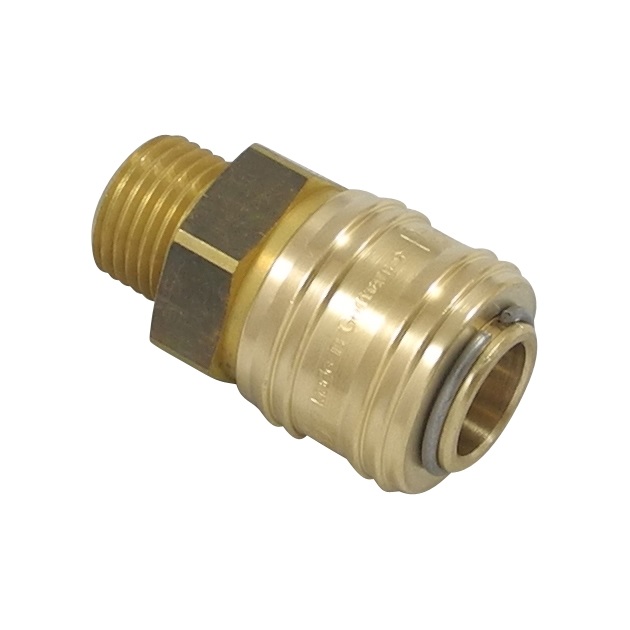
26KAAD16MPX Quick coupling with male thread


20SFIW10MXX Plug with female thread
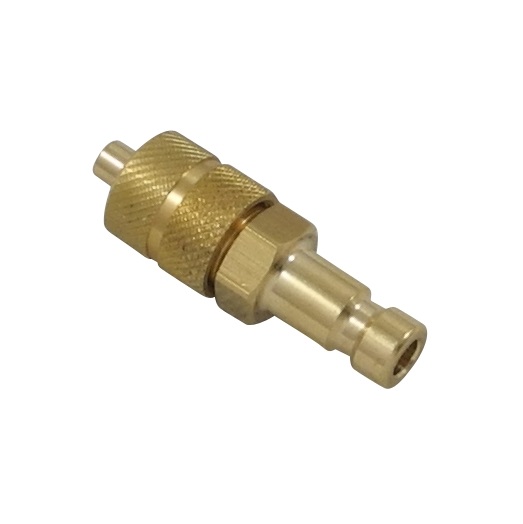
20SFKO04MXX Plug with hose nut


20SFTF05MXN Plug with hose barb

26SFTF06MXX Plug with hose barb

21SFAN13MXN Plug with male thread

26SRTF09MXX Plug with recoil eliminator

IH709350200/100 Multipurpose hose

26KAAW21MPX Quick coupling with male thread

20KFTF04MPX Quick coupling with hose barb

21SFIW13EXX Plug with female thread

20KAKO06MPN Quick coupling with male thread

26KAAW13MPX Quick coupling with male thread

21KAAW10MPN Quick coupling with male thread
Brand Manufacturers: Selection Criteria, Technology, and Application Notes
On this page, you will find targeted information on products from renowned brand manufacturers in the industrial sector. The focus is on technical features, reliable material properties, typical designs, as well as connection and sealing concepts relevant for professional applications. The presentation supports the selection of suitable components based on practical application cases and verifiable specifications.
Quality Features of Brand Products
Material selection determines service life and application range: Stainless steel (AISI 304, 316 / 1.4301, 1.4401) is standard for corrosive environments and food technology; alloy steel and hardened materials are used for mechanical stress and high abrasion; aluminum is preferred when weight reduction is desired; technical plastics (PE, PA, PEEK, PTFE) offer chemical resistance or electrical insulation. Crucial are the documented material number and heat treatment specification, not the brand name alone.
Surfaces and coatings are specified according to function: galvanic zinc coatings offer basic protection, duplex layers increase corrosion resistance, passivated stainless steel surfaces minimize friction and adhesion. Coatings with PTFE or ceramic layers improve wear resistance and reduce friction moments in sliding areas.
Manufacturing tolerances and tests are often more tightly defined by brand manufacturers. Series components come with factory certificates (e.g., EN 10204 2.1 / 3.1) and measurement protocols. Pay attention to dimensioned drawings with tolerance specifications, run-out tolerances, and surface roughness (Ra/Rz), especially for rotating or vertical connections.
Constructive Designs and Connection Types
Brand products cover standardized designs that simplify installation and replacement: DIN, ISO, and ANSI compliant flanges, threads according to ISO 261/965, metric fine threads, and NPT variants for hydraulic connections. Plug connectors and quick couplings often follow industrial standards (e.g., ISO 7241, DIN 2353) and are designed for defined pressure and temperature ranges. For electronic components, enclosures according to IP protection classes (IP65–IP69K) and EMC standards are important.
For seals, elastomeric materials such as NBR, FKM (Viton), EPDM, and silicone-based elastomers are used. The selection depends on the medium, temperature, and pressure; NBR is suitable for mineral oils, FKM for higher temperatures and aggressive media, EPDM for steam and hot water. To ensure tightness, material specifications (Shore hardness, tensile strength) as well as installation grooves and O-ring profiles are relevant.
Connection and Installation Tips
When replacing or retrofitting brand components, immediate comparative values must be checked: functional dimensions, sealing surfaces, bolt circle diameters, insertion/pressing torques, and recommended values for screw strengths. For flange connections, sealing surface roughness and the tightened torque of the screws are crucial for the uniformity of surface pressure. Always use the tightening torque and lubricant specified by the manufacturer to avoid over- or under-compression of the seal.
Electrical and pneumatic connections require checking the pin assignment, protection classes, and connection cross-sections; for high currents, cross-section calculation and temperature management must be considered. In hydraulic systems, venting paths and filter elements must be checked to prevent pressure peaks from leading to premature wear.
Practical Application Examples
1. Pump and Valve Installation in Chemical Plants: A stainless steel ball valve from a well-known brand is used in a pipeline with an aggressive medium. Before installation, the material release (1.4404) is checked, the flange connections are designed according to DIN EN 1092-1, and the seal is changed to FFKM to ensure resistance to aggressive media. Installation is carried out with torque monitoring and a step-by-step tightening sequence to avoid localized deformations.
2. Linear Unit in a Production Machine: A precision linear unit with brand guide rails and a ball screw replaces a worn unit. Before installation, the manufacturer's ball screw play and lubrication plan are considered, the spindle center is aligned, and clamping bushes are pre-tensioned according to manufacturer specifications before tightening. The housings are then checked for run-out to avoid exceeding tolerances.
3. Sensor Network in Production Lines: Industrial multi-parameter sensors from a brand manufacturer are installed in a conveyor line. The sensors come with an IP67 enclosure, M12 connectors, and predefined output signals (4–20 mA, IO-Link). When laying the cables, shielding and grounding requirements are observed, shutdown times and diagnostic intervals are integrated into the PLC, and regular calibration cycles are documented.
Further application-related examples and detailed technical descriptions can be found on our technology page https://maku-industrie.de/technik and in real practical cases under https://maku-industrie.de/anwendungsbeispiele.
Inspection Criteria Before Procurement and Use
Before procurement, check the data sheets provided by the manufacturer for nominal values for pressure, temperature, service life cycles, and media resistance. Pay attention to the availability of spare parts, delivery times, and service options. For electromechanical parts, service life specifications and MTBF data are relevant. Test seals such as CE, UL, ATEX, or SIL classifications provide additional safety regarding the operating environment and functional safety.
Maintenance, Replacement, and Lifecycle Management
Brand products often offer defined maintenance intervals and replacement components that can be mapped in workshop and spare parts management processes. To extend service life, regular lubrication intervals, visual inspections for wear, and load tests are recommended. For components with seals, replacement intervals should be planned not by feel, but by operating hours or switching cycles, to avoid unplanned downtimes. Use original spare parts or compatible parts with equivalent specifications to ensure warranty claims and functionality.
Compatibility and Retrofit Strategies
For retrofitting, the same criteria apply as for new selection: interface compatibility, mechanical fit, electrical connection, and control protocols. Brand manufacturers often offer retrofit kits or adaptable interfaces to minimize replacement times and reduce adaptation effort. Check whether firmware or driver updates are required and whether the control architecture (PLC, fieldbuses, Ethernet/IP) supports the new components.
Environmental and Normative Requirements
Brand products are often classified according to relevant industrial standards. Pay attention to material certificates (RoHS, REACH), explosion protection classifications (ATEX, IECEx), and ISO manufacturing audits. Environmental requirements influence material selection and sealing strategies; in potentially explosive atmospheres, suitable enclosures and temperature classes are mandatory.
Selection Aid in One Sentence
- Choose based on documented material specifications, conformity to standards, tested service life data, and available service infrastructure.
Frequently Asked Questions
1. What information do I need to safely select a spare part from a brand manufacturer?
You need the exact material number, dimensional data including tolerances, type designation, sealing and connection details, operating temperature and pressure ranges, as well as existing certificates and material test certificates (e.g., EN 10204) to ensure replacement and functionality.
2. When is the use of FKM vs. EPDM seals appropriate?
FKM is suitable for high temperatures and organically aggressive media, EPDM for steam, hot water, and many alkaline media; the choice strictly depends on the medium, temperature range, and pressure profile, as well as the desired service life.
3. How do I check the authenticity and quality of a brand product before installation?
Check serial numbers and test certificates against manufacturer databases, request factory test protocols, inspect surface markings and delivery documents, and for critical components, perform incoming inspections in addition to dimensional and leak tests.