
By maku developed and selected products from other manufacturers
Bottle holders, tool holders and other devices for workplaces like linear stands, balancers, spring balancers, service units and tool sets are available here.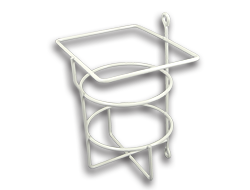

Efficiency and Precision for Industrial Applications: System Solutions for Your Workplace
In modern manufacturing industries and demanding skilled trades, efficiency, ergonomics, and process reliability are the decisive factors for economic success. Every movement must be precise, every tool optimally positioned, and every component exactly adjusted. Our product categories offer well-conceived and field-tested solutions to achieve these goals. From ergonomic workplace design to precise assembly technology and secure media guidance, you will find components here that have been specifically developed for continuous and demanding use in industrial environments. We focus on technical details and functional superiority to sustainably optimize your production and assembly processes.
Ergonomics and Process Optimization: The Foundation for Productive Work
An ergonomically designed workplace is not a minor detail but a fundamental prerequisite for increasing productivity and ensuring employee health. Repetitive strain from holding tools or unnatural body postures leads to fatigue and can cause long-term health problems. Our solutions address precisely this by minimizing physical strain and making workflows smoother and more intuitive.
Spring Balancers and Retractors: Weight Relief for Fatigue-Free Handling
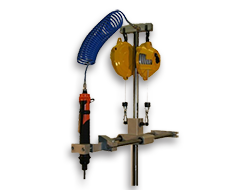
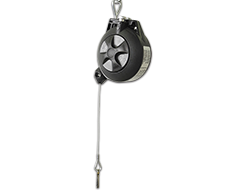
Spring balancers and retractors are indispensable aids at assembly workstations where handheld tools such as electric screwdrivers, heavy drills, or riveting tools are in continuous use. The basic principle is the compensation of tool weight. A balancer holds the attached tool precisely at the desired height, allowing the operator to move and position it without effort. After use, the spring balancer automatically retracts the tool to a predefined resting position, ensuring a tidy and safe work area. The selection of the right device depends on the weight of the tool. Our models cover a wide range of load capacities, from a few hundred grams to over 100 kilograms. Depending on the requirements, the housings are made of high-strength plastic or robust die-cast aluminum for particularly harsh environments. The cables are optionally made of durable steel or abrasion-resistant, non-conductive nylon, which also qualifies them for ESD-sensitive areas. Integrated overload protection and fall protection are standard features on professional models, ensuring maximum occupational safety.
Practical example: In a production line for automotive components, an employee has to tighten hundreds of screws per shift with a 2.5 kg electric screwdriver. Without support, the strain on the wrist and arm would quickly lead to fatigue. By using a balancer precisely adjusted to the tool's weight, the screwdriver virtually floats in the employee's hand. The employee only needs to apply minimal force to guide the tool, which drastically reduces strain, increases precision, and maintains a consistent cycle time.
Electric Screwdrivers for Series Assembly: Repeatability and Control
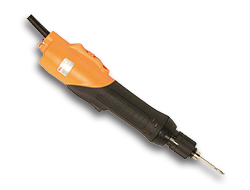
Where screw connections must be made in series with a defined torque, professional electric screwdrivers are the first choice. Unlike conventional cordless screwdrivers, these tools offer precise torque control via mechanical shut-off clutches or electronic controls. A shut-off clutch ensures that the screwing process is stopped immediately and precisely when the exact target torque is reached. This prevents overtightening of the screw and ensures consistent and process-reliable screwing quality. Brushless motors (brushless technology) offer significantly longer service life, higher efficiency, and maintenance-free operation compared to conventional motors with carbon brushes. For assembly stations in electronics manufacturing, special ESD-capable models are available that prevent electrostatic charging and thus protect sensitive components. The ergonomic design and low weight of these tools further support the operator during long work cycles.
Order and Systematics: Tools and Operating Materials in Direct Access
Efficient work processes are based on thoughtful organization. According to the principles of 5S or Lean Manufacturing, it is crucial that all necessary tools and materials have their fixed place and are immediately available without searching. This not only reduces idle times but also minimizes the risk of errors or accidents.
Tool Quivers and Bottle Holders: Everything in its Place
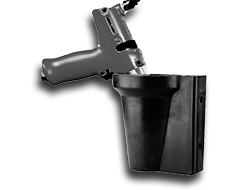
Our tool quivers and bottle holders are simple but extremely effective components for creating order directly at the workplace. They are made from robust materials such as impact-resistant plastic (e.g., ABS) or metal and can be flexibly attached to aluminum profiles, workbenches, or assembly trolleys. A tool quiver ensures that screwdrivers, pliers, or measuring instruments are always within reach. Bottle holders securely accommodate containers for cleaning agents, solvents, or oils, preventing tipping and spilling. This not only increases efficiency but also occupational safety and cleanliness.
Practical example: At a test station for hydraulic assemblies, the technician must adjust sensors, clean connections, and log measurement values. A tool quiver mounted on the test station holds the necessary screwdrivers and wrenches. Directly next to it is a bottle holder with a spray bottle of isopropanol for cleaning the connections. The technician has everything in direct access and does not have to leave their workstation, which significantly speeds up the testing process.
Flexible and Secure Media Guidance in Dynamic Systems
In automated systems, on robots, or on rotating machines, various media such as compressed air, gases, hydraulic oil, or coolants must be transferred safely and reliably. Rigid pipelines are unsuitable here. Intelligent solutions are required that allow movement without compromising the integrity of the media guidance.
Variacor Rotary Joints: Leak-Free Transmission under Rotation
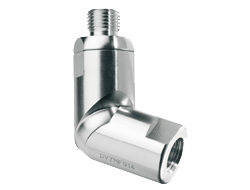
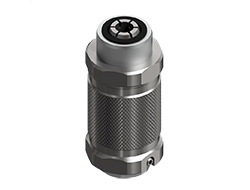
Variacor rotary joints are highly specialized components that enable the leak-free transmission of liquid or gaseous media from a static to a rotating component. They are the heart of rotary tables, robot arms, or hose reels. The selection of the right rotary joint depends on several factors:
- Medium: The sealing materials must be chemically resistant to the transmitted medium. Common materials include NBR (for oils, compressed air), EPDM (for water, hot water), or FKM/Viton® (for chemicals, high temperatures).
- Pressure and Temperature: The joint must be designed for the maximum operating pressure and the prevailing temperature.
- Rotational Speed: The internal bearing and sealing technology must withstand the required rotational speeds permanently.
The housings are made of aluminum, brass, or stainless steel (for the food or pharmaceutical industry) depending on the application. Multi-channel versions allow the simultaneous transmission of different media through a single joint.
IBEDA Gas Couplings: Uncompromising Safety in Gas Technology
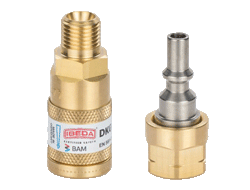
When handling flammable gases such as acetylene, propane, or hydrogen, as well as oxygen, safety is the top priority. IBEDA gas couplings according to DIN EN ISO 7289 are designed for the fast and, above all, safe coupling and uncoupling of gas hoses. They feature several integrated safety devices. A gas non-return device (check valve) prevents gas from flowing in the wrong direction. The flame arrestor prevents flashback in case of a backfire. A thermal cut-off valve melts at a certain temperature, interrupting the gas supply before a fire can occur on the hose. These robust brass couplings are indispensable for mobile welding and cutting systems and guarantee compliance with the highest safety standards.
Practical example: A welder works on a large construction site and frequently needs to reposition their equipment. Thanks to the IBEDA quick couplings, they can quickly and tool-free disconnect their hoses from the gas cylinder and the torch, change location, and securely reconnect everything with a click. The coded system for fuel gas and oxygen prevents confusion of connections, which massively reduces the risk of accidents.
Frequently Asked Questions (FAQ)
1. How do I choose the right spring balancer or retractor for my tool?
The selection is primarily based on the weight of the tool to be attached. Weigh your tool including all attachments such as bits or air connection nipples. Then choose a spring balancer or retractor whose load capacity range covers this weight. Ideally, the tool weight should be in the middle of the specified load capacity range to allow for optimal and sensitive adjustment. Also, consider the required cable extension length – this should be sufficient to comfortably reach all areas of the workplace. Finally, check the material of the cable (steel for robustness, nylon for flexibility or in ESD areas) and the housing.
2. What is the difference between an electric screwdriver with a shut-off clutch and one with a slip clutch?
Both systems serve torque control but operate differently. A slip clutch starts to "rattle" or slip as soon as the set torque is reached. However, the drive continues to run as long as the operator presses the switch. This can lead to a small amount of additional torque being transmitted. A shut-off clutch, on the other hand, mechanically separates the drive from the output as soon as the target torque is reached and switches off the motor. This ensures extremely high repeatability and prevents unintentional overtightening of the screw. For process-critical series screw connections in industry, where exact and verifiable tightening torques are required, the screwdriver with a shut-off clutch is the technically superior and more process-reliable solution.
3. Which sealing material do I need for my Variacor rotary joint?
The choice of sealing material is crucial for the service life and tightness of the rotary joint and depends directly on the medium being conveyed. As a rule of thumb:
- NBR (Nitrile Butadiene Rubber): The standard for neutral media such as compressed air, mineral oils, and greases in a temperature range of approx. -30°C to +100°C.
- EPDM (Ethylene Propylene Diene Rubber): Ideal for water, hot water, steam, brake fluids, and many acids and alkalis. Not suitable for mineral oils. Temperature range approx. -40°C to +150°C.
- FKM (Fluoroelastomer, e.g., Viton®): Excellent resistance to many chemicals, fuels, oils, and solvents, as well as high temperatures (up to approx. +200°C).
Always check the chemical resistance of the planned sealing material to your specific operating medium, especially with aggressive chemicals or high temperatures. In case of doubt, professional advice is recommended.