
Order Rectus accessories quick and easy via onlineshop
Many accessories for the Rectus quick couplings, plugs and hoses can be found here. Sealing kits, swivel joints, blow guns, dust caps and others fulfill the assortment.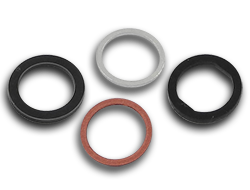


Order Rectus Accessories conveniently online as a supplement
The right accessories for Rectus quick-release couplings ensure functional reliability, leak-tightness, and safe handling in pneumatic and hydraulic systems. At maku, you will find seals, blow guns, dust caps, swivel joints, pressure reducing valves, and pressure relief valves that are precisely matched to the mechanical and media-related requirements of Rectus components. The choice of material, dimensional accuracy, connection types, and suitable sealing systems are crucial, as only then can flow characteristics and service life remain constant.
Materials and Designs: Selection according to Operating Conditions
For seals, elastomeric materials such as NBR and EPDM, thermoplastic options such as PVC, and fiber-reinforced materials such as Fiber (graphite, PTFE-filled variants) are available. NBR is suitable for oils and hydraulic fluids, EPDM for water and aggressive media, PVC offers good resistance to mechanical stress at moderate temperatures, and Fiber seals are ideal for high temperatures and abrasion. Aluminum sealing rings and PVC sealing rings differ not only in material but also in dimensional stability and thermal conductivity; aluminum rings are preferably used where metal-on-metal seating surfaces are required and thermal stress occurs.
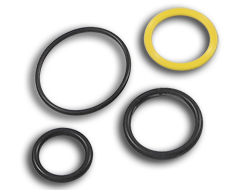
Seal kits are designed for serial replacement and maintenance intervals and contain several types of seals depending on the requirements: radial O-rings, flat gaskets, conical sealing rings, and sealing tapes for larger gap dimensions. Sealing tapes are suitable for wedge and compensation sealing on irregular flange surfaces. For high-pressure applications, reinforced sealing rings with metallic inserts or fiber designs are the method of choice. For standard retrofit or repair work, the use of seal kits classified according to DIN/ISO dimensions is recommended to ensure compatibility with existing Rectus couplings.
Connections, Threads, and Standards
Rectus accessories are available for various connection types: straight and angled screw connections, quick couplings with external or internal threads, push-in and compression fittings, and hose connections with cones or crimps. Metric ISO threads, BSP (G), and NPT are used in international systems. When ordering, pay attention to the correct designation (e.g., G1/4", M5, 1/8" NPT) and the type of seal (tapered thread with PTFE seal, O-ring seal, form-fitting metal seal). For recurring assembly processes, reusable quick couplings without dripping and with an integrated valve for pressure relief are recommended.
Standard relevance: Products should have DIN or ISO compliant dimensions. ISO 6150/1 for O-rings, DIN 7603 for flange gaskets, and ISO 228 for pipe threads are particularly relevant. Pay attention to material certificates and pressure/temperature specifications to avoid risks due to material failure.
Functionality of the Components
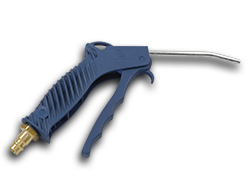
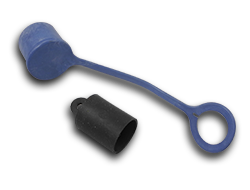
Blow guns are lightweight, handheld tools with ergonomic valves and often integrated throttling for finely dosed air volumes. They are used in workshops for machine cleaning and in production lines for product dedusting. Choose nozzle shapes (conical, flat jet, bundled) according to the cleaning task and pay attention to noise reduction and check valves to avoid pressure surges in the line. Dust caps prevent dirt from entering unused coupling ends; they should be made of abrasion-resistant plastic or soft elastomer to prevent damage to the connection surfaces.
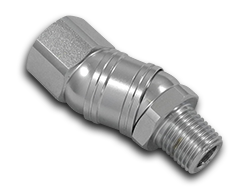
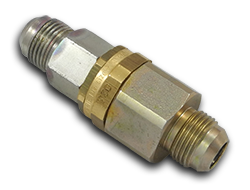
Swivel joints and rotary joints reduce torsional forces on hoses and lines as well as wear on couplings in moving applications such as robot axes or swivel arms. Pay attention to torque limits, rotation angle limitation, and material pairing to avoid wear-in effects. For continuous rotational movement, special rotary unions with integrated sealing and, if necessary, media channel guidance are required.
Pressure Regulation and Safety Relief
Pressure reducing valves ensure a stable, predefined outlet pressure regardless of the inlet pressure. Important criteria for selection are adjustment range, response accuracy, flow characteristic, and design (diaphragm-controlled, spring-loaded). Pressure relief valves function as a safety component to prevent overpressure; here, response pressure, re-seating behavior, tightness after closing, and material resistance to the medium are important. For applications with pulsating pressures or corrosive media, choose valves with stainless steel housings and suitable seals (PTFE, Viton).
Practical Examples
Example 1 — Maintenance of a pneumatic production station: In an assembly line with Rectus quick-release couplings, seal kits (NBR O-rings, fiber flat gaskets) are used during scheduled maintenance. Before disassembly, the system is depressurized, each coupling nozzle is closed with a suitable dust cap, and the new seals are inserted according to DIN dimensions. After final assembly, a leak test is performed at 6 bar with leak detection using soap solution and a measurement protocol.
Example 2 — Robot arm with rotary joint: A welding robot requires a rotary joint with internal air and electronic channels. Here, aluminum-clad rotary unions are used, equipped with PTFE seals to minimize friction. The joint is mounted with threadlocker and torque monitoring. The hoses are connected to the couplings with crimp sleeves; a pressure relief valve with fine adjustment acts as a safety measure to relieve overpressure.
Example 3 — Compressed air cleaning and equipment protection: In the paint shop, blow guns with throttled air supply and noise-reduced nozzles are used. Before each use, the guns are connected, and the air line is combined with an inline filter and pressure reducing valve to maintain a constant working pressure of 3 bar. Dust caps are used on all free couplings to prevent contamination of the nozzle threads.
Logistics, Storage, and Replacement Interval
Store seals in a dark, dry place at a constant temperature to prevent premature aging; elastomers age faster with UV and ozone exposure. Spare parts should be stored in a verifiable manner and traceable by batch number. For critical applications, inventory planning with defined replacement intervals based on operating hours, cycles, and medium is recommended. Document assembly and testing steps in maintenance protocols so that leak measurements, oil changes, and valve tests are traceable.
Compatibility and Ordering Information
When ordering, check compatibility with your Rectus assembly using the item number, cross-sectional dimension of the seal, flange or thread form, and material requirements. Service kits and seal kits simplify rough and fine maintenance. Further technical information, drawings, and application examples can be found in our technical and application section: Technology and Application Examples.
- Typical products: Seals (PVC, aluminum, fiber), blow guns, dust caps, swivel joints, pressure reducing valves, pressure relief valves, seal kits
Care Instructions
Clean metallic connection surfaces before installation with suitable solvents, avoid sharp tools that could damage grooves or seating surfaces. Use lubricants only if approved by the material manufacturer; for NBR and Viton, silicone-free greases are suitable. After assembly, perform functional and leak tests and record measured values and serial numbers for safety and quality reasons.
FAQs
1. Which sealing materials are suitable for hydraulic applications with mineral oil?
For mineral oil, NBR O-rings and reinforced fiber seals are standard; for higher temperatures and chemical stress, Viton variants are preferred.
2. How do I choose the right pressure reducing valve for a pneumatic system?
Determine the required outlet pressure, maximum inlet pressure, flow rate (l/min), and medium; choose a design with suitable accuracy and material resistance according to operating conditions.
3. When should dust caps be used?
Dust caps are mandatory for unused coupling ends in dusty environments, during transport and storage, and immediately after disassembly until re-commissioning, to prevent contamination and damage to the connection surfaces.