
High quality fastening tools by Apex Tool Group
Fastening tools by the Apex Tool Group for compressed air applications such as nutrunners and impulse nutrunners in different versions.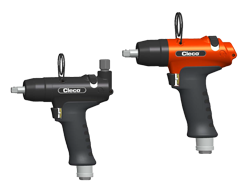
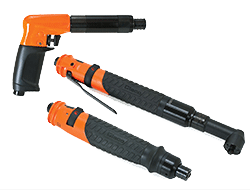
Buy Apex Tool Group Pneumatic Tools at Favorable Prices
Apex Tool Group fastening tools for pneumatic applications offer robust mechanics, precise torque transmission, and economical operating costs. In this category, you will find **rotary screwdrivers**, **impact wrenches**, angle wrenches, and suitable accessories for production lines, assembly stations, and maintenance. The descriptions focus on technical features, connection and sealing concepts, material selection, performance data, and integration into compressed air supply systems.Technical Designs and Materials
Apex pneumatic tools are typically available in housing variants made of die-cast aluminum, hardened steel, or composite materials. Aluminum housings reduce weight and thermal mass, while steel components are used where high torsional loads and shock stresses occur. Shafts, gear wheels, and impact mechanism parts are often hardened or nitrided to minimize wear and increase service life under cyclic loading. Bushings and bearings can be made of bronze, sintered metal, or ceramic-coated materials to optimize lubrication requirements and friction.Connection Types, Sealing Systems, and Air Supply
Standard connections for Apex tools are usually G1/4" (DIN ISO 228), alternatively NPT 1/4" for export-oriented models. For quick tool changes, quick couplings with straight or angled designs are recommended; for assembly lines, swivel couplings are common for twist-protected media supply. Sealing systems use elastomeric materials such as NBR (nitrile) for standard pressure and mineral oil resistance, or FKM (Viton) for higher temperatures and synthetic oils. PTFE sealing rings are used in seats and valves where low friction and chemical resistance are required. For more aggressive operating fluids or high temperatures, special seals based on HNBR or perfluorinated elastomers are available. For reliable function, compressed air treatment units (filter-regulator-lubricator, FRL) are mandatory. Recommended operating parameters: 6–8 bar operating pressure, cleaned and dried air with max. 40 µm particle size, dew point < 3 °C. Oil admixture is required for some impact wrenches; use recommended ISO-VG oil (mostly ISO VG 32 or 46) in a metered amount according to the manufacturer's specifications. Further information on installation, maintenance, and compressed air quality can be found at https://maku-industrie.de/technik.Performance Data: Torque, Speed, Air Consumption
Select tools based on the following parameters: maximum tightening torque, free-running no-load speed, impact frequency, air consumption at nominal load and inlet pressure, and no-load air consumption. Typical rotary screwdrivers for assembly tasks offer adjustable torque ranges from a few Newton meters up to about 100 Nm. Impact wrenches are characterized by high peak torques in a compact design and are ideal for screw connections that require fast tightening at a defined final torque. Torque accuracy is achieved via integrated clutches, impact- or torque-limiting mechanisms, or in-line sensor systems. Pay attention to repeatability as a percentage of the nominal torque; typical industrial values are ±3–±6% depending on the system.Mechanics and Control
Rotary screwdrivers differ in power transmission: direct drive for high torque in a compact design, geared drive for optimized no-load speeds and long service life. Impact tools use impact mechanisms or impulse generators with spring-mass systems to deliver powerful, short torques. Electronically controlled variants offer variable torque profiles, repeatability, and interfaces for control systems (e.g., 24 V signals, IO-Link). Pneumatically controlled models are simpler, more robust, and more cost-effective in harsh industrial environments, but require precise compressed air regulation. For automation integration, standardized mounting interfaces and flanges, as well as optional rotary couplings for hose feeds, are relevant.Service Life, Maintenance, and Spare Parts
Regular maintenance increases availability: lubrication of gears according to intervals, inspection and replacement of seals, lubricant change as needed, and control of compressed air quality. Wear parts are typically impact mechanism components, seals, bearings, and clutch elements. For series production, a stock of critical spare parts is recommended to reduce downtime. Documented service cycles and detailed exploded drawings significantly facilitate maintenance.Fields of Application and Practical Examples
The tools in this category are used in the series assembly of machine components, in vehicle manufacturing, in electrical assembly, and in maintenance. The following structured practical examples show typical applications and necessary system parameters. * Assembly of engine blocks: Use of a gear-assisted rotary screwdriver with adjustable torque 50–120 Nm, compressed air 6.5 bar, quick coupling G1/4", NBR seals, FRL with 5 µm filter and oil mist regulation, measuring system for tracing tightening torques.Practical Example 1 — Automotive Production Line
In a production line for transmission components, an impact wrench is used to tighten screws with high precision. Tool: Apex impact wrench, peak torque 300 Nm, no-load speed 1,200 min‑1. Air supply: 6 bar stabilized by an in-line regulator, oil admixture according to manufacturer, hose diameter 8 mm. The assembly head is connected with a rotating quick coupling to allow tool changes without air loss. Testing process: each tightening torque is reported to the control buffer; faulty nuts are mechanically ejected and subsequently reworked manually. Result: cycle time 22 seconds per unit with 99.8% first-pass quality.Practical Example 2 — Maintenance and Repair Workshop
For maintenance work on production facilities, light rotary screwdrivers with aluminum housings and ergonomic handles are used. Operating requirements: variable torque stages 2–25 Nm, air connection G1/4", low air consumption for mobile compressor applications. Sealing is ensured by NBR O-rings; FKM O-rings are used for oil changes. Maintenance: bearings and seals are checked every 3 months, small parts are available as repair kits.Practical Example 3 — Electronics Assembly
In electronics assembly, compact angle wrenches with low torque and controlled torque release are used. Requirements: maximum height 80 mm, torque 0.2–5 Nm, vibration-reduced gear design. Air quality: fine filter 1 µm, oil mist only if required by the tool. Tool change is done via quick-release chuck, measurement data is transmitted to the line IT system. Result: error-free connection for sensitive components, rework under 0.1%.Accessories and System Integration
Relevant accessories include quick couplings, flexible hoses in PU or NBR, hose protection spirals, in-line lubricators, compressed air filters, regulators, and dryers, as well as shrink or spring guides for cables and air lines. Electronic controls offer interfaces for line control, data acquisition, and quality assurance systems. For special applications, there are guide holders, angle adapters, extended drive shafts, and customized mounting flanges.Purchase Criteria and Selection
When selecting an Apex pneumatic tool, the following criteria are primary: torque range and repeatability, air consumption and required connection, size and ergonomics, material resistance of seals to used oils, ease of repair and availability of spare parts, and integration capability into existing control and quality systems. Further technical background and materials can be found on our technology page: https://maku-industrie.de/technik. Practical examples and application cases are documented at https://maku-industrie.de/anwendungsbeispiele.FAQ
1. What compressed air quality is required for Apex impact wrenches?Recommended are 6–8 bar operating pressure, particle size < 40 µm, dew point < 3 °C; for precise tools, additionally fine filters 1–5 µm and a metered oil mist according to manufacturer's specifications. 2. What connection and sealing variants are available?
Standard connections: G1/4" or NPT 1/4". Seals: NBR for standard oils, FKM for higher temperatures and synthetic oils, PTFE auxiliary seats for low friction; HNBR for increased resistance to heat and chemicals. 3. How do I improve repeatability when screwing?
Ensure stable compressed air (regulator/reservoir), use FRL units, regular maintenance and lubrication, use electronically controlled tools or screwing systems with feedback sensors and testing processes for measurement data acquisition.