
Order sanders by Apex Tool Group in Germany
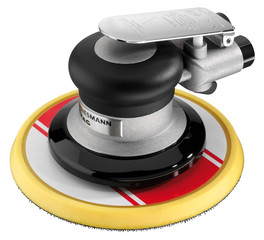
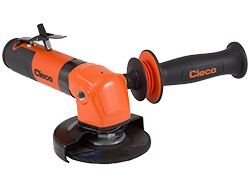
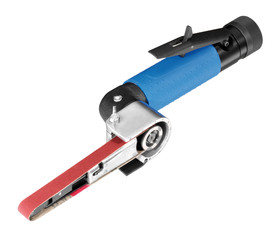
Ordering Grinding Machines from Apex Tool Group in Germany
Grinding machines from Apex Tool Group offer precise, process-reliable solutions for metalworking, post-hardening, deburring, and surface preparation in industrial manufacturing. On this category page, buyers will find technical information on designs, drive types, grinding media, cutting parameters, connection and integration options, as well as notes on maintenance and process reliability. The text is aimed at responsible buyers, production managers, and manufacturing engineers who wish to integrate high-performance grinding solutions into their production processes.
Types and Designs – Selection Based on Process Requirements
Grinding machines can be distinguished by their construction and application: stationary belt grinders for pre-processing and rough grinding, surface grinders for exact flatness, cylindrical grinders for cylindrical precision, flat grinders for large plates, and CNC-controlled grinding centers for flexible series production. Apex offers robust machine frames made of welded steel or tempered cast iron to ensure vibration damping and thermal stability. For high-precision components, machines with hydrostatic guides and direct-driven grinding wheels are available to achieve runout and positioning accuracies in the micrometer range.
Drives, Power, and Speed Ranges
The choice of drive depends on the material and processing step. Universal motors in the 1.5–7.5 kW range cover universal grinding tasks; powerful units up to 22 kW are required for high-performance processing and high feed rates. Frequency converters and brushless servo motors enable stepless speed control, allowing adaptation to different abrasives and materials. For precision grinding, constant speed control and automatic load control are important to stabilize surface quality and tool life.
Grinding Media, Grits, and Mounts
The choice of abrasive and suitable grit determines surface roughness, material removal, and thermal load on the workpiece. Apex machines are compatible with: aluminum oxide grinding wheels for general steels, silicon carbide for cast iron and non-ferrous alloys, ceramic grain mixtures for high-performance grinding, and diamond or CBN-coated tools for hardened steels. Mounts range from standard B2/A46 wheel flanges to quick-change clamping devices and precision flanges with balancing options. Clamping systems and flange geometries are available with ISO and customer-specific interfaces.
Grinding Parameters, Cooling, and Process Reliability
Efficient grinding requires coordinated parameters: cutting speed, feed rate, allowance, and coolant strategy. For heat-sensitive materials, an EMK-supported (emulsion-based) coolant system with a targeted dosing unit and filtered recirculation is recommended. Dry or minimum quantity lubrication (MQL) is suitable for certain stainless steel and aluminum processes, reduces rework but requires grit adjustment. Machines can be equipped with tempering circuits and electric heating elements to improve tool life and dimensional accuracy in changing ambient temperatures. For occupational safety and process stability, integrated overload shutdown, thermal monitoring of the grinding wheel, speed monitoring, and hose or flange pressure sensors for coolant are necessary.
Extraction, Seals, and Filter Technology
Dust class, filter fineness, and air guidance influence health and machine service life. Apex grinding machines offer modular extraction interfaces, compatible with central industrial extraction systems, as well as optional HEPA or combination filters for fine metallic abrasion and grinding dust. Seals in the housing area, labyrinthine chip guides, and sealed bearing housings protect bearings and electronics. For fine powdery materials, additional special protective measures such as overpressure relief, explosion protection (ATEX-compliant), and antistatic coatings are available.
Integration, Control, and Interfaces
Apex machines offer controls from simple PLC regulators to complete CNC solutions with HMI. Interfaces include Profinet, EtherCAT, Modbus TCP, and digital I/O for connection to line controls, manufacturing execution systems (MES), and robots. For series processes, automatic component feeding, camera-assisted length and thickness measurement, and adaptive feed control are integrated. Optionally, IO-Link sensors can be used for condition monitoring and predictive maintenance. Documented HHT and diagnostic interfaces enable quick service access and remote functionality.
Material Compatibility and Typical Applications
Apex grinding machines cover a wide range of materials: unalloyed and alloyed steels, stainless steels, titanium, aluminum alloys, cast iron, bronze, and various plastics. For hardened workpieces, diamond or CBN grinding wheels are the first choice; for soft metals and aluminum, the coolant strategy and grit must be adjusted to avoid clogging and tearing. Surface preparation for paint application, deburring processes after milling and drilling, contour differences in shafts and axles, and fine finishing of tools are typical applications.
Maintenance, Wear Parts, and Service Life
Regular maintenance includes grinding wheel balancing, bearing inspection, coolant filter changes, and checking guides for play. Wear parts, in addition to grinding wheels, include circlips, seals, carbon brushes (for motors), filter elements, and belts. Predictive maintenance packages use vibration detection and temperature trend analyses to minimize planned downtime and prevent unplanned failures.
Connection Technology and Electrical Specifications
Mains connections range from 230 V single-phase for smaller belt grinders to 400 V/50 Hz three-phase for large stationary machines. Motor starting and switching technology complies with IP54 to IP65, depending on protection requirements. Controls are supplied as standard with galvanically isolated inputs; options include galvanically protected fieldbus interfaces, emergency stop monitoring according to DIN EN ISO 13849, and electrical power with backup monitoring for cutting and grinding cycles.
Practical Application Examples
Practical Example 1 – Deburring of Milled Parts Made of Alloy Steel: A horizontal belt grinding machine with a 3 kW drive, 80 m/s belt speed, and water-based cooling is used. The component is guided by a pneumatic clamping system, and feed and belt pressure are adaptively controlled. Result: Burr-free edges with reproducible surface roughness Rz < 6 µm. See detailed process steps at Application Examples.
Practical Example 2 – Finish Grinding of Hardened Shafts: Cylindrical grinding machine with CBN wheel, hydrostatic guides, and CNC axes. Pre-processing in two cycles, followed by finish grinding with reduced cutting depth and continuous coolant supply. Result: Roundness < 2 µm, surface hardness unchanged due to controlled heat dissipation.
Practical Example 3 – Preparation of Welds on Aluminum Profiles: Belt and disc grinding combination with grit 80–120 and dry pre-grinding, followed by polishing belt with fine paste. Use of dressing tools for profile edge guidance, extraction system with fine dust filter protects the welding workstation. Process parameters and material recommendations were adapted to the specific alloy.
Further technical background information and interface descriptions can be found at Technology.
Selection Aid: Decision Criteria for Purchase
Choose the machine according to the processing goal, cycle time, workpiece size, material, and desired tolerances. Consider interfaces for line integration, maintainability, and spare parts availability. Check whether protection classes, filter types, and temperature controls meet operational requirements. For series processes, the availability of automation options and remote diagnostics is relevant.
Quick Checklist for Technical Specification
- Material and hardness, cycle time, desired surface roughness and tolerances; available mains connections and extraction capacity; integration (CNC/PLC/robot) and maintenance strategy.
FAQs
1. Which grinding machine is suitable for hardened shafts up to 60 HRC?
For hardened shafts up to 60 HRC, a cylindrical grinding machine with a CBN or diamond wheel, hydrostatic guides to prevent vibrations, cutting depth and coolant control, and a CNC axis to achieve roundness and runout values in the micrometer range is recommended.
2. How do I prevent heat input when grinding thin-walled aluminum profiles?
Reduce feed speed and cutting depth, use finer grits, select suitable grinding pads for aluminum, and use MQL or targeted coolant supply. Additional measures include lower belt speeds and free support points to prevent deformation.
3. Which extraction and filtration level do I need for grinding processes with stainless steel and nickel alloys?
Use an industrial extraction system with pre-separators, fine filters (HEPA), and antistatic grounding. Check filter fineness and volume flow suitable for the dust class; for health-relevant dusts, certified filters and regular filter maintenance are mandatory. Optional: overpressure relief and ATEX assessment for flammable dusts.