
Buy low-priced high quality Tees online

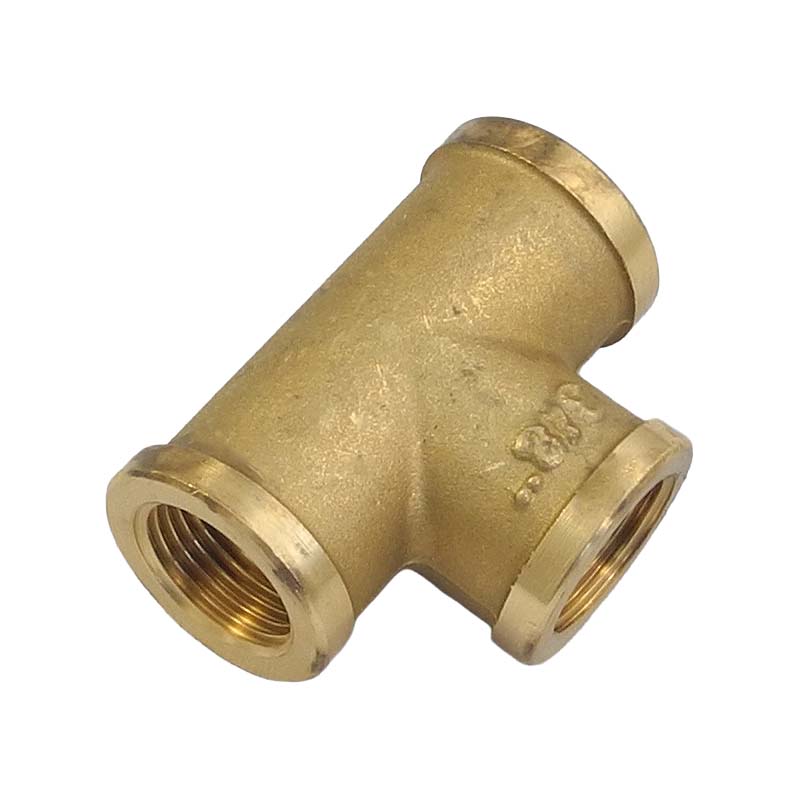


Adapter for pressure sensor on espresso machine


0915 - Equal tees, female thread

0916 - Equal tee, male to female

0917 - Equal tee, male to female

0927 - Equal tee, male thread

0928 - Equal tee, male to female

1845 - Equal tees, female thread

Types, Materials, and Designs of Tees for Industrial Connections
Tees connect three pipe sections in a rectangular or 120° angled layout and are central components in pneumatic, hydraulic, and fluid technology systems. Available materials include brass, nickel-plated brass, stainless steel, and anodized aluminum. Brass offers a good price-performance ratio and corrosion resistance in dry and slightly humid environments. Nickel-plated brass variants increase surface hardness, wear resistance, and provide improved protection against contact corrosion. Stainless steel (typically 1.4301/304 or 1.4404/316L for higher corrosion resistance) is suitable for aggressive media, food, pharmaceutical, and offshore applications. Anodized aluminum reduces weight and offers sufficient corrosion protection in dry industrial environments under lower loads.
Design Variants and Dimensioning
Tees are available as fittings with internal or external threads, compression fittings, push-in connectors, as well as press and weld designs. Thread types include metric ISO threads (e.g., M10x1), BSP (G and R threads), and NPT for international applications. Compression and clamp fittings enable pressure-resistant, demountable connections without welding. For unpressurized systems or signal lines, push-in or push-fit variants are also used. Manufacturer-specific product lines such as Parker Rectus provide standardized solutions with documented pressure and temperature specifications, DVGW or ATEX approvals where required.
Sealing Systems and Media Suitability
The choice of seal determines the application range and service life. Standard elastomers include NBR (nitrile rubber) for mineral oils and air, EPDM for steam, water, and corrosive media, and FKM/FPM (Viton) for high temperature and chemical resistance. PTFE seals offer chemical inertness and low friction with high temperature stability. Sealing seats can be designed as O-ring seats, geometrically shaped flat surfaces, or metal-to-metal sealing connections. For stainless steel tees, profiled sealing seats or pre-assembled PTFE inserts are often common to prevent leaks at high pressures. Pay attention to compatibility between sealing material and medium; unsuitable elastomers lead to swelling, embrittlement, or early leaks.
Mechanical Requirements and Pressure Classes
Tees must be selected according to operating pressure, temperature range, and static load. Brass tees typically cover pressure ranges up to approximately 25 bar, while nickel-plated versions can meet slightly higher pressure requirements. Stainless steel versions, depending on wall thickness, connection type, and manufacturing standard, achieve significantly higher operating pressures up to 400 bar and more for custom designs. In addition, vibration resistance and torsional stiffness must be considered, especially in dynamic applications or when installed in vibrating machinery. For safety-relevant systems, test reports, material certificates, and, if necessary, 3.1/3.2 approvals are available.
Connections, Assembly, and Installation Practice
Connection technology determines tightness and maintenance effort. Screw connections with conical sealing surfaces (e.g., 24° cone, JIC) create a metallic seal and require defined tightening torques. Compression fittings require clean pipe ends and the correct compression ring for material and wall thickness; incorrect assembly leads to slippage or leakage. Push-in fittings are suitable for rapid prototypes or maintenance work but are less vibration-resistant. Welded tees provide the most permanently tight connection in piping installations but require qualified welders and post-treatment. During installation, attention must be paid to flange routes, free accessibility for torques, and the exit location of leaks. Use manufacturer's torque values and check all connections for retightening after the first operating cycle.
Corrosion Protection and Surfaces
Nickel plating increases contact corrosion resistance, prevents galvanic effects, and simplifies cleaning. Anodized aluminum offers decorative and technical corrosion protection but must be checked for galvanic connection with nobler metals. Stainless steel offers passive protective layers but can suffer stress corrosion cracking in chloride-containing media; suitable alloys or internal coatings should be chosen here. Surface roughness affects sealing surfaces; ground or polished surfaces reduce seal stress for soft seals.
Fields of Application and Practical Use Cases
Automated Production Facilities: In pneumatic cylinders, tees distribute compressed air to multiple cylinder paths. A nickel-plated brass tee with push-in connections connects the main air line (8 mm) to two tool lines (6 mm). Assembly takes place in the control cabinet on vibration-damped mounts; NBR O-rings are sufficient for standard air to reduce leaks.
Cooling Circuits in Machine Tools: Stainless steel tees with flush weld ends direct coolants to spindle and tool zones. Seal-less welded transitions minimize flow losses and prevent particle accumulation. For abrasive coolants, larger diameters and optimized flow transitions are recommended to prevent erosion at internal edges.
Hydraulic Power Units: High-pressure stainless steel tees with 24° cone connections distribute hydraulic oil to control blocks. FKM seals are used here due to their temperature and oil resistance. During service work, system bleeding and clean filtration are crucial, as foreign particles can damage compression ring and cone connections.
Food and Pharmaceutical Industry: Tees made of stainless steel 316L with polished internal surfaces and PTFE seals ensure cleanability and sterility. CIP/SIP resistance is a prerequisite; the component geometry must avoid dead spaces. Piping must be designed so that product residues cannot stagnate.
Practical Checklist (Compact Selection Aid)
- Select material, seal, and connection type according to medium, pressure, and temperature.
Selection Criteria, Tests, and Documentation
Select tees based on the following parameters: medium, temperature range, pressure class, necessary approvals, mechanical load, and mounting type. Check factory certificates (EN 10204), material certificates, and, if applicable, coating proofs. A pressure tightness test after assembly and a functional test under operating conditions are standard. For safety-critical systems, regular leak inspection and documented readjustment are mandatory. Manufacturer specifications on service life cycles and wear limits facilitate maintenance intervals.
Compatibility, Spare Parts, and Inventory Management
Standardize as few connection sizes and materials as possible on your system to reduce maintenance costs. Keep critical seals as first-aid kits. Replacement tees should have the same manufacturing tolerances and surface treatment as original parts to avoid differences in corrosion and strength. When reordering branded items such as Parker Rectus, check dimension tables and part numbers to ensure fit. Further technical information and product lines can be found on our technology page https://maku-industrie.de/technik and specific operating examples under https://maku-industrie.de/anwendungsbeispiele.
Maintenance, Safety, and Service Life
Maintenance reduces downtime: regular visual inspection, seal replacement after specified operating hours, retightening according to torque values, and cleaning of connection surfaces. Document each maintenance step in your plant logbook. Consider material fatigue under cyclic loading; for critical connections, periodic ultrasonic or non-destructive testing is recommended. Use only tested original seals to avoid liability risks and functional failures.
FAQs
1. Which tee material is suitable for aggressive media such as salt solutions?
For chloride or salt-containing media, stainless steel 1.4404/316L is the first choice; alternatively, highly alloyed duplex steels or corrosion-resistant coatings may be necessary. Choose seals made of PTFE or special FKM types; documented corrosion tests are recommended.
2. How do I check for leaks after installing a compression fitting tee?
Perform a pressure test with the maximum operating pressure at 1.3 times the test pressure, check all connections for visible leaks, and if necessary, measure using leak detection spray or differential pressure sensors. If leaks are detected, disassemble the compression ring, check pipe ends, and replace the compression ring.
3. When is a welded tee a better choice than screw or compression fittings?
Welded tees are preferable when permanently tight, smooth internal surfaces without dead spaces are required, for example, in cooling circuits or hygienic applications. They are also advantageous at high pressures and dynamic loads. Note the effort required for qualified welding and possible post-treatments.