
Buy high quality low-priced elbow fittings by Parker Rectus


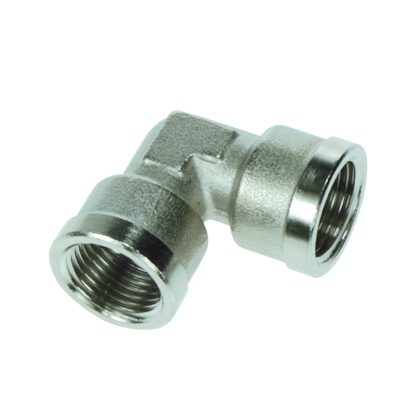
0912 - Elbow connections, female thread

0913 - Elbow connections, male to female
Elbow Fittings from Parker Rectus: Technical Overview and Selection Criteria
Elbow fittings serve as connecting elements to redirect lines, hoses, and pipes in a space-saving and stress-free manner. Parker Rectus offers elbow fittings in various designs, materials, and connection types that meet technical requirements in pneumatics, hydraulics, vacuum, and fluid technology. This text provides specific selection criteria, technical details on materials, sealing systems, thread and working sizes, as well as practical application examples for industrial use.
Materials and Surfaces
The choice of material influences corrosion resistance, mechanical strength, weight optimization, and weldability/solderability. Parker Rectus elbow fittings are available in brass (CuZn alloys) for general fluid applications, nickel-plated brass variants for increased corrosion resistance in humid environments, stainless steel (typically AISI 316/316L) for aggressive media, food and medical applications, as well as high temperature and pressure resistances, and anodized aluminum for weight savings with good corrosion resistance. Surface treatments such as nickel plating, passivation, or anodic anodizing additionally influence abrasion and corrosion resistance. Selection guideline: Use stainless steel for chloride-containing media or when galvanic corrosion must be avoided; brass is cost-effective in neutral and oil-free pneumatic systems.
Designs and Angle Degrees
Elbow fittings are typically designed as 90° and 45° redirects; Parker Rectus also offers compact saddle and flat-seal models with minimal installation space. 90° elbow fittings are suitable for confined machine spaces, while 45° variants offer lower flow resistance and are advantageous for higher flow rates. There are also swivel elbow fittings that can be oriented after installation, reducing torsional forces on hoses. For piping systems with tight bending radii, a specially shaped flange or saddle design is recommended to minimize kinking and fatigue risks.
Connection Types and Threads
Parker Rectus elbow fittings cover common connection standards: metric ISO threads (e.g., M5–M27), BSP (G, R), NPT for North American systems, as well as special pipe connections according to DIN or EN. Furthermore, push-in and plug-in connection variants are available, allowing quick assembly without additional sealing, as well as compression and cutting ring fittings for permanent, pressure-resistant connections. The correct selection depends on the medium, operating pressure, and frequency of assembly. When changing standards (e.g., BSP to NPT), differences in sealing and tolerances must be observed; compatible transition elements or adapters from Parker Rectus reduce leakage risks.
Seals, Sealing Principles, and Media Resistance
Sealing systems for elbow fittings include screw connections with flat seals, conical connections with PTFE or graphite-based seals, and O-ring seals made of NBR, FKM (Viton), or EPDM. NBR is suitable for mineral oils and air, FKM for higher temperatures and aggressive media, EPDM for water and steam applications. PTFE offers excellent chemical resistance but is less suitable for dynamic sealing zones without appropriate support. For compressed air and vacuum applications, metallic seat seals or special vacuum seals are available. Check compatibility tables for the specific medium; for mixtures, additives, or process chemicals, a resistance check is recommended.
Mechanical Load Capacity, Pressure, and Temperature Ranges
Brass elbow fittings typically achieve continuous pressure values of up to 16–25 bar in standard versions; nickel-plated variants offer the same pressure spectrum but better surface resistance. Stainless steel elbow fittings are suitable for higher pressures (depending on size, up to over 400 bar in special versions) and temperatures from −40 °C to +200 °C; with suitable seals, even higher temperatures are often possible. Anodized aluminum elbow fittings are weight-optimized and suitable for medium pressures. For pulsating loads, vibrations, or shock loads, reinforced designs and additional fastening options should be chosen to prevent fatigue at the connection point.
Manufacturing Tolerances, Tightness, and Test Criteria
Parker Rectus manufactures elbow fittings to tight manufacturing tolerances for threads, sealing surfaces, and seat geometries to ensure repeatable tightness. Test criteria include pressure testing (hydrostatic and pneumatic), leak rate measurement using helium or air tests, as well as optical and dimensional controls. In safety-critical systems, 100% testing for tightness and thread quality is common. Documentation and traceability of batches ensure use in regulated environments.
Compatibility with Hoses and Pipes
When connecting hoses, diameter, wall thickness, and material used are crucial. Cutting ring and compression fittings are suitable for metal-sheathed or high-pressure hoses, push-in fittings for flexible polymer hoses with defined outer and inner geometry. For vibrations, hose clamps and strain reliefs should be used to relieve the elbow fitting. For pipelines, welding, soldering, or clamping connections are possible; for translational movements, swivel elbow fittings with integrated swivel joints are preferred.
Installation Instructions and Maintenance
Installation without torque specifications increases the risk of leaks or damage. Parker Rectus specifies specific tightening torques for thread sizes; for O-ring seals, clean, grease-free sealing surfaces and sufficient O-ring-based lubricant should be used to prevent pinching. When installing, use threadlocker only if compatible with the medium. During service, O-ring and PTFE seals should be regularly inspected, and worn parts replaced. For repeated assembly, the use of wear rings or replacement seals made of resistant materials is recommended.
Quality and Standard Notes
Parker Rectus elbow fittings comply with common standards such as ISO, DIN, and partly special industry standards for food and medical applications. When used in potentially explosive atmospheres, ATEX-compliant variants and corresponding material tests must be considered. Technical data sheets provide permissible pressure and temperature ranges, thread, and sealing information; compare data sheet values with process conditions to avoid overstressing.
Practical Examples
Example 1 – Pneumatic Tool Supply: In an assembly cell, a 90° elbow fitting made of nickel-plated brass is used to compactly route the compressed air supply to the tool head. The elbow fitting has a push-in connection for a 6 mm polyurethane hose and an M5 metric thread for attachment to the valve block. The quick assembly reduces installation times and minimizes bending radii on the hose, thereby reducing wear.
Example 2 – Cooling Circuit in Machining: For a machine tool, a stainless steel elbow fitting with 45° geometry and a PTFE flat seal is used to route coolant lines near the spindle. The 45° geometry reduces pressure losses and turbulence, and the PTFE seal ensures chemical resistance to additives. Regular visual inspection and replacement of the seal after maintenance intervals ensure process stability.
Example 3 – Vacuum Handling in Electronics Manufacturing: A stainless steel elbow fitting with a conical metal seal connects vacuum lines to a suction gripper. The metal seal remains tight even at temperatures above 150 °C and under cyclic loads. A swivel intermediate piece allows alignment without torsion on the hose.
Selection and Ordering Information
When selecting an elbow fitting, check the combination of material, thread or connection standard, sealing material, and the permissible pressure and temperature range. Order suitable replacement seals and, if necessary, adapters to minimize downtime during commissioning and maintenance. For technical data sheets, material specifications, and application examples, please refer to the technical overview at https://maku-industrie.de/technik and specific practical examples at https://maku-industrie.de/anwendungsbeispiele. On the category page, you will find the available sizes and configurable options.
- Most important selection criteria: Material, connection standard, sealing material, pressure/temperature range, design (90°/45°/swivel)
Concluding Remarks
Elbow fittings significantly influence flow behavior, installation flexibility, and the service life of pipe and hose systems. The technically correct combination of material, connection type, and seal minimizes leaks and failure risks. Use product data sheets and carefully measure space requirements before ordering. In case of uncertainty regarding media resistance or special applications, inquiries to technical support or specific material tests are recommended.
FAQs
1. Which seal is best for compressed air applications?
For compressed air, NBR seals are the standard choice due to good abrasion resistance and sufficient temperature resistance; for higher temperatures or contact with oils, FKM should be chosen.
2. When is a swivel elbow fitting useful?
A swivel elbow fitting is useful when installation alignment is required or when torsion on hoses and lines needs to be avoided, for example, on rotating or frequently moved machine parts.
3. How do I ensure compatibility between BSP and NPT connections?
BSP and NPT are not directly compatible due to different thread profiles and sealing principles. Use certified adapters or interchangeable components explicitly designed for the combination, and check the sealing principle and tightening torque.