
Compressed air and hydraulics coiled hoses
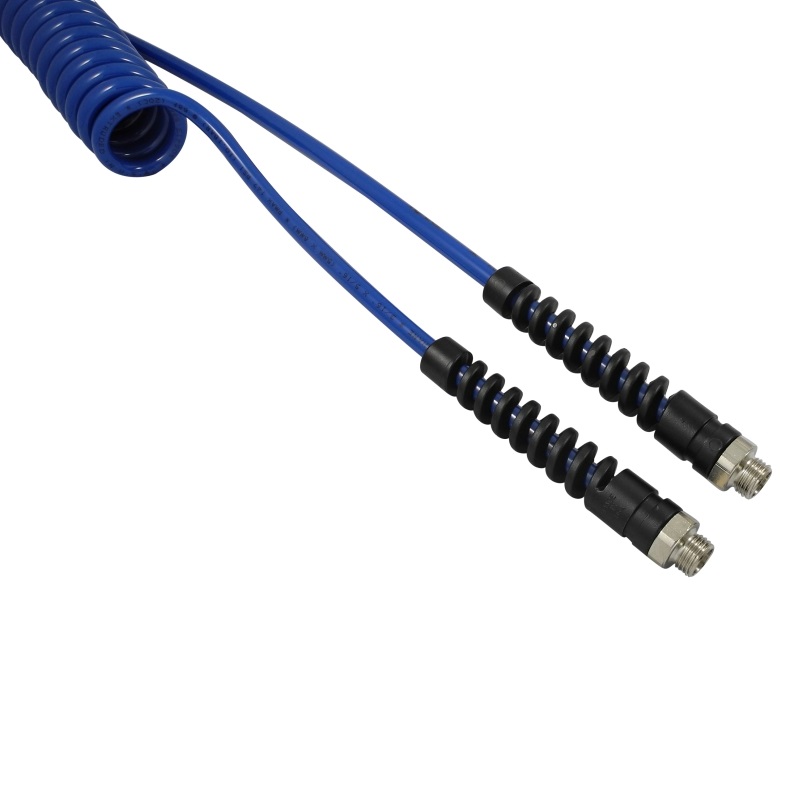
PU08/020/DV PU-coiled hose


PU15/060/DV PU-coiled hose

SP08/075/K+S PA-coiled hose

SP08/050/K+S PA-coiled hose

PU10/040/DV PU-coiled hose
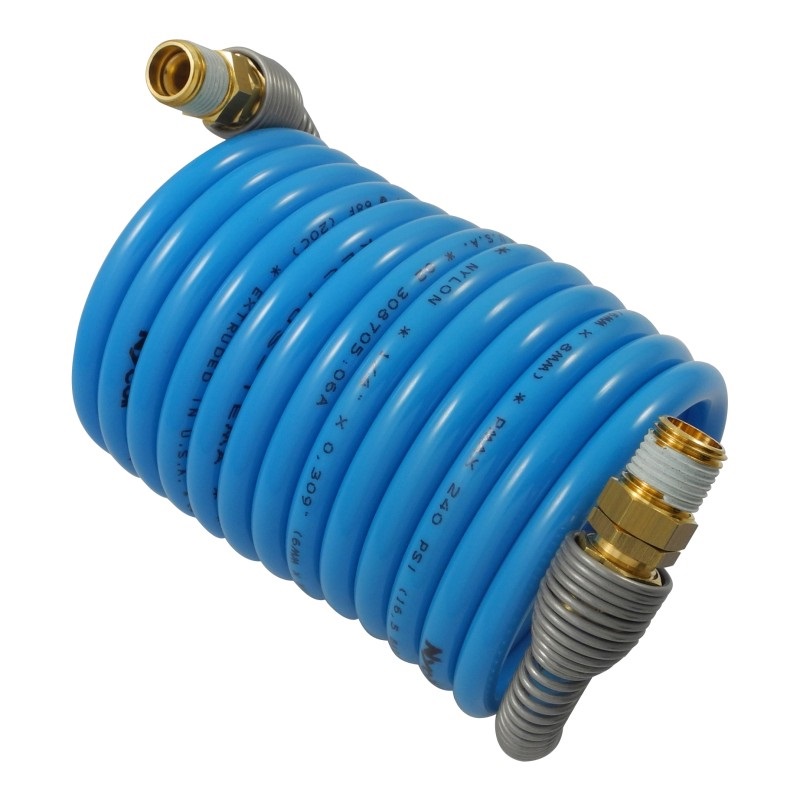
SP10/075/DV PA-coiled hose
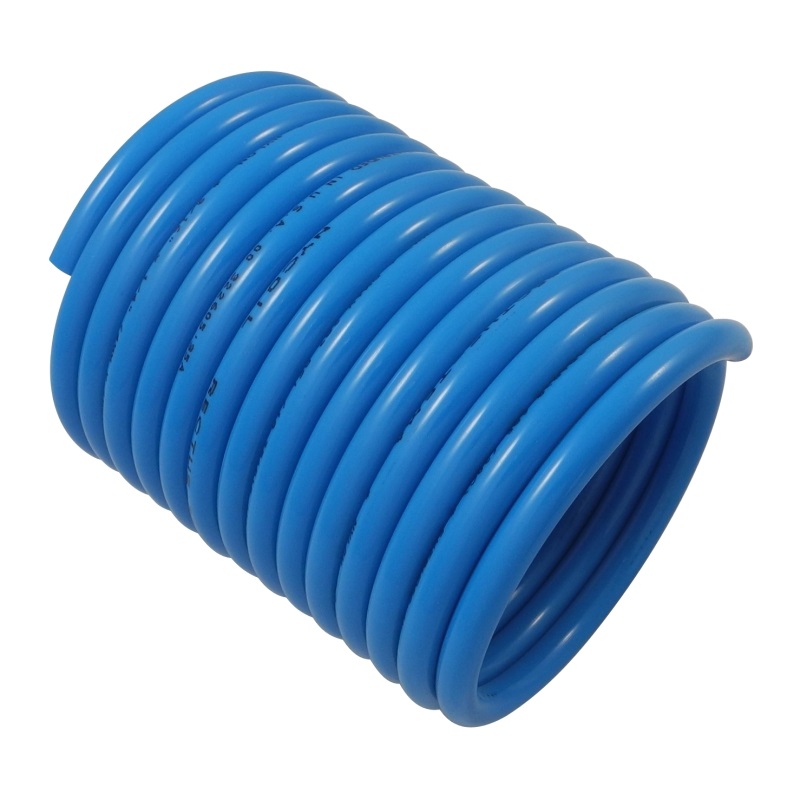

PU15/040/DV PU-coiled hose
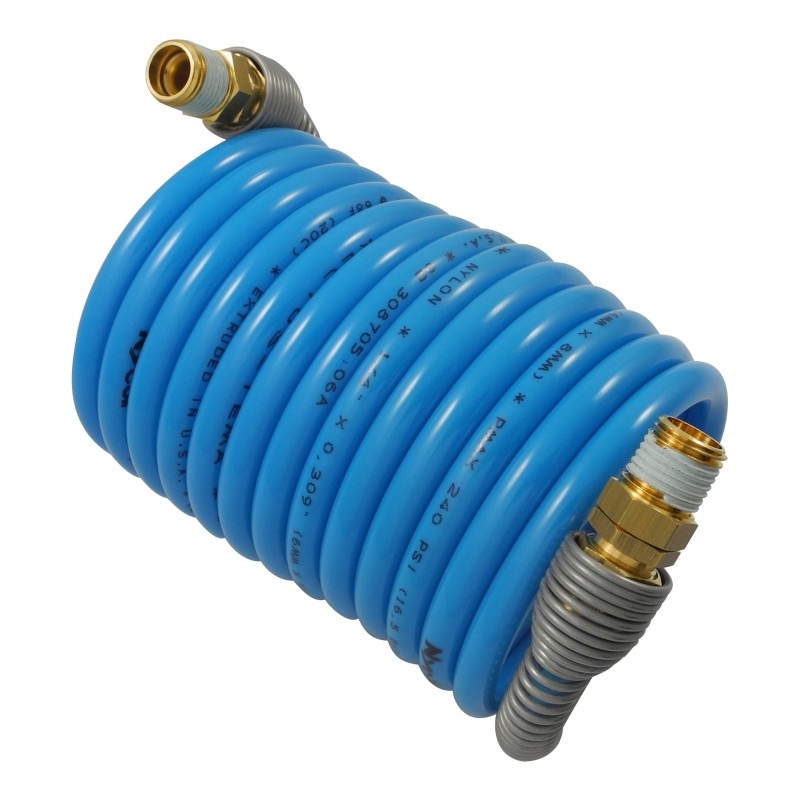
SP08/025/DV PA-coiled hose

SP12/025/K+S PA-coiled hose

PU08/030/DV PU-coiled hose

PU10/030/DV PU-coiled hose

PU10/075/DV PU-coiled hose
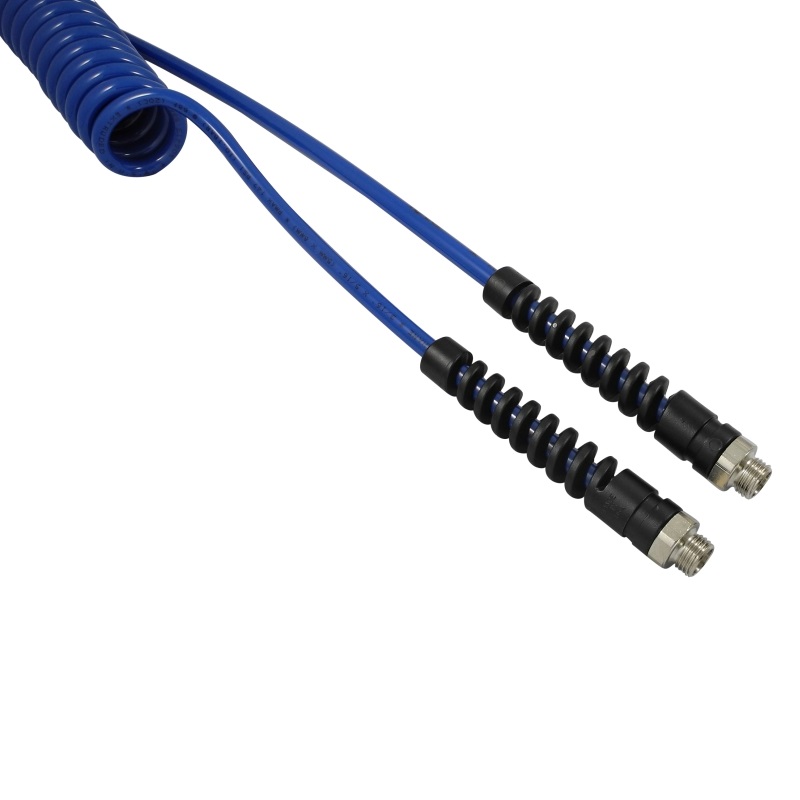
PU10/060/DV PU-coiled hose
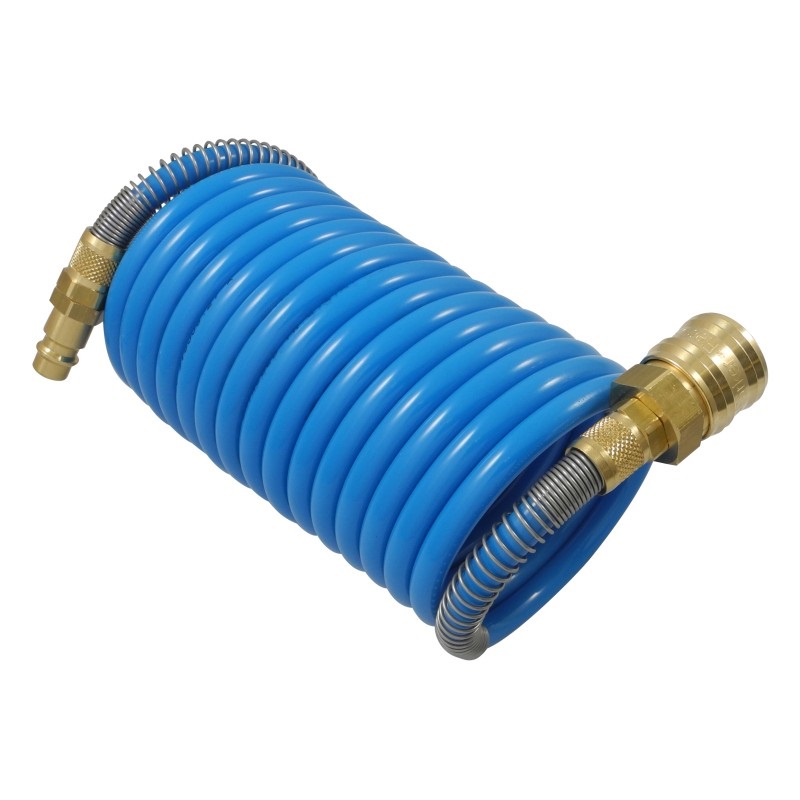
SP10/100/K+S PA-coiled hose
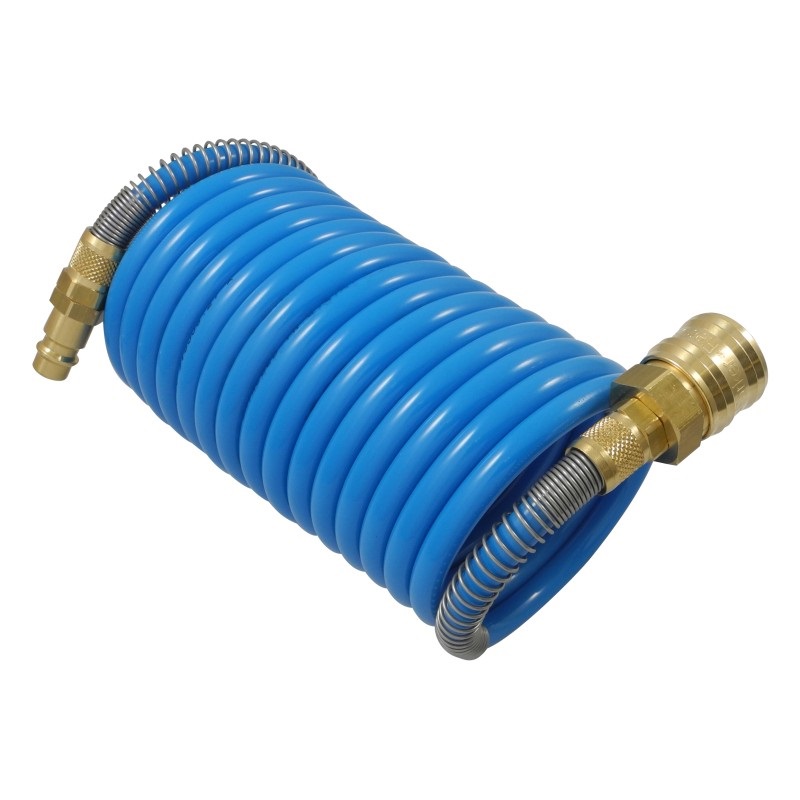
SP12/100/K+S PA-coiled hose

SP08/100/DV PA-coiled hose

PU12/075/DV PU-coiled hose


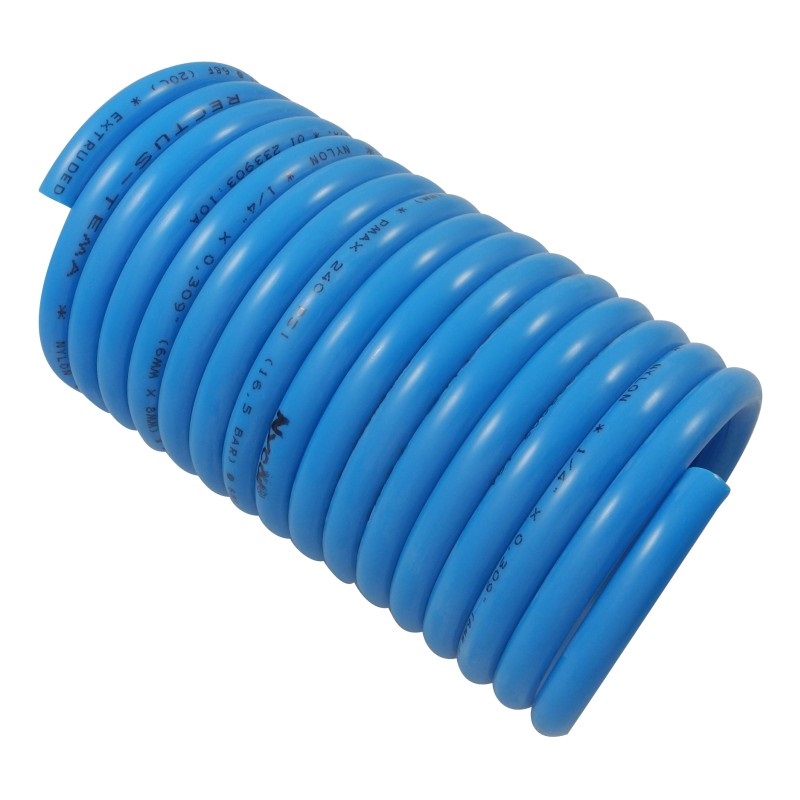

SP08/075/DV PA-coiled hose
Technical Introduction to Spiral Hoses for Compressed Air and Hydraulics
Spiral hoses offer a space-optimized and kink-resistant solution for media supply in pneumatic and hydraulic systems. In this category, you will find spiral-shaped pneumatic and hydraulic hoses made of Nylon 12 (PA) and flexible polyurethane (PU) in various diameters and with different connection types. The spiral shape reduces the required installation length, increases the restoring force under tensile load, and prevents tangling in confined work areas. Key selection criteria include material properties, pressure and temperature range, connection and sealing concept, and resistance to media such as oil, lubricants, or compressed air additives.
Materials and Material Properties
PA 12 (Nylon 12) is characterized by high mechanical strength, good chemical resistance to hydraulic oils, and low water absorption. PA 12 spiral hoses are suitable for medium pressures in hydraulic applications, offer good abrasion resistance, and still acceptable flexibility at lower temperatures. Typical operating temperatures range between -20 °C and +80 °C, depending on the specific compounding and processing.
PU (Polyurethane) is significantly more flexible, has excellent restoring forces, very good abrasion resistance, and good resistance to many oils, greases, and oil derivatives, but more limited continuous operating temperatures of approximately -30 °C to +60 °C. PU spiral hoses are the first choice for movable pneumatic lines, workbench connections, and applications with frequent bending and unrolling.
Construction, Designs, and Wall Thicknesses
Spiral hoses are manufactured in single-layer or multi-layer designs. Single-layer PU hoses are very flexible and lightweight, while multi-layer hose concepts for PA 12 or reinforced PU variants offer improved burst pressure values and higher abrasion resistance. Wall thicknesses are crucial for pressure resistance and kinking behavior; thinner-walled spiral hoses reduce volume and increase flexibility, while thicker-walled variants allow higher operating pressures and longer service life under mechanical stress. The selection of wall thickness should be based on the maximum expected system pressure and the stress from movement.
Pressure, Temperature, and Media Resistance
Important characteristic values are nominal working pressure (PN), burst pressure (usually 3–5 × PN), and the permissible temperature range. Common PU spiral hoses for pneumatics are designed for pressures up to 10 bar; reinforced PA 12 variants achieve higher values suitable for light hydraulic applications. For hydraulic use, pay attention to the manufacturer's approval regarding hydraulic fluids and additives. The tightness of the connections and the compatibility of sealing materials (NBR, FKM/Viton, PTFE) are crucial for resistance to oils and hydraulic fluids.
Connections, Seals, and Standards
Spiral hoses are supplied with various connection types: quick couplings, push-in connectors for pneumatics, screw connections with pipe fittings (e.g., ISO, DIN), and special connections for hydraulics. For high-pressure hydraulics, screwed metal fittings with suitable seals (e.g., PTFE or FKM O-rings) are preferable. For pre-assembled lines, ensure the selection of suitable fittings and observe the permissible torques and insertion depths. Standards such as ISO 14876 (for spiral and coil hoses in specific areas) and general pressure hose standards provide guidelines for test pressures and material tests.
Assembly, Storage, and Handling
Assembly errors and improper storage shorten service life. Spiral hoses should be installed without tensile stress; for moving applications, defined strain relief is part of the installation. Longer storage in a coiled state can lead to permanent deformation; short storage cycles are uncritical, but for longer storage, relaxed storage at room temperature is recommended. Cut surfaces of pre-assembled hoses must be cleanly deburred; even with PU, clean edges are required for push-in connections and sealing surfaces.
Practical Application Examples
In assembly automation, PU spiral hoses are preferred for supplying pneumatic cylinders on handling axes, as they automatically retract during travel and prevent tangling. A concrete example: In a placement station with a swivel arm, 6 mm PU spiral hoses connect the cylinders and the electrical quick-change interface; due to the spiral shape, the hose length remains short in the resting state, and the restoring force prevents hose loops and reduces wear on the fittings. For compact hydraulic units in intralogistics vehicles, PA 12 spiral hoses are used to create short, high-pressure-capable connections between the pump and valve block with minimal space requirements. There, the hose connections are sealed with FKM O-rings, and the lines are secured against vibration with clamps.
Practical example for maintenance: In a machining center, PU spiral hoses were used for air supply to pneumatic tools. After 12 months of use, initial signs of abrasion appeared at the contact points. By using additional hose protection spirals at the stressed points and adjusting the installation length, the service life could be significantly extended.
Further examples and detailed system concepts can be found under Application Examples and technical background information under Technology.
Selection Criteria and Decision Aid
Make the material choice based on the expected mechanical stress, media type, and temperature range. Select connections suitable for the operating pressure and use reinforced designs for hydromechanical loads. For mobile or moving applications, prefer PU spiral hoses due to flexibility and restoring force; for higher pressures, oil resistance, and lower thermal expansion, PA 12 solutions are preferable. Additionally, check requirements for abrasion resistance and UV resistance if outdoor applications are planned.
- Key selection points: Material (PA 12 vs. PU), maximum operating pressure, temperature range, connection type, and sealing material.
Assembly and Quality Checks
For pre-assembled spiral hoses, clean cut surfaces, correctly mounted fittings, and form-fitting seals are mandatory. Before commissioning, pressure tests and leak tests must be carried out to ensure the tightness of the connections. Standard tests include burst pressure tests, fatigue tests, and temperature cycling tests. Document test values and batch information for traceability in production environments.
FAQs
1. For which applications are PU spiral hoses suitable, and when PA 12?
PU spiral hoses are primarily suitable for moving pneumatic connections, low to medium pressures, and areas with high abrasion stress; PA 12 is suitable for applications requiring higher pressures, better oil and chemical resistance, and lower thermal expansion, for example, in light hydraulic lines.
2. Which connections and seals are advisable for hydraulic spiral hoses?
For hydraulic spiral hoses, screwed metal fittings with suitable O-rings made of FKM/Viton or PTFE inserts are recommended. Push-in systems are common for pneumatics, not for high-pressure hydraulics. Pay attention to manufacturer specifications regarding insertion depths, torques, and permissible media.
3. How do I extend the service life of spiral hoses in moving applications?
Avoid tensile stress, secure lines against friction and position changes, use hose protection spirals at contact points, and choose the appropriate wall thickness. Regular visual inspections and documented maintenance intervals reduce failures. If necessary, check the assembly and retighten or replace fittings.