
Grinding Technolgy
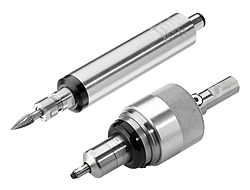
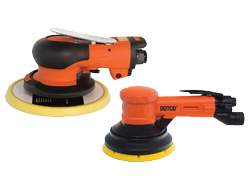
Grinding Technology: Precision, Process Stability, and Material Efficiency
Grinding technology encompasses all processes, tools, and system components for abrasive surface finishing and shaping. In industrial manufacturing processes, the choice of abrasives, machine design, coolant-lubricant management, and clamping technology determines dimensional accuracy, roughness, and machining speed. Our category overview summarizes products and technical criteria relevant for efficient, reproducible grinding processes in metalworking and precision engineering production environments.
Materials, Abrasives, and Grits
The selection of the abrasive depends on the material and the machining objective. For hardened steels and tool steel, electrocorundum or boron nitride-coated grinding wheels are common, while soft, ductile metals like aluminum or copper require abrasive tools with an open bond to prevent clogging. Ceramic grain shapes offer high tool life under high cutting conditions, while diamond and CBN tools are the first choice for cemented carbide, hardened steel parts, and precision grinding. The choice of grit influences surface roughness and chip volume: coarse grits (e.g., 24–60) for material removal, medium grits (80–220) for shaping, and fine grits (e.g., 320–1200) for fine grinding and polishing.
Designs of Grinding Tools and Machines
Grinding technology products exist in various designs: external and internal grinding wheels, surface grinding beds, rotary transfer and grinding centers, belt grinders, buffing and eccentric grinders, as well as special solutions such as honing, lapping, and polishing machines. Machines differ in clamping length, grinding spindle speed, grinding plane travel, and control options (CNC, NC, manual). For cylindrical grinding machines, the precision of the spindle bearings, the concentricity of the collets, and the coolant supply are critical parameters. For belt grinders, belt width, belt drive power, and torsional rigidity of the belt carrier determine process stability.
Connections, Seals, and Integration into Manufacturing Cells
For industrial grinding machines, reliable connections for power, compressed air, coolant-lubricant (KSS), and extraction are required. Electrical interfaces often include 400V 3~ supply, automatic protective devices, and fieldbus-compatible control connections (Profinet, EtherCAT). KSS connections require superior sealing and filtering solutions to keep cooling circuits clean; here, NBR or FKM seals are standard depending on chemical resistance and temperature profile. Equally crucial are hose lines with suitable quick couplings for ease of maintenance, as well as suction pipes and cyclone separators for particle separation. Machine integration into manufacturing cells demands coordinated control protocols and mechanical interfaces for robot feeding, pallet changing, and measuring probes.
Cooling, KSS Strategies, and Process Control
Coolant and lubricant strategy influences surface quality, tool life, and thermal deformation. Emulsions minimize friction, water-based KSS are cost-effective and easier to filter, while synthetic KSS offer higher lubrication and corrosion protection. For high-precision parts, mist or minimum quantity lubrication (MMS) reduces thermal input and facilitates post-processing. Process control is carried out via temperature and flow monitoring, pressure sensors, and tool wear measurement. Automatic infeed and grinding force monitoring prevent overheating and edge rounding. For reproducible results, defined filtration stages and regular KSS analyses are necessary.
Surface Quality, Metrology, and Post-Processing
Surface requirements range from functional tolerances to optical specifications. Roughness parameters (Ra, Rz) and form deviations (runout, flatness) are controlled by tool grit, contact pressure, feed rate, and cooling system. Inline metrology such as laser scanners, surface measuring devices, and runout tests enable process control without production interruption. Post-processing steps include lapping, polishing, or chemical deburring to improve surface microstructure and relieve stresses.
Economic Efficiency and Tool Life Optimization
Tool life optimization reduces unit costs. Factors include tool quality, coolant-lubricant management, reconditionability of grinding wheels, and correct cutting parameters. High-volume applications often use diamond-coated tools or interrupted-cut grinding wheels, which provide longer life with less downtime. Condition monitoring and predictive maintenance minimize unplanned failures; this includes vibration monitoring of the grinding spindle and temperature forecasts for KSS circuits.
Standards, Safety, and Environmental Protection
Grinding technology is subject to standards for machine, product, and occupational safety (e.g., EN ISO 12100, EN 12415 for circular saws/grinding wheel relevance). Safety covers, emergency stop switches, spark deflectors, and particle filters are mandatory in production environments. Emulsion and oil waste must be disposed of according to legal requirements; ecodesign and energy efficiency measures such as frequency-controlled motors reduce ecological and operational costs.
Practical Examples
Practical Example 1: A manufacturer of injection nozzles grinds valve cones on a CNC grinding machine with CBN wheels. Application: tighter tolerances ±2 µm, KSS: synthetic emulsion, spindle temperature monitoring, and inline roughness measurement. Result: 40% reduction in rework and consistent cycle times. Practical Example 2: A workshop for hydraulic components uses belt grinders with open bond and antistatic extraction to deburr soft copper and aluminum components. Customized belt grits prevent clogging and improve component temperature. Practical Example 3: A tool manufacturer uses lapping machines with the finest diamond dispersion for flatness correction of magnetic clamping plates, coupled with digital measurement logging for customer documentation.
For further technical details and specific application cases, please visit our technology page at https://maku-industrie.de/technik and our application examples at https://maku-industrie.de/anwendungsbeispiele.
Product Selection and Specification Guide
Before selecting a grinding tool, the following key data should be checked:
- Material and hardness of the workpiece, required tolerances and surface roughness, thermal sensitivity of the component, machine and spindle parameters, KSS availability and filtration capacity, integration requirements into manufacturing cells, and necessary safety accessories.
Maintenance and Wear Management
Regular balancing of grinding wheels, dressing to restore the grain pattern, checking clamping systems, and documenting tool life are mandatory. Spare parts such as seals (NBR, FKM), quick couplings for KSS, spindle bearings, and filter elements should be kept as stock items. A defined maintenance interval based on operating time and production volume increases availability.
Checking Manufacturing Suitability
Before series production, a process FMEA combined with test series to optimize cutting parameters is recommended. Use test runs with measurement logging and compare roughness and form measurement values against target specifications. For complex parts, the programming of the CNC axes, including compensation values and adjustment strategies, is crucial.
FAQs
1. Which grinding technology is suitable for hardened steels?
For hardened steels, CBN and diamond-like tools are the best choice. CBN offers high heat resistance and tool life for hardened steel; diamond grinding tools are efficient for cemented carbide and non-ferrous materials. Choose a strong bond and suitable grit based on the desired surface roughness.
2. How do I prevent clogging when grinding aluminum?
Clogging can be prevented by using open bonds, suitable coolant-lubricants (MMS or synthetic emulsions), antistatic extraction, and specially coated grinding belts/wheels. Reduced cutting speed and coarser grit during deburring also improve chip evacuation.
3. What role does KSS filtration play in reproducible grinding results?
KSS filtration is crucial. Clean KSS reduces wear, improves surface quality, and prevents particle inclusions. Filtration stages should be matched to the particle size of the process; central filtration systems with temperature control and continuous particle recirculation increase process stability and machine availability.