
Order high-grade male stud elbows now


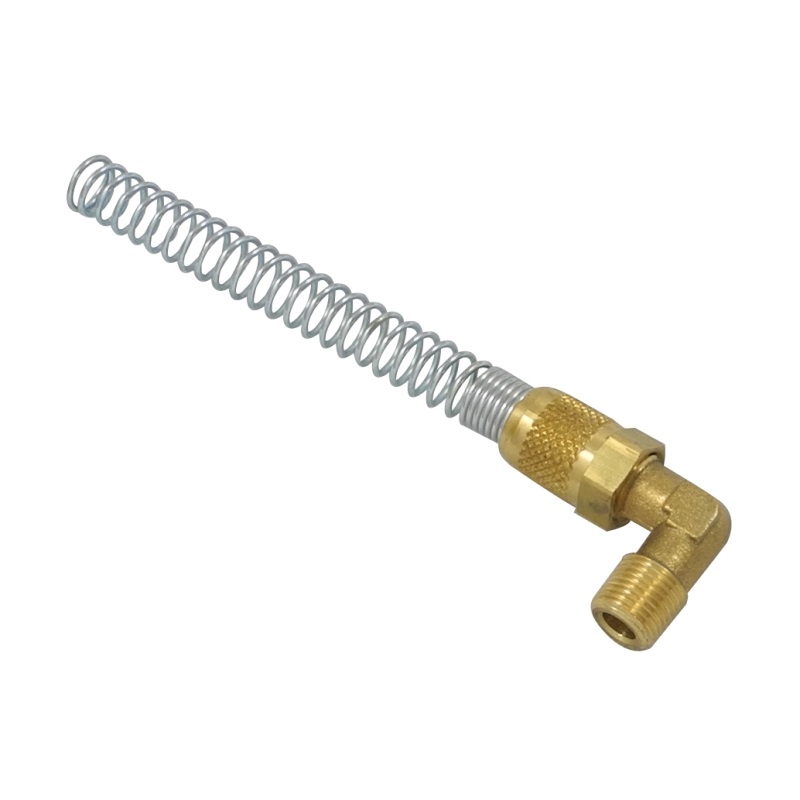

Elbow Screw-In Fittings: Technical Description, Materials, and Applications
Elbow screw-in fittings connect hose lines to housings, valves, or distributors at a fixed 90° angle. Typical applications are found in pneumatic and hydraulic systems, machine supply, cooling systems, and the process industry, where space constraints or line layouts require a right-angle connection. Compared to straight screw-in fittings, elbow fittings reduce the number of additional pipe bends, thereby minimizing tension and kinking stress at the hose connection.
Materials and Surfaces
Elbow screw-in fittings are predominantly available in brass and nickel-plated brass; both materials offer good machinability, corrosion resistance, and electrical conductivity. For areas with increased chemical requirements or higher temperatures, stainless steel variants (e.g., 1.4401/316L) are used. Plastic versions made of polypropylene or PEEK are employed where metallic materials would be too reactive or conductive. Surface treatment influences corrosion protection and sealing behavior: nickel plating protects brass against localized corrosion and improves lubricity during screwing; passivation and electropolished surfaces on stainless steel reduce adhesions and facilitate cleaning.
Thread Types, Dimensions, and Tolerances
Elbow screw-in fittings are available in standard threads such as Metric (M), G/ISO (BSPP), and R/ISO 7-1 (BSPT). The choice of thread type determines the sealing strategy: sealing conical threads (BSPT/R) require thread sealant using PTFE tape or sealing paste, while cylindrical internal threads (BSPP/M) typically work with tighter seating surfaces or gaskets. ISO and DIN tolerances for thread form and fit are crucial, as they influence the torque behavior during screwing and the risk of leakage. Hose connections are graded by inner diameter (e.g., 3/8", 1/2", 3/4") and are often offered as standard connection sizes for hose fittings.
Seals and Leakage Risk
Sealing concepts for elbow screw-in fittings differ according to thread type and operating media. Elastomer seals made of NBR are suitable for air, oil, and general hydraulic applications up to approx. 100 °C. FKM (Viton) offers extended resistance to fuels, oils, and higher temperatures. EPDM is recommended for hot water and steam applications, as well as many corrosive media. For aggressive chemicals or high temperatures, PTFE seat rings or graphite seals are used. The selection of the seal also influences the tightening torque and the adjustability of the connection; too high a torque can damage sealing elastomers, while too low a torque leads to leaks.
Designs and Connection Technologies
Elbow screw-in fittings come in various designs: screw-in type with a cylindrical bore for a fixed hose nozzle, ball or cone connection for soft hoses with a hose clamp, and form-fitting quick-release couplings with locking elements for frequent assembly cycles. The most common design is the screw-in nozzle with a ribbed hose connection, which is mechanically secured together with a hose clamp or crimp sleeve. For pressure lines, crimp or press connections are often preferred to achieve a defined high tensile strength and tightness. In pneumatic applications, quick couplings or push-in connectors supplemented by retaining elements are common to enable quick assembly at defined pressure.
Temperature and Pressure Ranges
The permissible operating pressure depends on the design, material, and thread dimensions. Brass elbow fittings are usually usable up to ~10 bar in pneumatics, and significantly higher in hydraulics depending on the design. Stainless steel variants offer higher pressure and temperature resistance, as well as better resistance to cyclic loading. Elastomer seals limit the upper temperature; NBR, for example, up to approx. 100 °C, FKM up to approx. 200 °C. In applications with temperature fluctuations, attention must be paid to different expansion coefficients of metal, hose, and sealing material, as these can lead to loosening or overstressing of the seal.
Practical Application Examples
In a manufacturing cell, elbow screw-in fittings are used to route pneumatic lines to grippers in a space-saving manner. The connection is made via a nickel-plated brass elbow screw-in fitting M5x0.8 to a 6 mm hose; the nickel-plated surface reduces friction during insertion and increases service life in the pivoting area. In a cooling circuit installation, a stainless steel elbow screw-in fitting in 1/2" BSPP replaces a previous L-shaped pipe bend, thereby reducing the line length and improving flow behavior. In the compressed air supply of an assembly island, elbow fittings with integrated throttles are used to specifically limit the volume flow to the pneumatic cylinder and control settling times; the throttle integration reduces the number of separate components.
Another example is the conversion of an existing lubrication system, where conventional pipe fittings were replaced by screw-in elbows to reduce installation heights. By choosing a stainless steel version with an FKM seal, compatibility with mineral oils and the cleanability of the area were improved. In laboratory applications, plastic elbow fittings made of PEEK are used for aggressive media; here, PEEK offers chemical resistance and low cell formation at high temperature stability.
Assembly Instructions and Test Procedures
Before assembly, threads and sealing surfaces must be cleaned and checked for foreign bodies. Conical threads must be provided with suitable thread sealant (PTFE tape, sealing paste); cylindrical threads usually require a flat gasket or a form-fitting seal in the connection area. When screwing in, the tightening torque specified by the manufacturer must be observed to avoid plastic deformation of the seal or overstressing of the thread. After assembly, a pressure or leak test procedure is recommended: for pneumatic systems, a compressed air test at operating pressure, visual inspection for oil stains, and possibly soap solution are sufficient; for fluid lines, hydrostatic tests under slightly increased test pressure are standard. For dynamic loads, recurring test intervals should be planned.
- Checkpoints: cleanliness, sealing surfaces, tightening torque, leak test
Compatibility, Spare Parts, and Ordering
When ordering spare parts, dimensions such as thread type, pipe/hose diameter, design (internal or external thread, right or left-hand thread), material, and if applicable, sealing material are crucial. In many industrial applications, compatibility with standards (e.g., ISO, DIN, SAE) is required; deviations can lead to leaks or incompatibility with existing components. For technical information and product selection, you can use our technical overview: https://maku-industrie.de/technik. For practical application reports and further use cases, visit: https://maku-industrie.de/anwendungsbeispiele.
Service Life and Maintenance
The service life of elbow screw-in fittings is determined by mechanical stress, media influence, and assembly quality. Regular visual inspections for corrosion, cracks, or contamination are mandatory. For elastomer seals, replacement at intervals based on operating conditions is recommended. In vibration-stressed systems, additional securing measures such as retaining rings or suitable lock nuts are recommended.
Selection Criteria for Engineers
Engineers select elbow screw-in fittings based on operating pressure, medium, temperature, space conditions, and maintenance effort. Material compatibility, compatibility with hose manufacturers, and the possibility of crimp or clamp assembly are decisive factors. Where high tightness and mechanical strength are required, crimp connections with a defined tightening torque are preferable; for frequent reconnection, quick couplings are suitable.
FAQ
1. Which seal is suitable for air and oil applications?
NBR seals are standard for air and mineral oils up to approximately 100 °C. For higher temperatures or more aggressive media, FKM seals or PTFE seats should be chosen.
2. When is a stainless steel version required?
Stainless steel is required in chloride-containing environments, high temperatures, aggressive chemicals, or when hygienic cleaning and corrosion resistance are paramount.
3. How do I determine the correct thread?
Check existing connection dimensions for standard specifications (Metric, BSPP, BSPT) and measure thread diameter and pitch. Pay attention to the sealing requirement: conical threaded connections require thread sealant, cylindrical connections usually require a flat gasket.