
Buy threaded nozzles, nipples, manifolds and more fittings




Fittings: Precision and Reliability in Connection Technology
Fittings are indispensable components in a variety of technical systems, from compressed air and hydraulic technology to gas and liquid installations. They ensure the safe and efficient connection of pipes, hoses, and other components and are crucial for the functionality and leak-tightness of complex systems. The selection of suitable fittings requires a thorough understanding of their designs, materials, and specific application areas.
Diversity of Fittings: Designs and Functions
The range of fittings is broad and includes a variety of designs, each conceived for specific tasks.
Threaded Nozzles and Hose Nozzles
Threaded nozzles and hose nozzles serve to connect hoses with threaded connections. They enable a flexible connection of hose lines to fixed installations or devices. The selection of the correct nozzle depends on the hose material, diameter, and operating pressure.
Nipples: Connecting Elements for Various Requirements
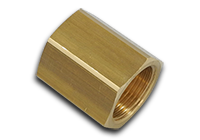
Nipples are short connecting elements with external threads at both ends. They are used to connect two components with internal threads. * Double Nipples: These nipples have the same thread at both ends and serve to directly connect two components. * Reducing Nipples: A reducing nipple allows the connection of pipes or threads of different sizes. It has different diameters or thread types at both ends and is an elementary component for establishing a connection when dimensions do not match. Reducing nipples are available in various materials such as brass or stainless steel and can be used for diverse applications, for example, in plumbing or industry. * Sockets: Sockets are components used to connect two pipes or cables of the same or different diameters. They are the counterpart to the nipple and are used in pipe technology, electrical engineering, and even in chemical laboratories. Threaded sockets are fastening components with internal threads that are more than twice as long as their internal diameter.
Distributors, Elbows, and T-pieces
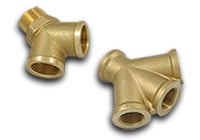
These fittings enable the branching or change of direction of lines. * Distributors: They serve to distribute a media flow to multiple outlets. * Elbows: Elbows allow a change of direction in a pipe or hose line, typically by 90 degrees. They are available in various designs and materials to meet the requirements of different systems. * T-pieces: A T-piece is a connecting element that allows a branch from a continuous line. The name is derived from its T-shaped external form. T-pieces are basic elements in gas and liquid piping systems and enable the connection of additional consumers or the approach of additional directions. They are available in various materials such as stainless steel and can be designed with the same or a reduced branch.
Plugs and Blind Plugs
These components serve to securely close unused openings. * Plugs: They are screwed into threaded openings to permanently or temporarily seal them. * Blind Plugs: Blind plugs are used to seal pre-fabricated threaded holes or unused openings airtight and/or watertight. They protect against dirt, corrosion, and mechanical influences and prevent unwanted leaks or energy losses. Blind plugs are available in materials such as plastic and metal.
Union Nuts and Lock Nuts
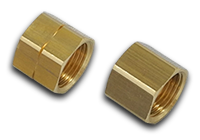
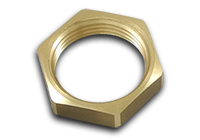
These nuts play an important role in securing connections. * Union Nuts: A union nut is a fastening element that ensures stable and secure connections between two components. They are primarily used in plumbing and mechanical engineering to create tight connections between fittings and pipelines or to secure structural elements. Union nuts are available in various sizes and materials and have an internal thread and a hexagonal outer shape. During assembly, the union nut is pushed over the thread and tightened to screw the individual parts together. They are also an essential part of compression fittings in hydraulic systems, where they ensure a precise and leak-free connection between pipe and fitting. * Lock Nuts: Lock nuts serve to additionally secure screw connections and prevent unwanted loosening of the screws. They are often used in combination with other nuts and work on the principle that they are screwed onto the bolt and then tightened with another nut. Lock nuts are particularly useful in applications where vibrations or movements can occur that could lead to the loosening of normal nuts. There are also special lock nuts that must be used with locking washers. Although lock nuts offer additional security, they are considered an unreliable securing method that poorly protects against vibrations. Alternatively, threadlockers such as LOCTITE can be used, which fill the play between nut and bolt, thus ensuring reliable securing.
Materials: Resistance and Application Areas
The choice of material for fittings is crucial for their resistance to the medium, pressure, temperature, and environmental conditions. Rectus offers high-quality fittings in various materials, including brass, stainless steel, and aluminum. * Brass: Brass fittings are widely used and offer good corrosion resistance in many applications, especially with water and neutral liquids. They are also easy to machine and cost-effective. * Stainless Steel: Stainless steel fittings are characterized by excellent corrosion resistance, especially against aggressive media and high temperatures. They are robust and durable and are used in chemistry, the food industry, and medical technology. * Aluminum: Aluminum fittings are lightweight and offer good corrosion resistance in certain environments. They are often used in applications where weight plays a role, such as in aviation or vehicle construction. * Plastic: For certain applications, especially with corrosive media or low pressures, fittings made of various plastics are also used.
Application Areas: Where Fittings are Indispensable
Fittings are found in almost all technical areas.
Compressed Air Systems
In compressed air systems, fittings are essential for the distribution, control, and shut-off of compressed air. These include threaded adapters, screw connections, couplings, and valves that can handle pressures from 6 bar to over 300 bar. A safe air supply is ensured by high-quality compressed air fittings, which are available in various sizes and designs.
Practical Example: Automation in Manufacturing
In an automated manufacturing plant, pneumatic cylinders are used to move workpieces. The compressed air supply is provided by a complex system of lines and fittings. A brass T-piece branches off the main compressed air line to supply several workstations. At each station, a quick coupling ensures the fast and secure connection of compressed air tools. During maintenance work on a single station, the compressed air supply is shut off by means of a ball valve, while the rest of production continues undisturbed. Unused connections are sealed with plastic blind plugs to prevent the ingress of dirt and ensure the system's leak-tightness.
Hydraulic Systems
Hydraulic fittings are crucial for the safe and efficient connection of hydraulic hoses to equipment and systems. They must withstand high pressures and temperatures and are available in various designs, such as crimp nipples, banjo bolts, and pipe stubs. The choice of material, often steel or stainless steel, depends on the specific requirements of the application, especially regarding corrosion resistance.
Practical Example: Mobile Working Machines
In a mobile working machine, such as an excavator, hydraulic systems are responsible for the movement of booms and attachments. Here, steel hydraulic crimp fittings are used, which, with union nuts and cutting rings, create a leak-free connection between the hydraulic hoses and the cylinders. An elbow allows for space-saving routing of a hydraulic hose in a confined area of the machine frame. To facilitate maintenance, quick-release couplings are used at certain points, enabling quick replacement of attachments without having to drain the entire hydraulic system.
Gas Installations
In gas installations, fittings are of utmost importance for the safety and leak-tightness of the system. Shut-off valves, regulators, and connectors are fundamental components that must comply with all relevant standards and regulations. Fittings in gas systems serve to shut off the gas supply, regulate the gas flow, and ensure safe operation. They must be high-temperature resistant and are often marked with DVGW certification, confirming their operational safety.
Practical Example: Industrial Gas Supply
In an industrial plant, natural gas is used to heat production facilities. The gas supply is provided via a main line, from which several branches lead to individual consumers. Before each gas meter, a shut-off valve is installed, which interrupts the gas supply during maintenance or in an emergency. A brass reducing nipple connects a larger main line to a smaller supply line for a specific system. To ensure the leak-tightness of the threaded connections, a special PTFE thread sealing tape is used, which is chemically resistant and high-temperature resistant.
Liquid Transport
Fittings are also indispensable in the field of liquid transport, be it water, oil, or chemicals. They enable the safe and controlled transport of media in pipelines and systems.
Practical Example: Cooling System in a Production Plant
A cooling system in a production plant transports cooling water to various machines. Here, stainless steel sockets are used to connect pipe segments and create a corrosion-resistant line. At branches to individual cooling circuits, stainless steel T-pieces are used, ensuring an even distribution of cooling water. To regulate the flow rate, ball valves are integrated into the lines. During installation, lock nuts are used to secure the screw connections of pumps and valves against vibrations and prevent unwanted loosening.
Connections and Seals: The Basis for Leak-tightness
The type of connections and seals is crucial for the leak-tightness and reliability of a fitting. Common connection types include threaded connections (e.g., BSP, NPT, metric), flange connections, and welded connections. The selection of sealing materials depends on the medium, temperature, and pressure. Commonly used sealing materials are elastomers (e.g., NBR, FKM), PTFE, or metallic seals. Further information on technical basics can be found at https://maku-industrie.de/technik. For concrete application examples, visit https://maku-industrie.de/anwendungsbeispiele.
Frequently Asked Questions (FAQs)
1. Which materials are best suited for fittings in aggressive environments?
For aggressive environments, stainless steel fittings are the preferred choice, as they exhibit high corrosion resistance to a variety of chemicals and high temperatures. Special alloys such as duplex stainless steel can further increase resistance. In extremely aggressive media or very high temperatures, special materials or fittings with special coatings may also be required.
2. How do I choose the correct size and thread type for a fitting?
Choosing the correct size and thread type is crucial for compatibility and leak-tightness. First, the nominal diameter of the existing pipes or components must be determined. Then, the thread type needs to be identified, which can be metric, imperial (e.g., BSP, NPT), or another standard. It is important that the threads of the fitting and the parts to be connected match exactly to ensure a secure and tight connection. For reductions, reducing nipples are used, which connect different thread sizes.
3. What role do seals play in fittings and what types are there?
Seals are of central importance for the leak-tightness of fitting connections. They fill the gaps between the connecting elements and prevent media from escaping. There are various types of seals, which are selected depending on the application:
- Elastomer seals (e.g., NBR, FKM): These are flexible and adapt well to surfaces. They are often used in systems with liquids and gases at moderate temperatures.
- PTFE seals: Polytetrafluoroethylene (PTFE) offers high chemical resistance and is suitable for aggressive media and high temperatures.
- Metallic seals: These are used at extremely high pressures and temperatures or in applications where elastomers or plastics are not sufficiently resistant.
- Thread sealants: In addition to physical seals, thread sealing tapes or pastes can also be used to further seal threaded connections and prevent seizing.
The correct selection and installation of the seal are crucial for the long-term reliability of the fitting.