
Buy low-priced compressed air tools by Apex Tool Group
Fastening tools by the Apex Tool Group for compressed air applications such as nutrunners and impulse nutrunners in different versions.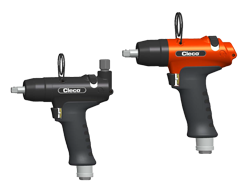
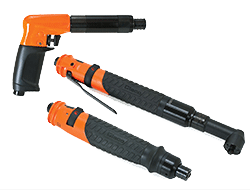
Buy Apex Tool Group Pneumatic Tools at Favorable Prices
Apex Tool Group's pneumatic fastening tools combine robust mechanics, high torque consistency, and easy maintenance. This category includes rotary screwdrivers, impulse wrenches, and impact wrenches in various designs and power levels, designed for assembly, maintenance, and industrial manufacturing. The focus is on precise power transmission, material compatibility, and reliable air supply to reduce downtime and scrap.Performance, Designs, and Materials
Torque ranges of Apex tools typically cover low precision ranges from 0.5 to 10 Nm up to high-torque devices over 1000 Nm. For sensitive assembly processes, rotary screwdrivers with finely adjustable control ranges and torque-controlled clutches are available. Impulse wrenches operate with short-term, high impact impulses, achieving high tightening and breakaway torque with less recoil at the handle. Materials for housings and internal components are designed for industrial stress: housings are predominantly made of die-cast aluminum or glass-fiber reinforced plastic for a good stability-to-weight ratio; internal gears and drive shafts are made of hardened steel or tempered steel (e.g., 42CrMo) for wear resistance; bearing bushes and seals are made of high-temperature resistant polymers and NBR or FKM seals for oil exposure. For devices used in humid or corrosive environments, additional surface coatings or stainless steel components are offered.Connections, Air Requirements, and Control
Typical connection sizes are 1/4" (6 mm) and 3/8" (9–10 mm) BSP/NPT for industrial hoses. Compatible quick couplings (e.g., ISO 6150 B, 1/4" plug nipple) and correctly dimensioned lines are important to minimize pressure losses. Air quality requirements are crucial: 0.5–5 µm filtration, a pressure range of 4–8 bar depending on the device, and targeted oil addition via an automatic lubricator extend service life and maintain torque consistency. Air consumption is specified in l/min (at 6 bar) and varies greatly by model; precision-oriented devices operate with low consumption, high-performance impulse tools require significantly more volume flow.Seals, Maintenance, and Upkeep
Sealing materials must be designed for temperature and oil resistance. NBR is suitable for standard applications, FKM (Viton) for higher temperatures and chemical loads. Preventive maintenance includes daily visual inspection, regular lubrication of the air supply, replacement of oil/water separators in the filter system, and adjustable torque readjustment. Fast-wearing components such as brushes, clutch linings, or impact mechanism packages are available as replaceable service kits. Documented intervals reduce unplanned failures.Handling, Ergonomics, and Safety
Ergonomic handles with vibration-damping materials reduce strain and increase repeatability. Devices with side or rear exhaust are preferred in assembly cells to keep chips and oil mist away from operators. In safety-critical applications, the use of torque-limited fastening systems and signal interfaces for process integration is recommended. Electronic variants with sensor integration provide torque and angle feedback for fully automated production lines.Typical Designs
- Rotary screwdrivers: stepless torque control, suitable for series assembly and precision fastening.
- Impulse wrenches: high impact energy, compact design, ideal for difficult-to-loosen connections.
- Impact wrenches: for vehicle and machine maintenance, robust impact mechanism and high tightening torque.
Practical Examples
Example 1 — Electronics Assembly: A rotary screwdriver with precise torque control (0.2–5 Nm) and a 1/4" quick-change chuck is connected to a regulated compressed air supply (6 bar, filtered 1 µm, inline oiler set to 1–2 drops/h). The screw's nozzle geometry is parameterized, the tool is equipped with a torque-related clutch, and after 2000 cycles, the sealing ring is quickly replaced to keep torque deviations below 3%. Example 2 — Machine Assembly: An impulse wrench with high tightening torque is used to set M12 screws with 120 Nm in frame constructions. The air supply is via a 3/8" line, pressure regulator set to 7 bar, maintenance plan includes checking the impact mechanism package and replacing the plain bearing every 250 operating hours. Handling includes an anti-vibration mount for operator relief. Example 3 — Vehicle Service: An impact wrench with a flame-retardant plastic housing and 1/2" square drive loosens and tightens wheel nuts. An oil mist separator is used on-site to prevent oil deposits on brake discs. For high breakaway torques, the technical team uses a short activation time followed by manual retightening to the specified torque using a torque wrench.Integration into Production Processes and Industry 4.0
For automated production lines, Apex pneumatic tools are available with interfaces for signal generators and actuators. By integrating torque feedback and cycle control, tools can be connected to PLCs in assembly cells and process data can be transferred to MES. Optimized programs reduce incorrect fastenings, enable batch traceability, and simplify quality assurance. Further technical background information on pneumatic technology and application examples can be found on our technical pages and in the practical reports: Technology and Application Examples.Selection Criteria Before Purchase
Choose a tool based on the maximum required torque, material durability, availability of spare parts, and compatibility with your air supply. Pay attention to manufacturer specifications for air consumption and recommended filtration levels. For production lines, the possibility of process integration and the availability of service kits are crucial. Documented testing and calibration intervals enable reproducible results and simplify audits.Scope of Delivery and Accessories
Standard deliveries often include the basic tool, interchangeable attachment, operating instructions, and a small service kit. Supplementary accessories include torque sensors, various attachments and extensions, silencers, protective covers, quick couplings, and maintenance kits. When used in potentially explosive atmospheres, additional certified silencers and antistatic components must be considered.Environmental and Safety Aspects
The selection of correct seal types and lubricants reduces leaks and oil mist. Regular maintenance prevents material wear and minimizes noise emissions. Pay attention to the noise protection values of the devices and use appropriate sound insulation measures to comply with workplace limit values.FAQ
1. What air quality is required for Apex pneumatic tools?
Filtration up to 1–5 µm is recommended, a pressure range typically 4–8 bar depending on the device, and inline lubrication for non-oil-free models. Using a filter-regulator-lubricator reduces wear and ensures constant torque.
2. How often should maintenance be performed?
Visual inspection daily, lubrication of the supply line according to operating instructions, replacement of oil/water separators every 250–500 operating hours, and replacement of service kit components depending on mileage or manufacturer specifications. Critical components should be checked every 1000–2000 hours with intensive use.
3. How do I choose the right tool for my application?
Orient yourself by the maximum required tightening torque, repeatability, working environment (humidity/corrosion), and integration needs into manufacturing processes. For sensitive fastenings, use rotary screwdrivers with fine control; for high tightening tasks, use impulse or impact wrenches. Technical details and installation instructions can be found under Technology.