
Order collets for grinding spindles now
Buy low-priced M5, ER 11 and ER 16 collets for spindles online.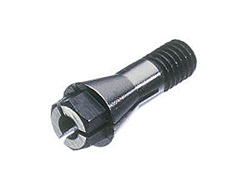
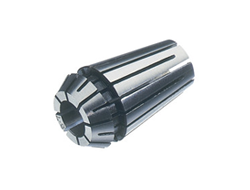
Collets for Grinding Spindles – Selection, Application, and Practice
Collets are the central connecting element between the grinding spindle and the tool or tool holder. For applications requiring high concentricity, high rotational speed, and small workpiece diameters, precisely matched collets such as M5, ER 11, and ER 16 are crucial. This text provides specific information on material selection, designs, tolerances, clamping behavior, assembly, wear indicators, and practical examples, enabling technical purchasers, machine operators, and maintenance personnel to make informed decisions. Further technical information and application examples can be found under Technology and Application Examples.
Materials and Surfaces
Collets are typically manufactured from oil-hardened spring steel (e.g., 1.1213 / C60) or alloyed spring steels with surface mechanical treatment. Spring steel offers the necessary elasticity for reliable shrinking and spring behavior, combined with wear resistance during repeated clamping. For abrasive applications or high corrosion requirements, surface-treated variants are used: electrolytic nickel plating reduces corrosion risks, phosphating improves the coefficient of friction, and hard chrome or nitriding treatments increase surface hardness in cases of increased wear. Ceramic coatings are rare but can be useful in extreme operating conditions.
Designs and Standards
The design determines dimensional accuracy, concentricity, and clamping range. Common standards include ER systems (ER 11, ER 16), which are characterized by standardized taper, dimensions, and elastic expansion. ER collets are universally applicable, allow large clamping ranges within a single collet size, and have defined tolerances for combination with standardized nuts and collet holders. M5 collets, in this context, usually refer to collets with metric threaded connections or holder-side mounting points for special spindle heads; the nomenclature here is not standardized and requires alignment with manufacturer specifications.
Clamping Behavior, Tolerances, and Concentricity
The precise fit between the collet, collet nut, and collet holder is crucial for concentricity. Concentricity values for high-quality ER 11/ER 16 systems typically range <0.01 mm with correct assembly and suitable collet selection. Deviations arise from worn collets, deformed collet nuts, or incompatible holders. Pay attention to the following tolerances: collet holder (taper) according to manufacturer's dimensions, collet diameter, and shank diameter. When selecting, the actual workpiece diameter plus tolerance basis must be considered to avoid overstretching the collet.
Clamping Ranges and Correct Collet Selection
In ER systems, a single collet typically covers a range of 1–3 mm. For particularly small diameters, thin-walled precision collets are used. Select the collet so that the diameter to be clamped lies in the middle of the specified clamping range. This reduces the force applied to the collet, minimizes wear, and maintains stable concentricity. For simultaneous multi-point clamping or sensitive materials, soft jaws or damping inserts should be considered.
Connections, Nuts, and Adapters
The collet nut forms the force input; material, internal thread, and taper geometry must match the collet. High-speed grinding spindles require cylindrically mounted nuts with optimized thread design to ensure even transmission of axial forces. Adapters for special spindle mounts (e.g., quick-change adapters, precision taper standard adapters) increase flexibility but must not impair concentricity. When using adapters, always consider spindle specifications and update measurement protocols if necessary.
Seals, Lubrication, and Temperature Management
Collets and their nuts are exposed to coolants, grinding dust, and temperature-induced bearing fluctuations. Seals at the spindle mount can prevent coolant ingress; elastic O-rings or labyrinth sealing systems are used here. Lubrication of the expansion slot is only useful in defined cases, as too much oil changes friction and thus the holding factor; dry protective agents or lubricants with precisely defined drying properties are recommended. Temperature management is particularly important for high-speed spindles: heating changes taper clearance and thus concentricity. Monitor spindle temperature and measure concentricity after longer operating periods.
Wear Indicators and Service Life
Wear is indicated by play, decreasing clamping force, visible grooves in the taper surface, and increased runout. A proactive inspection regimen includes regular measurements of concentricity, visual inspection of the groove geometry, and measurement of clamping force, if necessary, with testing devices. Service life varies greatly: in clean, dry operating conditions, precision collets can last a very long time; in abrasive, coolant-laden environments, service life is significantly reduced. Replacement intervals should be defined based on operating hours, measured values, and production requirements.
Compatibility and Replacement
When replacing, ensure complete agreement of taper, collet length, shank diameter, and groove geometry. Not all ER 11/ER 16 products are compatible with each other, as manufacturers sometimes use differing tolerances. Check technical data sheets and keep a sample for preliminary tests. Document replacement intervals and retain batch lists to ensure traceability for complaints.
Practical Examples
1) Fine machining of hardened steel: An ER 11 collet made of tempered spring steel with a phosphated surface clamps a carbide grinding pin Ø3.2 mm. The collet is chosen in the middle of the clamping range, the nut is tightened with a defined torque, and the concentricity is measured after 30 minutes of operation. Result: concentricity <0.01 mm, constant surface quality at 20,000 min⁻¹.
2) Series grinding of aluminum profiles: ER 16 collets with a nickel-plated surface are used. To prevent deformation, softer plastic inner jaws are mounted between the profile and the collet. This combination increases the contact area, workpieces receive clean edges, and collet tool life increases with high cycle volumes.
3) Retrofit case on an older spindle: A machine with a proprietary M5 connection requires an adapter for modern ER 11 collets. Procedure: Check adapter dimensions, compare spindle taper data with the manufacturer, measure adapter and collets in a test holder, and perform a trial run under load. Series operation only begins after concentricity is confirmed.
Selection Criteria for Procurement
Select collets according to the following prioritized criteria:
- Compatibility with spindle mount and nuts, as well as proof of concentricity values
- Material and surface treatment suitable for the operating environment
- Clamping range and collet thickness in relation to workpiece diameter
- Availability of replacements and regrinding options, as well as test protocols
Quality Control and Documentation
Deliveries should be accompanied by a test protocol, concentricity measurements, and a material certificate. Perform initial sampling to ensure series rates. For production-critical applications, a measurement plan with regular monitoring of concentricity deviation, visual inspection for grooves, and clamping force tests is recommended. Documentation facilitates complaints and optimizes maintenance intervals.
Procurement and Online Ordering
When purchasing online, pay attention to complete technical data (material number, dimensions, clamping range, compatible nuts), return policies, and service support for technical inquiries. For additional technical information, visit our technology page at https://maku-industrie.de/technik and specific application cases at https://maku-industrie.de/anwendungsbeispiele. The product page provides information on M5, ER 11, and ER 16 collets, application recommendations, and ordering options.
FAQs
1. Which collet is suitable for high speeds?
ER systems (especially ER 11 and ER 16) are designed for high speeds, provided that the material, surface treatment, and nuts are adapted for high speeds; it is important to check concentricity after assembly and to adhere to the specified speed limit of the collet.
2. How do I determine the correct collet size for my workpiece?
Select the collet so that the workpiece diameter lies in the middle of the specified clamping range. Check compatibility with the collet nut and holder; in critical cases, a measurement setup and preliminary testing under production conditions are required.
3. What maintenance measures extend service life?
Regular concentricity measurements, visual inspection for grooves and cracks, cleaning of coolant residues, controlled lubrication if required, and replacement in case of proven loss of concentricity. Introduce documented inspection intervals based on operating hours and operating conditions.