
Compressed air angle grinder in industrial quality for high demands
The angle grinders, which are operated with compressed air, stand for durability and high quality. Different sizes, speeds and outputs make it possible to find the right device for your application.

C3135A4-38OH Right Angle Grinder

C3120A45-58OH Right Angle Grinder
C3120A45-M14OH Right Angle Grinder
C3120A5-58OH Right Angle Grinder
C3120A5-M14OH Right Angle Grinder

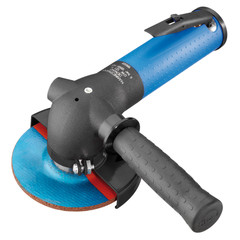


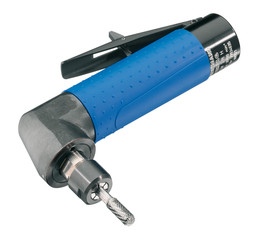

Angle grinder GW 218 HV
Price on request
Industrial-Grade Air Angle Grinders for Demanding Applications
Air angle grinders (also known as pneumatic angle grinders or air grinders) are designed for robust, continuous work in manufacturing, maintenance, and metalworking. Unlike electric tools, pneumatic models offer a higher power-to-weight ratio, greater overload tolerance, and simple explosion protection options in hazardous areas. On this category page, you will find tools from selected manufacturers such as Cleco and Mannesmann Demag, as well as compatible spare parts and wear components.
Technical Features and Construction
An industrial air angle grinder primarily consists of a hardened gear housing, an air-powered rotor (turbine or piston motor), a spindle with bearings, an output flange, and a protective guard. Relevant technical parameters include disc diameters (commonly 50, 75, 100, 115, 125 mm), no-load speed (typical ranges 5,000–20,000 rpm), air consumption (l/min at defined workload), drive pressure (often 6 bar as an industrial standard), weight, and vibrations. High-quality models use ball-bearing spindles with double ball bearings or tapered roller bearings, hardened gears, and durable spur gear drives for high transverse loads.
The air supply requires a clean, dry, and filtered airflow. To minimize wear, upstream filter-regulators (pressure regulators with retention filters), oil mist dosing units (inline lubricators), and condensate drains are essential. Corresponding connections are usually 1/4" BSP or NPT, sometimes metric; when ordering, pay attention to the connection standard (BSP/NPT), as well as hose dimensioning (ID/OD), as pressure drop and flow rate are crucial here.
Material Compatibility and Application Limits
Angle grinders in this category are designed for working on steel, stainless steel, cast iron, non-ferrous metals (aluminum, copper), coated components, and GRP/CFRP, taking into account suitable grinding discs. For stainless steel, rust-free grinding discs and special stainless steel separators are recommended to prevent foreign rust. When processing aluminum, softer abrasives and low pressure values are advisable to prevent clogging and loading of the grit. For ceramic or hard materials, diamond-coated discs or special cutting discs should be chosen. Temperature resistance of seals and bearings determines short-term and continuous use; FKM seals and hardened bearings extend the service life during intensive use.
Drive and Gearbox Variants
There are angle gearboxes with different ratios: direct drive for high speeds and low torques, reduction gears for high material removal rates at lower speeds. Relatively compact angle heads allow work in confined areas; narrow designs with short gear heads facilitate access to internal edges. Pay attention to the spindle mount and disc attachment: many industrial tools use standardized M10 or M14 spindles, while others rely on quick-change mounts for cutting and flap discs.
Safety, Ergonomics, and Maintenance
For pneumatic angle grinders, protective guards, locking levers, and torque-limiting components are crucial. A dead man's switch or torque limiter prevents dangerous kickbacks. Vibration-damping handles reduce fatigue during continuous use; weight and center of gravity are relevant for overhead applications or in welding assemblies. Regular maintenance includes cleaning the air inlet, lubrication via inline lubricator, replacement of seals and bearings, and inspection of the protective guard. Replacement pads and discs should be stored according to manufacturer specifications and checked for damage.
Selection Criteria — Which Model for Which Task?
- Choose disc diameter, no-load speed, and gear ratio to match the material and desired removal rate. High speed plus fine grit for finishing, lower speed with coarser grit for rough removal.
Further decision factors include air consumption versus available compressor capacity, weight for continuous use, ergonomic handle geometry for handling, and the interchangeability of wear parts. For stationary cutting and deburring operations, models with low vibration and high repeatability are preferred; for mobile applications, robustness and easy reparability are important.
Practical Examples
1) Weld seam processing in the steel construction hall: A 125 mm air angle grinder with reduction gear and 8,000 rpm removes root passes and finishes weld overlays. Using a flap disc with ceramic grit provides a clean finish. Air supply via 1/2" hose, upstream pressure regulator, and lubricator reduces interruptions. Work steps: rough deburring with 40-grit flap disc, fine leveling with 80-grit, final cleaning with nylon brush. Safety measures: protective guard, eye protection, extraction at the weld seam.
2) Deburring of aluminum die-cast parts: A compact 75 mm pneumatic tool with high speed and a soft flap disc prevents overheating and clogging. Low contact pressure, repeated removal in short intervals, cooling by airflow. Result: smooth edges without material distortion, reduced rework. When used on coated components: use suitable cutting discs to avoid damaging the coating.
3) Maintenance of machine parks: For rust removal on bearing housings, a 100 mm angle grinder with a wire brush is used, moderate pressure, small passes to maintain dimensional accuracy. Connections and condensate traps are checked weekly; seals and bearings are inspected every 6 months. Documentation of maintenance extends service life and reduces unplanned downtime.
Spare Parts, Accessories, and Compatibility
Frequently needed wear parts include grinding discs, flap discs, protective guards, clamping nuts, ball bearings, shaft seals, air filter inserts, and injectors for oil mist lubrication. When selecting accessories, pay attention to manufacturer compatibility; many manufacturers supply universal flanges, but differences in spindle threads (M10, M14) and clamping nuts require matching. Spare parts and application notes can also be found in our technical section at https://maku-industrie.de/technik and in specific case studies at https://maku-industrie.de/anwendungsbeispiele.
Quality Assurance and Delivery Environment
For industrial series processes, reliable supply chains and documented quality checks are necessary. Rely on manufacturers with standardized test protocols and spare part availability. Test protocols include no-load speed, kickback testing, vibration measurement, and leak testing. The inventory management of wear materials such as cutting discs and flap discs should be planned according to consumption and test cycles to avoid production interruptions.
Procurement Recommendations for Professionals
For high-frequency applications, we recommend models with reinforced bearings and service-friendly gear access. For individual users in maintenance, compact, lightweight tools with low air consumption are often sufficient. Before purchasing, check the existing compressor capacity and plan for a 10–20% safety reserve. Define maintenance intervals and procure a set of critical spare parts (seals, bearings, standard discs) for quick repairs.
Legal and Standards
Pneumatic grinding machines are subject to standards for machine safety and personal protective equipment. Observe DGUV regulations, CE conformity, and, if applicable, Ex certifications for harsh environments. Technical data sheets and operating instructions are binding for permissible operating conditions.
FAQ
1. What are typical air pressure and air consumption for pneumatic angle grinders?
Industrial air angle grinders typically operate at 6 bar. Air consumption varies depending on design and power; typical values range between 200 and 1,200 l/min. For continuous operation, plan for the maximum consumption peak and ensure filters, regulators, and lubricators are in the supply line.
2. Which grinding discs are recommended for stainless steel and aluminum?
For stainless steel, rust-free, non-ferrous grinding discs with fine to medium grit, as well as ceramic grits for high material removal without thermal alteration, are recommended. For aluminum, softer grits and open abrasives should be chosen to prevent clogging; flap discs with special bonds often work best.
3. How do I avoid kickback and increased risk of injury?
Prevent kickback by selecting appropriate discs, correct clamping, and protective guards. Use dead man's and locking switches, as well as torque-limiting clutches on tools with high drive power. Training on proper hand posture and regular tool inspection significantly reduces risks.