
Function of the Clecomatic® Clutch
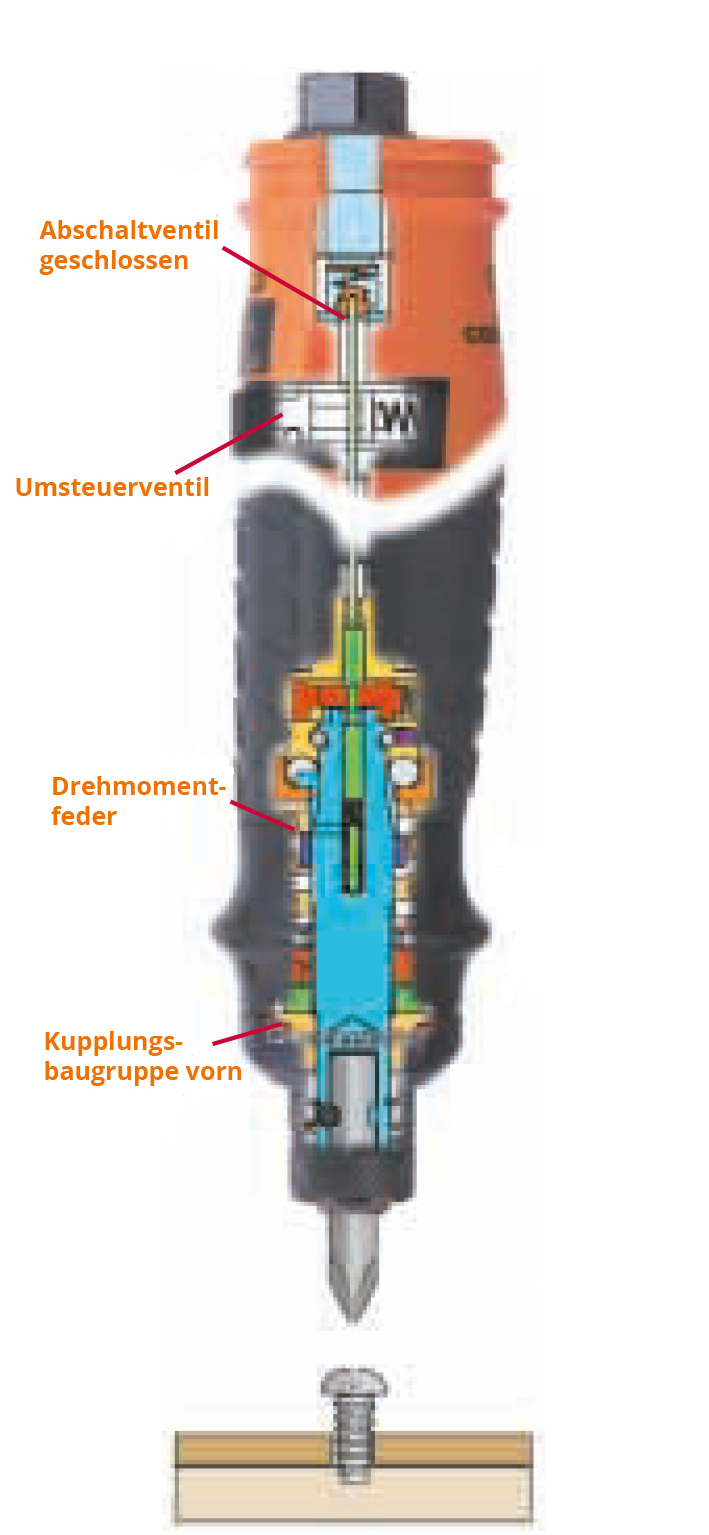
Before starting, the compressed air pushes the shut-off valve forward and closes it, so that air cannot flow through the motor. This simultaneously pushes the clutch assembly forward from the trigger rod against the clutch housing.
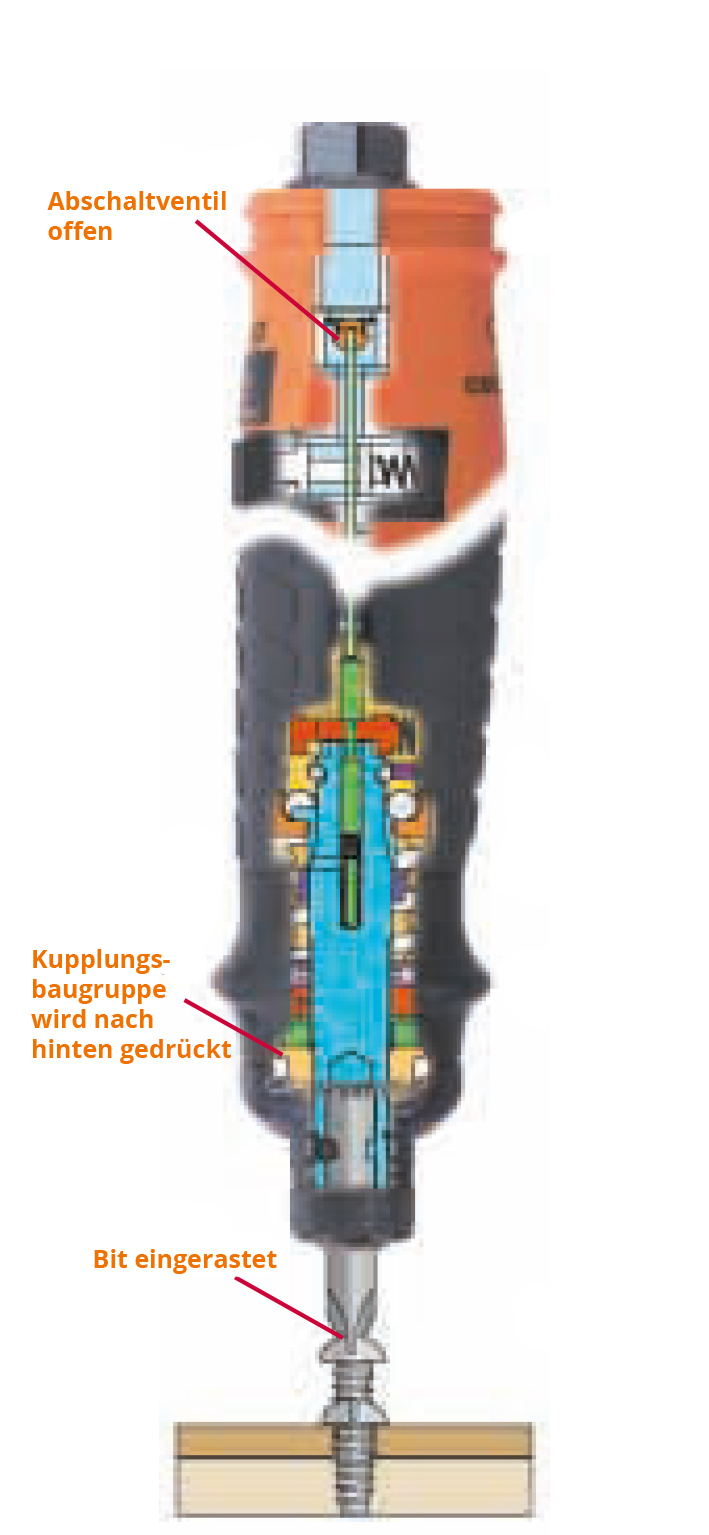
When the user presses the tool against the workpiece, the clutch shifts backward in the clutch housing. The shut-off valve opens and compressed air flows through the motor. During screwdriving, the balls in the clutch assembly are held firmly in the valleys between the lobes of the clutch cams by spring force, so that the motor, gearbox, and clutch assembly rotate together as a single unit while the fastener is being tightened.
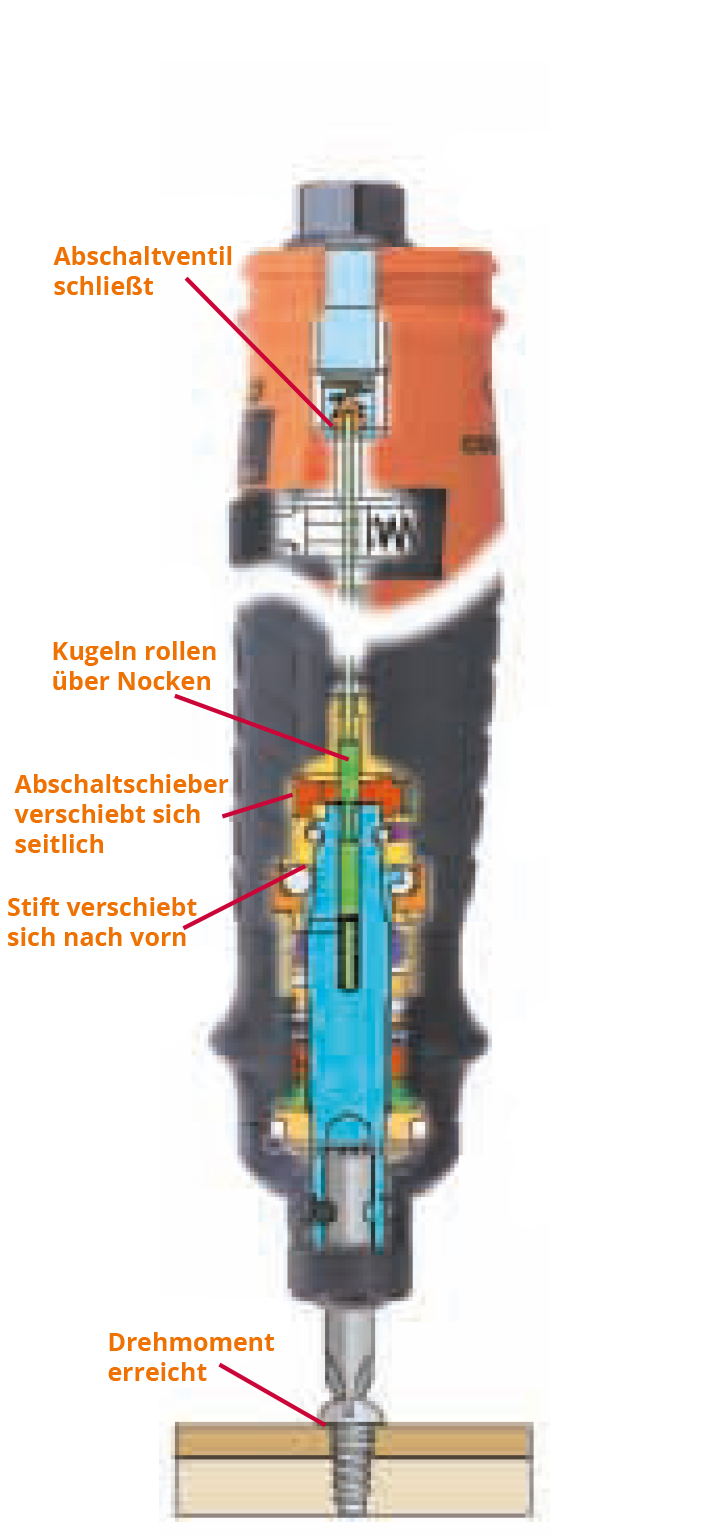
The torque at which the clutch shuts off the tool is determined by the compression force of the torque spring. This torque is pre-set – from the outside. By increasing the spring tension, the torque rises; by releasing the tension, it drops. At the critical moment when the desired tightening torque for the fastener is reached, two things happen:
1. The balls roll over the top edge of the cam lobes, separating the spindle and motor from each other. This reduces the influence of the rotating motor's inertia. 2. The spindle cam of the clutch shifts the shut-off slider far enough that a pin slides through a bore in the shut-off slider. This allows the shut-off valve to close and shut off the tool.
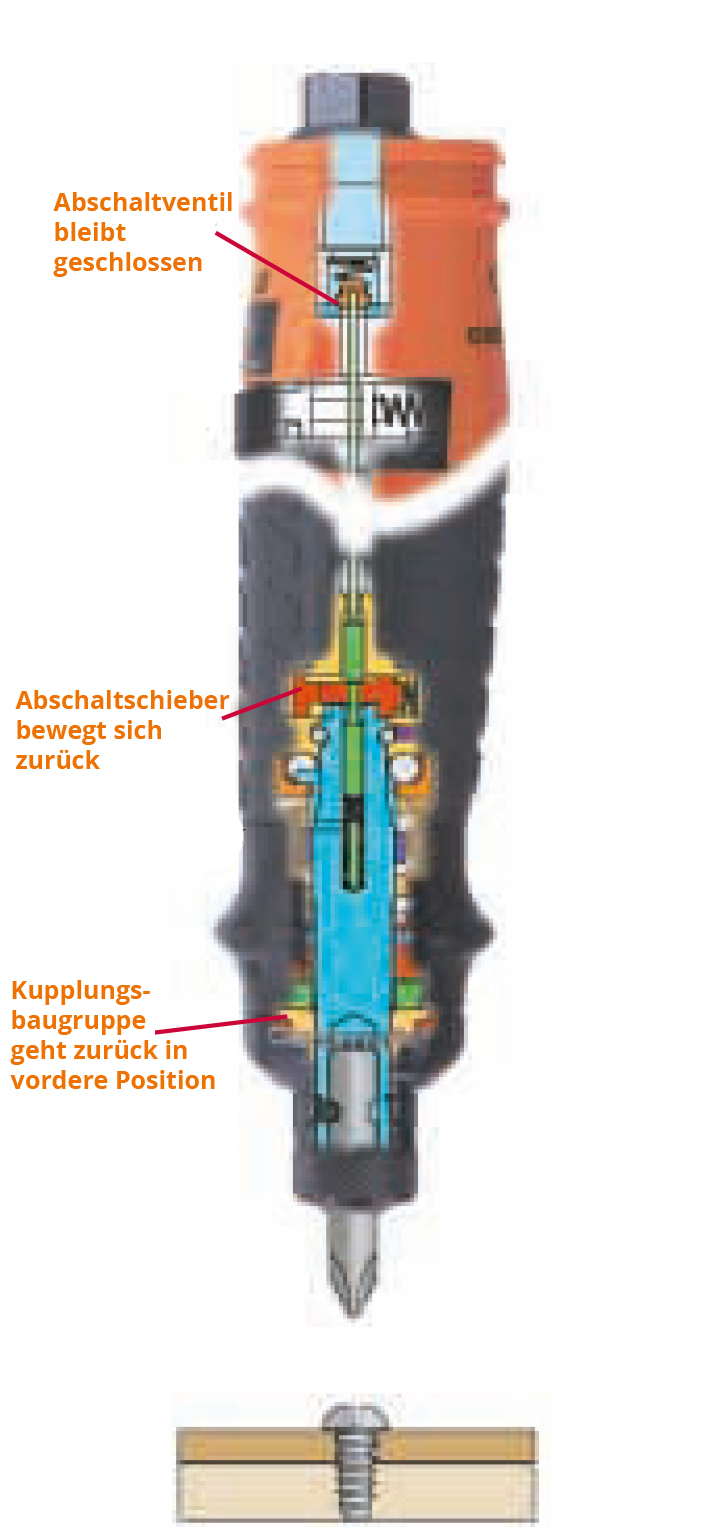
When the tool is lifted from the workpiece, the clutch moves forward in the housing, and two small springs reverse the linear movement of the previous step, so that the shut-off slider returns to its initial position.