
Application Examples for the Use of Pneumatic Motors
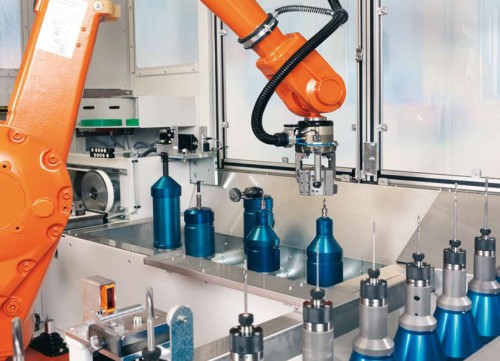
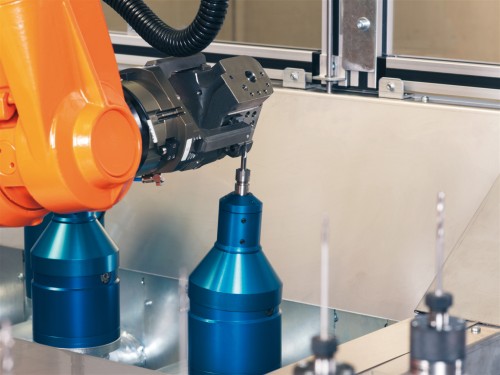
Application:
For automatic post-processing – deburring, drilling, countersinking, and brushing of finished parts after CNC machining by a robot
Advantages:
- high speed of the grinding spindles
- grinding spindle can be deflected axially and radially
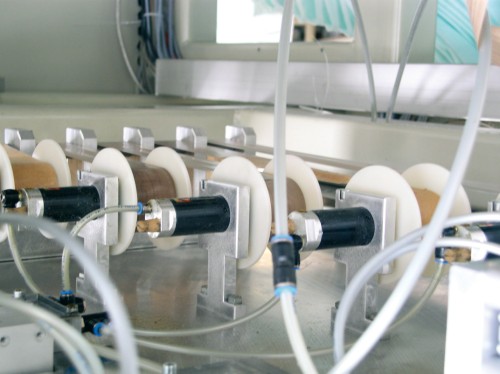
Application:
For winding tapes, wires, and threads onto a coil, the material being wound is also tensioned
Advantages:
- low and high speeds
- pneumatic motor is overload-capable
- small and compact design
- both clockwise and counter-clockwise rotation
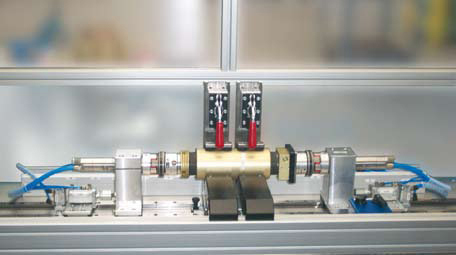
Application:
For mutual load testing of tool parts with a torque limitation or overload clutch
Advantages:
- low speeds possible
- small and compact design
- both clockwise and counter-clockwise rotation
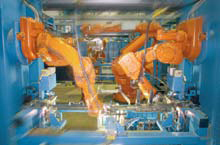
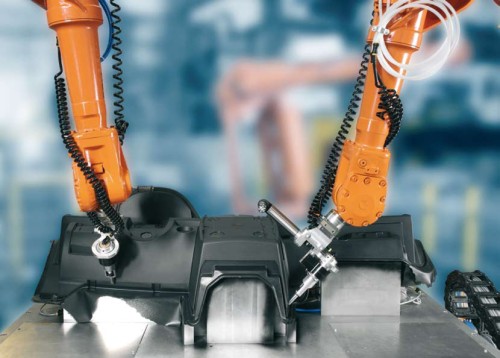
Application:
For direct mounting of the pneumatic grinding spindle on the robot head; excellent for deburring, countersinking, grinding, and filing injection molds and plastic parts
Advantages:
- high speeds possible
- several tools on one robot head
- small and compact design
- for working in confined spaces
- both clockwise and counter-clockwise rotation can be controlled
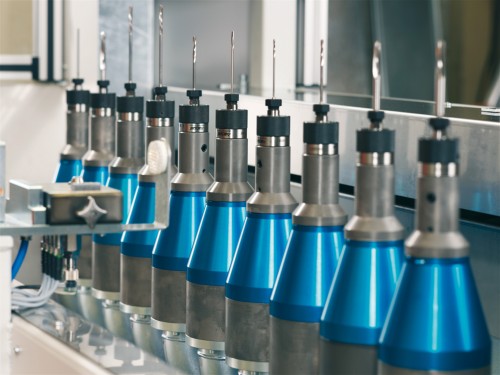
Application:
For vertical installation in automated production lines as a tool battery – for drilling and countersinking cast parts at production-oriented robot stations
Advantages:
- high speeds possible
- fast start-up of the grinding spindles
- small and compact design
- with / without axial and radial deflection
- for working in confined spaces